



News:
Brokerage
Posted: May 8, 2026
The psychology of New York dealmaking - by Joe Aquino
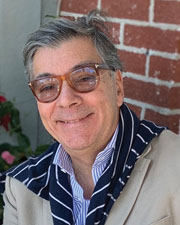
People often think New York real estate is about buildings, rents, demographics, or money. Those things matter, but after nearly forty years in commercial real estate, I can tell you the real business is psychology. Manhattan dealmaking is driven by personality, ego, fear, timing, perception, and human behavior.
The numbers are usually the easy part.
The hard part is understanding the people sitting across the table.
Over the years I’ve represented luxury retailers, restaurateurs, office tenants, landlords, and investors from around the world. I’ve worked on deals in New York, Beverly Hills, Miami, London, and other major markets, but nowhere operates quite like Manhattan. New York compresses ambition, anxiety, competition, and opportunity onto one small island where everyone feels they are one deal away from changing their life forever.
One of the first lessons I learned was that most deals are emotional before they become financial. A landlord may insist he wants a certain rent, but often what he really wants is prestige, security, or validation. A retailer may claim they are focused strictly on economics while secretly fearing they are missing the next important neighborhood. Many deals are fueled by fear — fear of failure, fear of losing face, or fear that the market is changing without them.
Luxury retail taught me this at the highest level. Luxury brands are not simply leasing stores. They are buying identity and positioning. Being next to Cartier, Chanel, or Hermès changes how a company is perceived globally. Sometimes brands will pay extraordinary rents not because the store itself is profitable, but because the address becomes a worldwide advertisement for the brand.
Markets also constantly evolve, and one had to stay on top of those changes or quickly become irrelevant. Years ago, Madison Ave. represented the center of luxury retail gravity. Then SoHo exploded with fashion, energy, and younger consumers. Today, it’s commonplace to see lines of young people standing outside their favorite store in NoLita for over an hour waiting to buy a sneaker, enter a pop-up, or experience a brand they discovered on social media. Neighborhoods once ignored suddenly become the hottest blocks in the city, while former “must-have” locations quietly cool off.
New York is constantly reinventing itself, and retailers, landlords, and brokers all have to adapt in real time.
The city is also intensely relationship-driven. Manhattan operates through networks built over decades — landlords, brokers, attorneys, developers, lenders, and longtime players who survived multiple cycles together. Reputation travels fast in New York, and so does weakness.
One thing younger brokers often misunderstand is that silence itself can be a negotiating weapon. People reveal enormous amounts under pressure. The broker who talks too much often loses leverage. The broker who remains calm and patient usually gains control of the room. Timing becomes psychological warfare. Knowing when to push, when to disappear, and when to let someone sit with uncertainty can completely change a negotiation.
The city rewards resilience more than intelligence alone. I’ve seen a brilliant brand collapse at the first downturn, while other brands stand tall for decades.
And perhaps that is why my best-selling memoir, Memoirs of a Watch Salesman: A New York Real Estate Story, has resonated with so many readers. It is not a book about the ROI of real estate or spreadsheets. It’s about the people behind the deals — the ambition, insecurities, egos, fears, power struggles, and personalities that ultimately shape New York itself. The buildings may dominate the skyline, but human emotion is what truly drives the market.
If you are evaluating space, considering a move, or repositioning a property, I would welcome the opportunity to share what I’m seeing in the market and how it may benefit you. If anything in this note resonates, I’d be glad to compare examples and see where I can add value.
Joseph Aquino is president of JAACRES, Manhattan, N.Y.
MORE FROM Brokerage
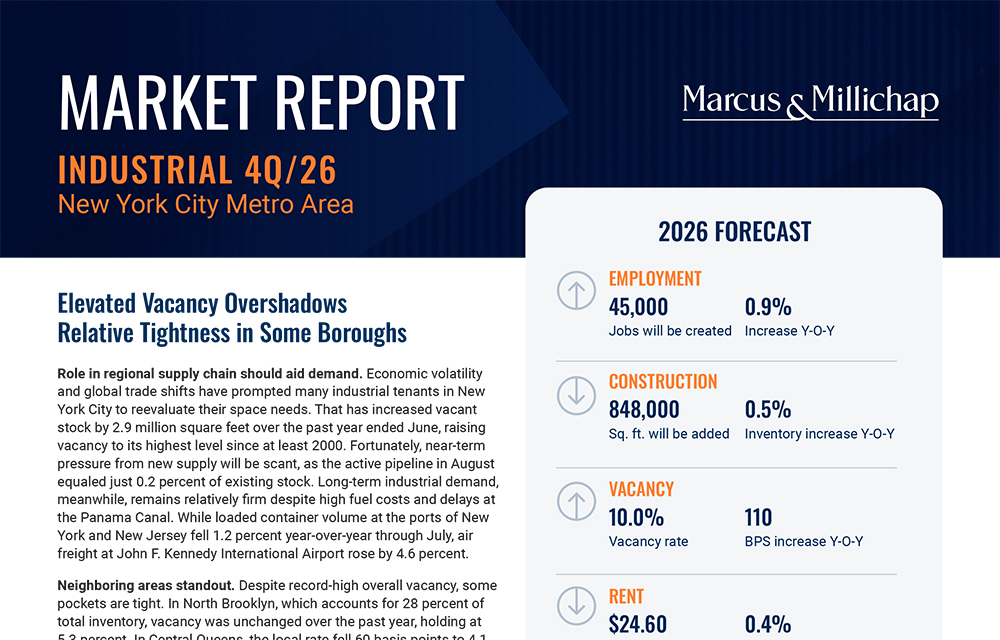
Marcus & Millichap releases fourth-quarter 2026 NYC industrial market report
Manhattan, NY Marcus & Millichap has published its fourth-quarter 2026 New York City Industrial Market Report. “New York City’s industrial market is showing a clear



Quick Hits

Columns and Thought Leadership

Hunt commercial real estate question and answer: Fortune 500 wisdom - by David Hunt
Yes, there are lessons to be learned from the largest companies in America when comes to managing your real estate. But the decision to buy or lease real estate may not be one of

New York’s streets are full again, and the retail numbers prove it - by Noam Aziz
Walk down any New York block this year and you can feel it. The sidewalks are crowded, the storefronts are lit, and the energy that defines this city is back at full volume.

The art of investing in real estate - by Thomas Donovan
Real estate investing is as much an art as it is a skill. No one can time the market, or the factors that drive it, perfectly. Location, zoning, size, transportation, and neighborhood density give you a baseline for

Hunt CRE question and answer: Choosing a real estate agent - by David Hunt
First, we will only work with one agent exclusively. The primary reason is that we want that agent to legally represent our client’s interests. In New York State, a real estate agent has a fiduciary
.gif)