



News:
Brokerage
Posted: August 7, 2009
Lashins Dev. launches sale-lease-back program
Lashins Development Corp. launched a sale-lease-back program. It completed its first sale-lease-back transaction with the acquisition of the 6,000 s/f Calico Corners store. Lashins Development created its sale-lease-back program in response to long-term trends in the appreciation of well-located real estate.
In a typical sale-lease-back, the owner of a property sells that property and then leases it back for a term of 10 or more years. A sale-lease-back offers the seller-tenant an attractive alternative for raising capital through the real estate market without having to move locations.
"Sale-lease-backs are an ideal financing tool when money is tight and when stock prices are down," said Ed Lashins, president of Lashins Development Corp. "A public company may find that issuing additional stock is not a viable option. Furthermore, today's economic environment may not be conducive to issuing debt or otherwise borrowing money. We look forward to developing our sale-lease-back program as a win-win vehicle for both sellers and buyers, who gain a steady income stream from their acquisition."
Lashins Development Corp. traces its roots back to 1944. Under principals Edward and Eric Lashins, the company is involved in building, owning, and operating office, retail, and industrial buildings in addition to constructing upscale houses.
Visit there website at: www.lashinsdevelopment.com.Heiss of Largo finances $5.32m mtge. for two office/warehouse bldgs.Lakewood Ranch, Fl Kevin Heiss, account executive for the Largo Group of Companies, arranged a $5.32 million permanent first mortgage for two office/warehouse buildÂings. The two buildings were built in phases in 2008 and are comprised of 33,003 s/f of office/warehouse space. Both buildings are 100% leased to Schoolhouse Finance, LLC d/b/a Imagine Schools. Imagine Schools took occupancy of Building 1 in January and expected occupancy of Phase 2 is scheduled to occur in August. The borrower obtained a competitive five-year fixed rate loan with a 25-year amorÂtization schedule for these properties.
Tags:
Brokerage
MORE FROM Brokerage
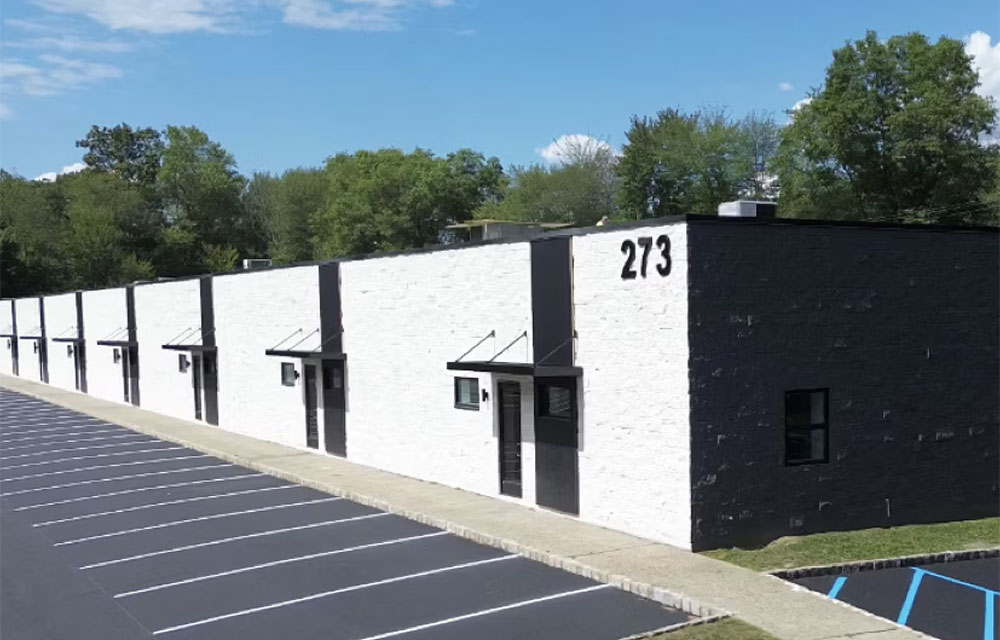
Resource Realty of Northern NJ delivers complete lease-up of 235 Franklin Rd. for Commerce Park Investors
Randolph, NJ Resource Realty of Northern New Jersey (RRNNJ) has completed the lease-up of a 10-unit small-bay industrial property at 273 Franklin Rd., marking the culmination of an investment strategy that began



Quick Hits
 (2).gif)

Columns and Thought Leadership

Positive forecast for New York’s pro-housing push? - by Philip Butler
New York’s housing crisis remains a hot button topic despite growing consensus that varied and affordable housing is desperately needed statewide. Governor Hochul has recently introduced several initiatives to overcome N.Y.’s anti-housing

Hunt commercial real estate question and answer: Fortune 500 wisdom - by David Hunt
Yes, there are lessons to be learned from the largest companies in America when comes to managing your real estate. But the decision to buy or lease real estate may not be one of

A guide to finding the right NYC property management company - by Sanjay Gandhi
Being a small to midsize landlord in NYC is an increasingly demanding endeavor. From navigating complex regulations, increased compliance demands to dealing with tenant issues and remediating violations. It is wise to enlist the assistance of a partner, a professional

New York’s streets are full again, and the retail numbers prove it - by Noam Aziz
Walk down any New York block this year and you can feel it. The sidewalks are crowded, the storefronts are lit, and the energy that defines this city is back at full volume.
.gif)