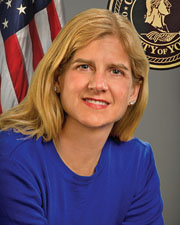
city of Yonkers




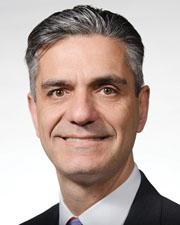
Rye Brook, NY According to Business Council of Westchester (BCW), two of the area’s economic development commissioners – Wilson Kimball, commissioner of planning and development for the city of Yonkers; and Luiz Aragon, commissioner for development for the city of New Rochelle – have been elected to its board of directors.
“We are truly honored to have these two distinguished planning professionals join our board. They bring many years of experience in economic development and have been at the forefront of the tremendous renaissance under way in the urban centers of Yonkers and New Rochelle,” said Marsha Gordon, President and CEO of the Business Council of Westchester.
“The addition of Wilson Kimball and Luiz Aragon to our Board is a significant development for the BCW and strengthens our position as the most influential economic development organization in Westchester County and the region,” said BCW Chairman Anthony Justic.
Kimball oversees a staff comprising the Planning Bureau, Community Development Agency, Sustainability, Downtown Waterfront Development, Tenant Based Rental Assistance and Economic Development. She leads negotiations of multi-million dollar property sales and coordinates development of public and private projects ranging from below $1 million to over $500 million. Since her tenure with the city began, Yonkers has benefitted from over $2.5 billion in private investment in all real estate sectors across the city. Prior to her current position, Kimball was Deputy Commissioner of Planning and Development for Yonkers. A graduate of Skidmore College, Kimball earned a J.D. from Fordham University School of Law where she was a Stein Scholar and recipient of the Archibald R. Murray Public Service Award. She also holds an MBA in Finance from Pace University where she was a Michaelian Scholar.
Aragon’s broad expertise includes community development, economic development and revitalization, housing, planning, transportation, and environmental management. He has led the current renaissance in New Rochelle and is responsible for repositioning the city as the next transit and talent oriented development destination in Westchester, as well as the execution of a transformative and unprecedented $6 billion Master Developer Agreement in partnership with RXR Realty. Aragon joined the City of New Rochelle after a 23-year career in government in New York City and upstate New York. Previously, he served as Commissioner for Planning & Environmental Management for Sullivan County and Deputy Commissioner for Preservation Services for New York City’s Department of Housing Preservation & Development (HPD). Aragon earned an MBA from Baruch College, CUNY and a BA in Architecture from Pratt Institute in Brooklyn.







.gif)