



News:
Brokerage
Posted: July 27, 2015
The Real Estate Lenders Association and Chandan Economics present Spring 2015 Survey of Commercial Real Estate Lender Sentiment
The Real Estate Lenders Association (RELA) unvield the findings of its Spring 2015 Survey of Commercial Real Estate Lender Sentiment. The survey features analysis by RELA's national economist Dr. Sam Chandan, president & chief economist at Chandan Economics and a professor in the associated faculty at the Wharton School of the University of Pennsylvania.
Key Findings from the Spring 2015 Survey
* Following several years of rising volume, survey respondents overwhelmingly expect that new lending activity will peak in 2016 or 2017. Just 17 percent of lenders responding to the current survey's special questions on the market cycle anticipate that lending volume will peak after 2017. While respondents expressed concerns about the direction of underwriting standards, they expect that competitive pressures will push standards lower until after the lending peak.
* The share of lenders expecting to increase the volume of their lending activity over the next year declined since the last survey but remains healthy. Lenders are most reserved in their expectations for the hotel sector, where a significant minority of survey participants now expects an outright decline in their institution's new commitments in late 2015 and early 2016.
* In contrast with the near-term outlook for other property types, lenders expectations for the multifamily sector improved from the prior survey. Lenders comment that caps on agency volume may constrain new multifamily lending by Fannie Mae and Freddie Mac, supporting demand for non-agency financing of apartments.
Tags:
Brokerage
MORE FROM Brokerage
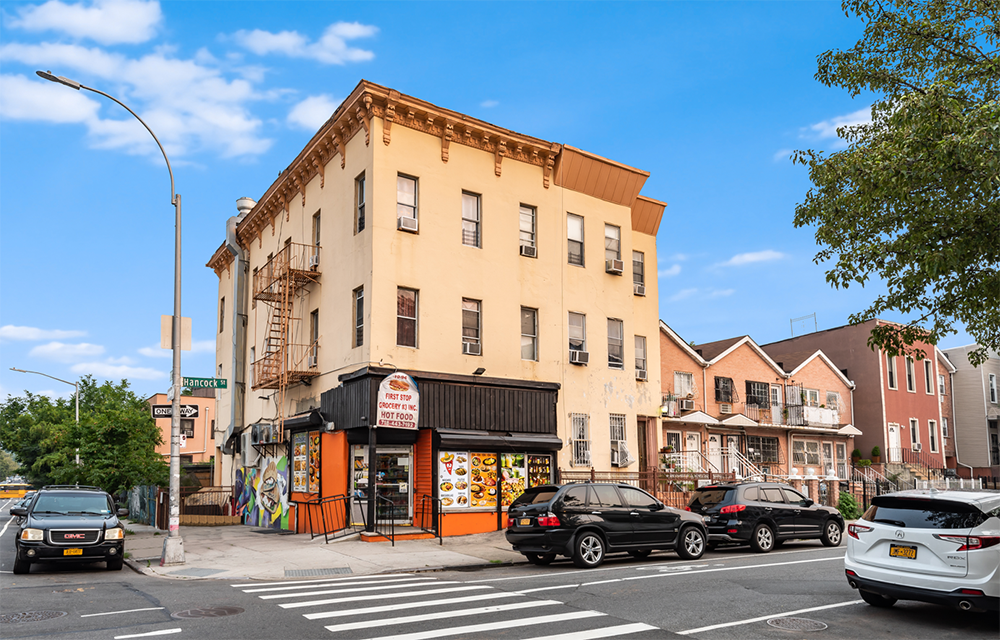
Investment Property Realty Group closes $1.75 million sale of 1094 Hancock Street in Brooklyn
Brooklyn, NY Investment Property Realty Group (IPRG), a New York-based commercial investment firm, has closed the sale of 1094 Hancock St., a mixed-use building in the Bushwick section, for $1.75 million.




Quick Hits
 (2).gif)

Columns and Thought Leadership

Hunt CRE question and answer: Choosing a real estate agent - by David Hunt
First, we will only work with one agent exclusively. The primary reason is that we want that agent to legally represent our client’s interests. In New York State, a real estate agent has a fiduciary

Hunt commercial real estate question and answer: Fortune 500 wisdom - by David Hunt
Yes, there are lessons to be learned from the largest companies in America when comes to managing your real estate. But the decision to buy or lease real estate may not be one of

A guide to finding the right NYC property management company - by Sanjay Gandhi
Being a small to midsize landlord in NYC is an increasingly demanding endeavor. From navigating complex regulations, increased compliance demands to dealing with tenant issues and remediating violations. It is wise to enlist the assistance of a partner, a professional

New York’s streets are full again, and the retail numbers prove it - by Noam Aziz
Walk down any New York block this year and you can feel it. The sidewalks are crowded, the storefronts are lit, and the energy that defines this city is back at full volume.
.gif)