



News:
Brokerage
Posted: October 27, 2008
The future of brownfield development: A look into the two elements that should exist
A few weeks ago I was asked to participate as a panelist at the third Canadian - United States Brownfield Summit sponsored by the National Brownfield Association and hosted by our municipal partners at the city of Buffalo. After rattling off a laundry list of successful brownfield reclamation projects across our region that included Buffalo Lakeside Commerce Park, Riverbend Commerce Park, BlueCross BlueShield of WNY Headquarters, Buffalo Bolt Business Park and many more, I tried to put the future of development of brownfield sites into some perspective for our audience based on our actual experience.
Buffalo Niagara Enterprise focuses our marketing, business and economic development efforts in five very targeted industry clusters. They are:
* Back office/customer service centers
* Life Sciences
* Advanced manufacturing
* Renewable energies
* Logistics & distribution
Despite the diversity of these industry clusters, there are common threads among each one when it comes to the subject of brownfields. And I suspect that these commonalities are not unique to our region, but would apply in other regions and markets as well.
There is legitimate interest in pursuing brownfield reclamation and development opportunities as long as two elements exist . . . dependability of the incentives that are being offered and reasonable, practical timing of the benefits the company is to receive.
As all of our brownfield experts and economic development professionals knew from their experience and the examples I had discussed, the costs associated with reclamation and remediation, when added to the already high price tag of the company's proposed project, absolutely dictate that before engaging, they must have certainty that the incentives being discussed are indeed available and that their eligibility is based on legitimate programmatic standards, not subjective bureaucracies.
And for these same reasons, timing is a huge issue. Companies who have customer orders to fill and product to be developed and brought to market simply cannot afford to be told that the very benefits that made the project practical and affordable will be delayed for unforeseen circumstances beyond their control.
It's also important to note that these two elements are why we see so many larger brownfield reclamation projects as opposed to smaller ones in our urban centers. Larger corporations simply have the financial ability to engage and weather any potential delays that could put a smaller company out of business. Until we are able to develop and implement incentives and programs that measurably mitigate that risk for smaller companies, we will continue to see relatively fewer of them engage in brownfield projects.
My final observation that I shared related to the international flavor of many of the prospects that Buffalo Niagara Enterprise, and perhaps economic developers in your region, are seeing with more frequency.
In our case this increase in the international flavor of our prospects is impacted by our aggressive Canadian marketing campaign over the last year. It is also due in part to the industry clusters that we target, and like many of the regions we compete with for business investment and attraction, the slowing national economy and the reduced strength of the dollar has resulted in an increase in foreign investment interest and opportunities.
These companies come from and exist in a culture that believes that as the city goes, so goes the surrounding region. They believe in the concepts of reclamation and smart growth and the use of green technologies and renewable energies. They want to be in and part of communities that are committed to these same principles and cultures. When they see regions that are engaged in committed brownfield programs, they see a region that shares their progressive philosophy and they are more likely to want to be part of it.
Thomas Kucharski is president and CEO of Buffalo Niagara Enterprise, Buffalo, N.Y.
Tags:
Brokerage
MORE FROM Brokerage
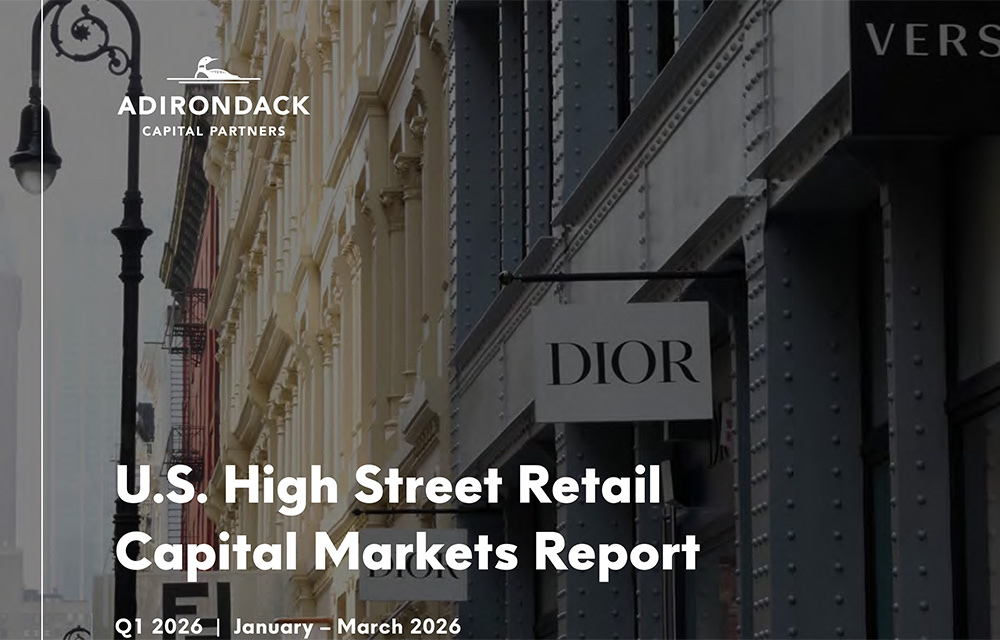
SoHo emerges as America’s most active trophy retail market as investors prioritize quality, Adirondack Capital Partners finds
Manhattan, NY Investors are increasingly concentrating capital in the country’s most coveted retail corridors, with SoHo emerging as the nation’s most active trophy retail market,



Quick Hits

Columns and Thought Leadership

The death of the generic offering memorandum: What buyers expect in 2025 - by Kimberly Zar Bloorian
There was a time when an offering memorandum (OM) was pretty bare bones, some photos, a few bullet points on income, and a rent roll thrown in at the back. That used to get the job done. Not anymore. In 2025, buyers are sharper, faster, and more selective. They’re looking

A fresh start - by Shallini Mehra and Amit Doshi
For the past several years, the New York City multifamily housing market has been defined by disruption. The combined impact of the HSTPA rent laws and a sharply higher interest rate environment has fundamentally reduced
The anticipated effect of Basel III and ISO 20022 implementation on commercial real estate - by Michael Zysman
July 1, 2025 is the deadline for US banks to begin to adopt Basel III banking standards and July 14, 2025 is the deadline for U.S. banks to adopt ISO 20022 messaging standards. Both will have a significant effect on the banking and commercial real estate (CRE) finance sectors.

Tri-state capital migrates nationally amid regulation pressure - by Reese Weaver
New York tri-state multifamily investors are increasingly reallocating capital to less-regulated markets across the U.S. as rent control and legislative risk erode returns at home. With over 60% of New York City’s rental housing stock classified as rent-stabilized, the traditional value-add model — buying under-performing buildings,
