



News:
Brokerage
Posted: February 24, 2014
Soybelman and Bolles join First Nationwide Title Agency
According to First Nationwide Title Agency (FNTA), two seasoned underwriters, Ilya Soybelman and Timothy Bolles have come aboard to support the existing national and N.Y. underwriting divisions.
Prior to joining FNTA, Soybelman was a commercial title officer with Fidelity National focusing on multi-site/multi-state portfolios. Before that, he was a commercial underwriter for First American Title Insurance Co., where he focused on commercial transactions nationally and escrow/settlement. He earned a BA in Economics from Stony Brook University.
He is currently working on his MBA from Bernard Baruch Zicklin School of Business.
Among his professional affiliations are Young Jewish Professionals and National Notary Associations.
Bolles joins FNTA from First American Title Insurance Co., where he served as a commercial underwriter, focusing on multi-site/multi-state portfolios, energy related transactions and the issuance of title insurance policies nationally. Before that, he served as title company administrator and commercial underwriter for Pierce Atwood LLP, located in Portland, Maine. Prior to that, he was a paralegal and commercial underwriter with Hopkinson & Abbondanza, P.A. and Atlantic Title Co., in addition to acquiring banking experience as a mortgage loan processor with Maine Bank & Trust Co. Bolles earned his BA degree in Economics/Business from the University of Maine.
"As the economy continues to recover and more and more commercial real estate acquisitions/dispositions are being transacted, the demand for our services has significantly risen," said Steven Napolitano, president and CEO of FNTA. "Consequently, we are fortifying our ranks with experienced professionals in order to provide clients with the best underwriting experts in the business. We are delighted to welcome Ilya and Tim to the fold."
Tags:
Brokerage
MORE FROM Brokerage
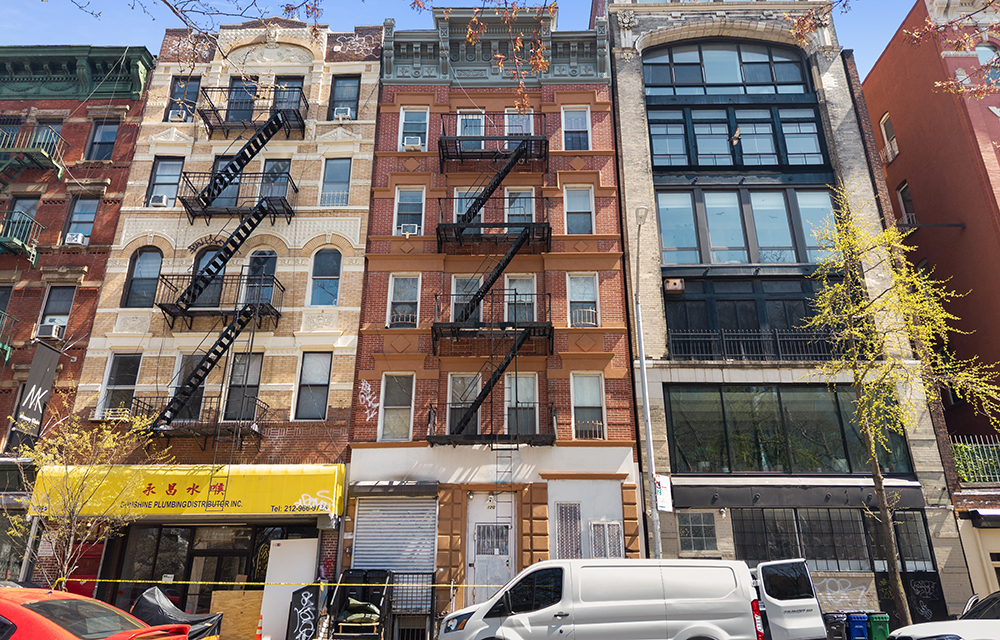
Investment Property Realty Group sells 120 Forsyth St. for $1.35 million
Manhattan, NY Investment Property Realty Group (IPRG) closed the sale of 120 Forsyth St., a mixed-use building located in the Lower East Side section of the city, for $1.35 million.




 (2).gif)

Columns and Thought Leadership

A guide to finding the right NYC property management company - by Sanjay Gandhi
Being a small to midsize landlord in NYC is an increasingly demanding endeavor. From navigating complex regulations, increased compliance demands to dealing with tenant issues and remediating violations. It is wise to enlist the assistance of a partner, a professional

Positive forecast for New York’s pro-housing push? - by Philip Butler
New York’s housing crisis remains a hot button topic despite growing consensus that varied and affordable housing is desperately needed statewide. Governor Hochul has recently introduced several initiatives to overcome N.Y.’s anti-housing

New York’s streets are full again, and the retail numbers prove it - by Noam Aziz
Walk down any New York block this year and you can feel it. The sidewalks are crowded, the storefronts are lit, and the energy that defines this city is back at full volume.

Hunt commercial real estate question and answer: Fortune 500 wisdom - by David Hunt
Yes, there are lessons to be learned from the largest companies in America when comes to managing your real estate. But the decision to buy or lease real estate may not be one of
.gif)