



News:
Brokerage
Posted: June 29, 2018
Rosewood Realty Group and Meridian Investment Sales exclusively list a West Village mixed-use property
Manhattan, NY Rosewood Realty Group and Meridian Investment Sales have been exclusively retained to sell 100 Christopher St., a newly-renovated mixed-use property in the West Village neighborhood. Senior executive managing director, David Schechtman and managing directors, Lipa Lieberman and Abie Kassin, are representing the seller with the assistance of Aaron Jungreis, Brendan Cohen, and Joshua Gruber of Rosewood Realty Group.
The property spans 21,000 s/f with 70 ft. of frontage along Christopher St. The five-story building consists of 36 residential units ranging from studios to three-bedroom apartments in addition to ground-floor retail space, currently leased to Rag & Bone. 100 Christopher St. recently underwent significant capital expenditures, including a new gas boiler and improvements to the building’s free market apartments, allowing investors to focus on future upgrades such as adding washers and dryers to individual units and finalizing the roof garden, which is currently being designed.
“The property enjoys a strong in-place cash flow, allowing investors to benefit from a turn-key building that will continue to appreciate in the historic West Village neighborhood,” said Schechtman. “The distinct property emits charm and character, which will help maintain its status as the preferred option for residents seeking housing in this supply-constrained area.”
Bounded by the Hudson River to the west, Sixth Ave. to the east, West 14th St. to the north, and West Houston St. to the south, the West Village neighborhood is known for its townhouses, boutique shops, and tree-lined streets. 100 Christopher St. is situated between Bleecker and Hudson Sts. The property is close to restaurants such as The Little Owl and Sushi Nakazawa, in addition to transportation options, including the 1 subway line and PATH train at the Christopher St. Station and the A, C, E, and L trains at the intersection of West 14th St. and Eighth Ave.
Tags:
Brokerage
MORE FROM Brokerage
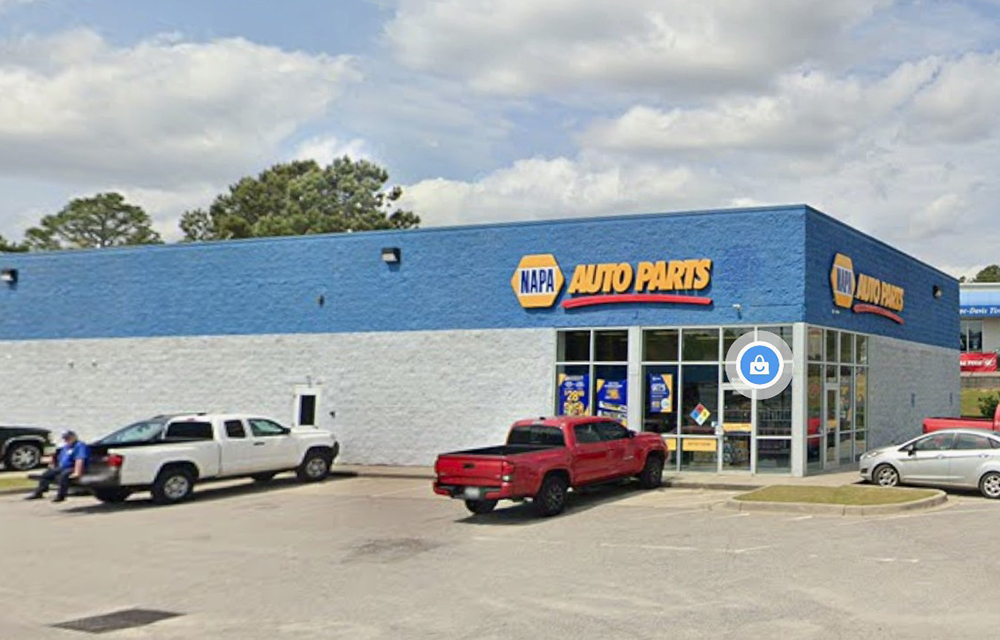
Marcus & Millichap brokers $15 million sale of multi-state NAPA Auto Parts portfolio
Palmetto, FL Marcus & Millichap brokered the sale of a nine-property NAPA Auto Parts portfolio for $15,025,104. The portfolio includes properties in Palmetto, FL.;




Quick Hits

Columns and Thought Leadership

New York’s streets are full again, and the retail numbers prove it - by Noam Aziz
Walk down any New York block this year and you can feel it. The sidewalks are crowded, the storefronts are lit, and the energy that defines this city is back at full volume.

Positive forecast for New York’s pro-housing push? - by Philip Butler
New York’s housing crisis remains a hot button topic despite growing consensus that varied and affordable housing is desperately needed statewide. Governor Hochul has recently introduced several initiatives to overcome N.Y.’s anti-housing

Hunt commercial real estate question and answer: Fortune 500 wisdom - by David Hunt
Yes, there are lessons to be learned from the largest companies in America when comes to managing your real estate. But the decision to buy or lease real estate may not be one of

A guide to finding the right NYC property management company - by Sanjay Gandhi
Being a small to midsize landlord in NYC is an increasingly demanding endeavor. From navigating complex regulations, increased compliance demands to dealing with tenant issues and remediating violations. It is wise to enlist the assistance of a partner, a professional
.gif)