



News:
Brokerage
Posted: February 19, 2019
REBNY Index: Real estate broker confidence rises in 4Q18; Increase in overall broker confidence follows three consecutive quarters of decline
New York, NY The Real Estate Board of New York’s (REBNY) Real Estate Broker Confidence Index for fourth quarter of 2018 was 5.86 out of 10, an increase of 1.11 since brokers were surveyed about the third quarter of 2018.
Confidence among both residential and commercial real estate brokers increased quarter-over-quarter with their assessment of current and future real estate market conditions. This boost followed three consecutive quarters of declining confidence since the fourth quarter of 2017.
“REBNY brokers continued to weigh the effects of federal tax reform and trade negotiations, potential rent regulation reform, and changing interest rates in measuring their confidence for this survey,” said John H. Banks, REBNY President. “Their rising confidence in the real estate market now and six months from now marks a brighter outlook for improved market conditions in 2019.”
The Commercial Broker Confidence Index, which only focuses on responses from members of REBNY’s Commercial Brokerage Division, was 6.46 in the fourth quarter of 2018, an increase of 0.93 since brokers were surveyed about the third quarter of 2018. The improvement was attributable to evaluations of price corrections occurring within the New York City real estate market as the effects of federal tax reform continue to set in.
“The biggest thing holding back the market is taxation. In particular, real estate taxes have gone up and up, while at the same time effective rents have declined. This is particularly true with retail properties,” said one commercial broker.
Some commercial brokers expressed confidence following the announcement of Amazon’s plans for its second headquarters in Long Island City and the expansion of similar tech firms in New York City, along with the reversal of the L-train shutdown. In contrast, other commercial brokers expressed concerns regarding interest rates, tariffs, stock market volatility, and political instability.
Another commercial broker said: “I have deals pending with international clients who are awaiting the final outcome of the trade negotiations. So we are in a holding pattern.”
In spite of concerns, the Commercial Broker Future Confidence Index was 5.84 in the fourth quarter of 2018, a 0.62 bump from the third quarter of 2018 that was largely driven by positive expectations regarding the future commercial financing and leasing markets, and commissions six months from now.
The Residential Broker Confidence Index, which only focuses on responses from members of REBNY’s Residential Brokerage Division, was 5.25 in the fourth quarter of 2018, an increase of 1.28 since brokers were surveyed about the third quarter of 2018. Assessments of current residential real estate financing and leasing market conditions accounted for the increase.
“The real estate market is in a slight correction and mortgage rates are still historically low, so investing in residential real estate has historically been a good investment and will continue to be,” said one residential broker.
Several residential broker respondents predicted that the future market would remain soft with conditions positioned more towards price sensitive buyers. Other residential brokers voiced their concerns regarding the significant unrest and uncertainty within the political arena, stock market turbulence, and buyer hesitations that contributed to a slowdown within the market.
“While winter generally shows less activity in the market, the uncertainty of economic conditions, rising interest rates, and a very volatile stock market have had a negative impact on the real estate market,” said another residential broker.
Despite such views, however, residential brokers expressed somewhat renewed expectations with the Residential Broker Future Confidence Index rising to 5.52 in the fourth quarter of 2018, a 1.61 increase from the third quarter of 2018.
REBNY regularly surveys its residential and commercial brokerage division members to measure their confidence in the New York City real estate market now and six months from now. Survey results are published quarterly with a maximum index of 10.
Tags:
Brokerage
MORE FROM Brokerage
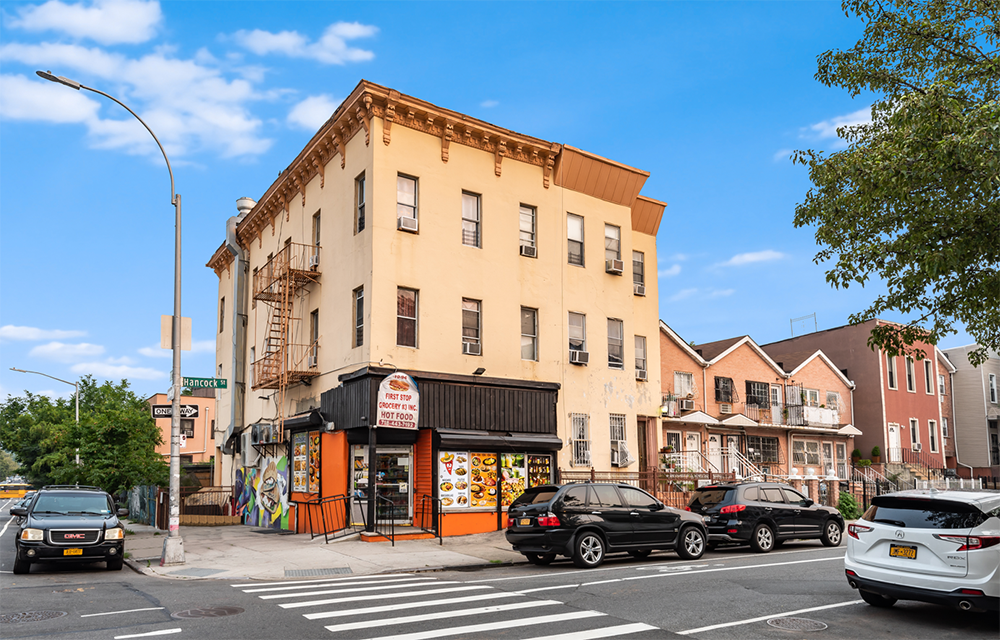
Investment Property Realty Group closes $1.75 million sale of 1094 Hancock Street in Brooklyn
Brooklyn, NY Investment Property Realty Group (IPRG), a New York-based commercial investment firm, has closed the sale of 1094 Hancock St., a mixed-use building in the Bushwick section, for $1.75 million.


Quick Hits
 (2).gif)

Columns and Thought Leadership

A guide to finding the right NYC property management company - by Sanjay Gandhi
Being a small to midsize landlord in NYC is an increasingly demanding endeavor. From navigating complex regulations, increased compliance demands to dealing with tenant issues and remediating violations. It is wise to enlist the assistance of a partner, a professional

New York’s streets are full again, and the retail numbers prove it - by Noam Aziz
Walk down any New York block this year and you can feel it. The sidewalks are crowded, the storefronts are lit, and the energy that defines this city is back at full volume.

Hunt commercial real estate question and answer: Fortune 500 wisdom - by David Hunt
Yes, there are lessons to be learned from the largest companies in America when comes to managing your real estate. But the decision to buy or lease real estate may not be one of

Hunt CRE question and answer: Choosing a real estate agent - by David Hunt
First, we will only work with one agent exclusively. The primary reason is that we want that agent to legally represent our client’s interests. In New York State, a real estate agent has a fiduciary
.gif)