



News:
Brokerage
Posted: December 18, 2018
Outside the Region: Kalikow Group launches leasing at 182-unit multifamily community in North Charleston
North Charleston, SC The Kalikow Group, a fourth-generation, New York development and management firm based in Westbury, NY, along with EYC Companies of Folly Beach, SC, has officially begun leasing on 4830 Wescott Apartments, a newly-constructed, 182-unit multifamily community located at 4830 Wescott Blvd. A ribbon cutting ceremony was recently held to mark the occasion and a website to market the project was launched earlier this year.
The development is within Dorchester County, one of the fastest growing counties in the state, and home to many of the area's major employers such as Boeing, Daimler, Cummins and Mercedes-Benz. All are located less than a mile away from 4830 Wescott in the Palmetto Commerce Park, a 1,120-acre industrial park.
4830 Wescott is within Wescott Plantation, a 1,600-acre master planned development with neighborhoods, public schools, a golf course and retailers. 4830 Wescott features three-story wood frame buildings and resort-style amenities.
“Our southeast projects have helped to create new communities in desirable neighborhoods that are in close commuting distance to good jobs, schools and downtown areas,” said Ed Kalikow, president at Kalikow Group. “Wescott is the latest community that has been a success for everyone involved.”
“Our multi-decade partnership with Kalikow Group has been incredibly successful in creating desirable communities that are affordable, attractive and contribute to the regional economy,” said Ellis Coleman, president of EYC. “We’re especially proud of being able to create amenity rich, energy efficient and technologically advanced communities that will be terrific places for families to set down roots and grow.”
Tags:
Brokerage
MORE FROM Brokerage
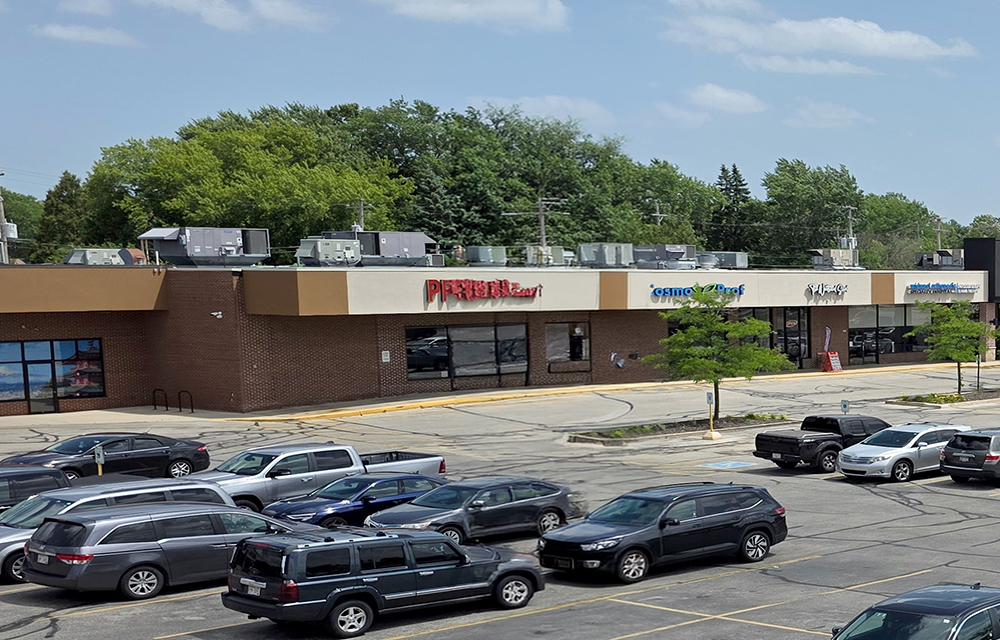
United Properties Corp. expands Wisconsin and Illinois retail presence adding 200,000 s/f
West Allis, WI United Properties Corp. completed two retail acquisitions totaling $27.4 million across Illinois and Wisconsin, adding 205,000 s/f of shopping center space to its portfolio






Quick Hits

Columns and Thought Leadership

Hunt commercial real estate question and answer: Fortune 500 wisdom - by David Hunt
Yes, there are lessons to be learned from the largest companies in America when comes to managing your real estate. But the decision to buy or lease real estate may not be one of

Positive forecast for New York’s pro-housing push? - by Philip Butler
New York’s housing crisis remains a hot button topic despite growing consensus that varied and affordable housing is desperately needed statewide. Governor Hochul has recently introduced several initiatives to overcome N.Y.’s anti-housing

New York’s streets are full again, and the retail numbers prove it - by Noam Aziz
Walk down any New York block this year and you can feel it. The sidewalks are crowded, the storefronts are lit, and the energy that defines this city is back at full volume.

A guide to finding the right NYC property management company - by Sanjay Gandhi
Being a small to midsize landlord in NYC is an increasingly demanding endeavor. From navigating complex regulations, increased compliance demands to dealing with tenant issues and remediating violations. It is wise to enlist the assistance of a partner, a professional
.gif)