



News:
Brokerage
Posted: January 30, 2026
MADE Bush Terminal signs leases with PELLE, Aripack, and MushLume - brokered by NYCEDC
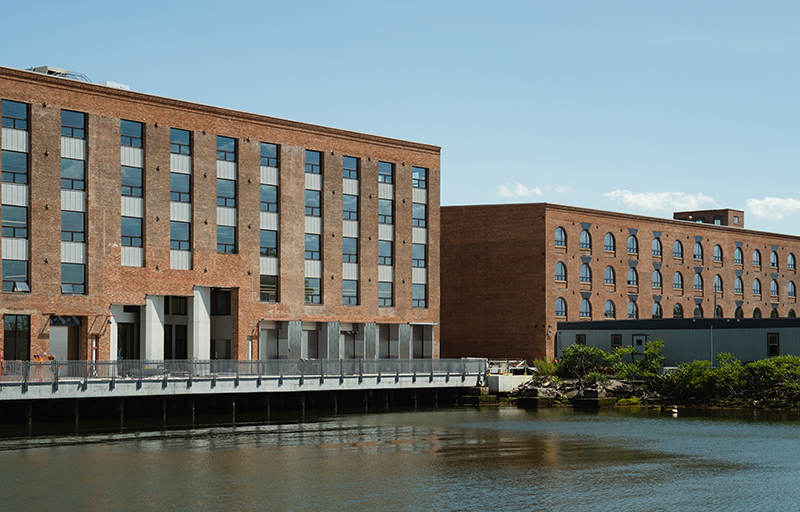
Brooklyn, NY — The New York City Economic Development Corporation (NYCEDC) has completed three new lease signings at MADE Bush Terminal, the city’s recently opened hub for creative manufacturing, design, and production industries in Sunset Park.
The new tenants — PELLE, Aripack, and MushLume—add more than 20,000 rentable s/f of leased space at the property in 2025, reflecting growing demand from design- and fabrication-focused companies seeking modern industrial space within a collaborative environment.
“The newest tenants at MADE Bush Terminal – PELLE, Aripack, and MushLume – represent the next generation of modern manufacturing centered around design, sustainability, and the co-location of small businesses,” said NYCEDC president and CEO Andrew Kimball. “These companies’ decision to locate to MADE is a reflection of how NYCEDC’s strategic investments in Sunset Park’s industrial waterfront are creating a thriving ecosystem for production, innovation, and growth.”
“This move allows us to unite all facets of our operations — design, fabrication, and client engagement — within a space that reflects our overall vision for the studio. New and exciting additions include a dedicated painting studio, state-of-the-art workrooms for lighting and cast-paper production, and the Pelle Gallery. We’re thrilled to join the MADE community and build a long-term home here,” said PELLE co-founder and creative director Jean Pelle.
“This move to MADE represents more than just a new address; it’s a reflection of Aripack’s commitment to collaboration, production, and innovation. By bringing our entire team under one roof in this dynamic space, we’re creating an environment where great ideas can flourish and our partnerships with customers can deepen. Brooklyn has been our home since 2004, and we’re excited to strengthen our roots in this borough’s thriving entrepreneurial community. MADE is the perfect platform for our next chapter of growth,” said Aripack CEO Isak Bengiyat.
“We are thrilled to be joining the unique community at MADE Bush Terminal and to be expanding our operations within a larger footprint. The new space will allow us to scale production, hold greater inventory volumes, and streamline our R&D efforts, while also providing a showroom space against an iconic waterfront backdrop with views of lower Manhattan. Maintaining a Brooklyn-based location for our sustainable, biofabrication business has always been our goal and we couldn’t imagine a better fit than the ecosystem that the Economic Development Corp. has been fostering at MADE,” said Danielle Trofe, founder and biodesigner.
PELLE, a Brooklyn-based design studio specializing in sculptural lighting and furniture, signed a 10-year lease for 11,960 rentable s/f on the fifth floor. The space will serve as the company’s expanded headquarters, consolidating offices, production workshops, and gallery space. The firm is relocating from Red Hook.
Aripack, a packaging solutions company focused on custom flexible and rigid packaging, signed a five-year lease for 6,000 rentable s/f on the fifth floor. The family-owned business is relocating from East New York and plans to move in December 2025. Aripack was represented by Nechama Green Liberow of Pinnacle Realty.
MushLume, a Brooklyn-based sustainable lighting studio working with mycelium-based materials, signed a three-year lease for 2,510 rentable s/f on the fifth floor. The space will support production and product development. Build-out is expected to begin this fall, with operations commencing in early 2026.
MADE Bush Terminal — short for Manufacturers, Artisans, Designers, and Entrepreneurs—comprises 140,000 s/f of modern industrial workspace, 30,000 s/f dedicated to cultural and public programming, and five acres of new parkland and open space. The redevelopment is part of a broader effort to revitalize Sunset Park’s waterfront as a manufacturing and innovation corridor supporting small businesses, workforce development, and community engagement.
Tags:
Brokerage
New York City
MORE FROM Brokerage
Adirondack Capital Partners arranges $45 million sale of West Chelsea development site to Toll Brothers
Manhattan, NY Adirondack Capital Partners (ACP) closed the $45 million sale of 126/128 Tenth Ave. and 456 W. 18th St. to Toll Brothers City Living. The acquisition forms part of a broader



Quick Hits

Columns and Thought Leadership

Positive forecast for New York’s pro-housing push? - by Philip Butler
New York’s housing crisis remains a hot button topic despite growing consensus that varied and affordable housing is desperately needed statewide. Governor Hochul has recently introduced several initiatives to overcome N.Y.’s anti-housing

A guide to finding the right NYC property management company - by Sanjay Gandhi
Being a small to midsize landlord in NYC is an increasingly demanding endeavor. From navigating complex regulations, increased compliance demands to dealing with tenant issues and remediating violations. It is wise to enlist the assistance of a partner, a professional

New York’s streets are full again, and the retail numbers prove it - by Noam Aziz
Walk down any New York block this year and you can feel it. The sidewalks are crowded, the storefronts are lit, and the energy that defines this city is back at full volume.

Hunt commercial real estate question and answer: Fortune 500 wisdom - by David Hunt
Yes, there are lessons to be learned from the largest companies in America when comes to managing your real estate. But the decision to buy or lease real estate may not be one of
.gif)