



News:
Brokerage
Posted: May 12, 2014
Letter of Intent - Here's Some New York Hospitality
Positive economic trends and growth throughout 2013 and early 2014 will drive hotel revenues higher in 2014. Strong growth in the construction of new hotels in and around Manhattan signifies the forward thinking investor sentiment that the capital markets will remain steady for the foreseeable future, even with the regime change in the Federal Reserve. Across the country, it is estimated that there are approximately 300,000 rooms under consideration for development, although financing has been somewhat harder to come by outside of the major metros, it has been flourishing in New York City.
Surprisingly, there has been a major movement towards funding boutique hotels, as the cash-flows prove their worthiness in an ever-strong NYC market. While traditional lenders are offering leverage for the construction of new hotels hovering around 70% for flagged hotels, financing ratios for boutique hotels have met if not surpassed that of flagged properties for the right borrower. Additionally, there are alternative financing options available as well. USDA Business & Industry loans are offered by lenders but guaranteed by the government. Rates on this loan differ from lender to lender but hover around Prime+2.75% and can be up to 80% guaranteed.
Current rates that Berko & Associates have seen from traditional lenders are in the prime + 2% range with a floor of 5%. In addition to conventional lenders, there are other options. EB-5 financing has begun to play an integral role for the development of many hotels. So much, in fact, that Marriott is actually urging developers to utilize the program to build hotels and add to their portfolio. Although EB-5 can be very difficult to procure, and intermediaries are quite particular about which projects are chosen for the program, the benefits can be excellent for the sponsor.
All in all, as the average daily rate across the country grew just shy of 4% in 2013, most analysts agree that a tick up north of 5% over the current ADR is to be expected in 2014, leading to an almost 8% rise in room revenues. Time for investors and developers to take advantage of a market with enough certainty that year over year for the past 4 years, we have seen increases in activity and revenues.
Lee Silpe is the senior analyst at Berko & Associates, New York, N.Y.
Tags:
Brokerage
MORE FROM Brokerage
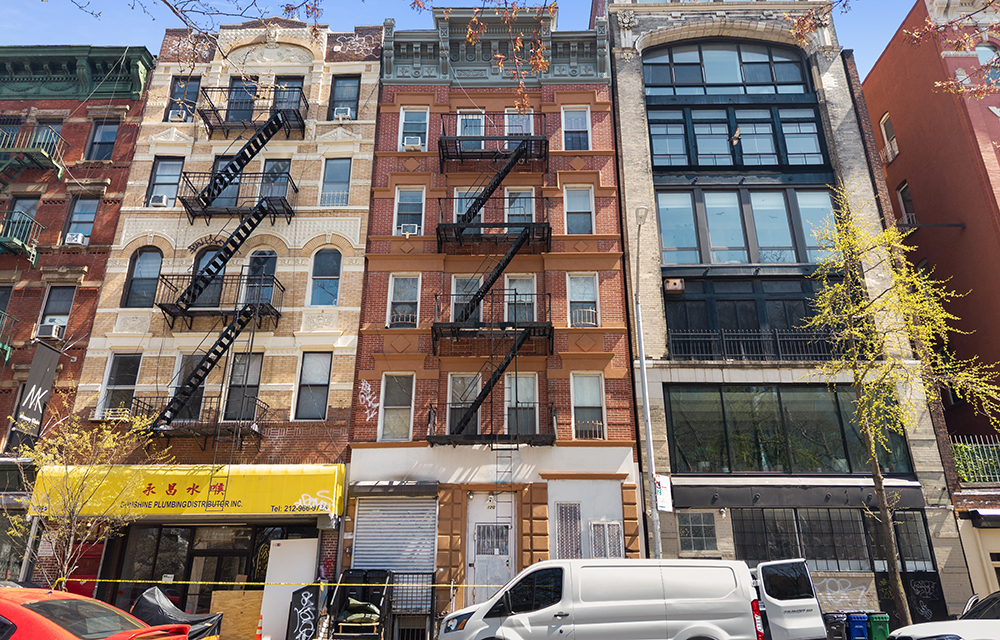
Investment Property Realty Group sells 120 Forsyth St. for $1.35 million
Manhattan, NY Investment Property Realty Group (IPRG) closed the sale of 120 Forsyth St., a mixed-use building located in the Lower East Side section of the city, for $1.35 million.



Quick Hits

Columns and Thought Leadership

Positive forecast for New York’s pro-housing push? - by Philip Butler
New York’s housing crisis remains a hot button topic despite growing consensus that varied and affordable housing is desperately needed statewide. Governor Hochul has recently introduced several initiatives to overcome N.Y.’s anti-housing

Hunt commercial real estate question and answer: Fortune 500 wisdom - by David Hunt
Yes, there are lessons to be learned from the largest companies in America when comes to managing your real estate. But the decision to buy or lease real estate may not be one of

A guide to finding the right NYC property management company - by Sanjay Gandhi
Being a small to midsize landlord in NYC is an increasingly demanding endeavor. From navigating complex regulations, increased compliance demands to dealing with tenant issues and remediating violations. It is wise to enlist the assistance of a partner, a professional

New York’s streets are full again, and the retail numbers prove it - by Noam Aziz
Walk down any New York block this year and you can feel it. The sidewalks are crowded, the storefronts are lit, and the energy that defines this city is back at full volume.
.gif)