



News:
Brokerage
Posted: January 27, 2014
Holland & Knight names Proulx to real estate practice
Holland & Knight has welcomed Paul Proulx to its real estate practice group as a senior counsel in the N.Y. office. Proulx has experience in land use, zoning and development matters and in general real estate transactions. He represents clients before city agencies, such as the board of standards and appeals and the city planning commission, and also on matters with the office of the mayor and city council.
"Paul is an excellent addition to our land use and zoning practice in New York," said Stuart Saft, practice group leader for real estate in New York. "He regularly represents clients before critical agencies in the city and understands the broad scope of development issues, including air rights."
Proulx has played a major role in many developments, including those that involved Landmarks Preservation Commission approval. He has guided entire development teams through special permitting processes in landmark demolition and replacement projects. He also led the consultant team effort to obtain entitlements for a $1 billion, multi-phase development and public-private partnership with the New York City Housing Authority in Astoria, Queens.
"The variety of real estate matters I have handled represents the type of issues that developers in New York City face," said Proulx. "I know how to get the development and entitlement process started and guided to completion. Land use and zoning issues continue to be significant factors for projects of all sizes in New York City."
Proulx earned a J.D. degree from Brooklyn Law School, a master's degree in Urban Planning from the Pratt Institute and an undergraduate degree magna cum laude from the University of Detroit. Before entering private practice, he was land use and economic development counsel to the supervisor of Babylon, N.Y., and an associate counsel to a real estate development company and hotelier.
Tags:
Brokerage
MORE FROM Brokerage
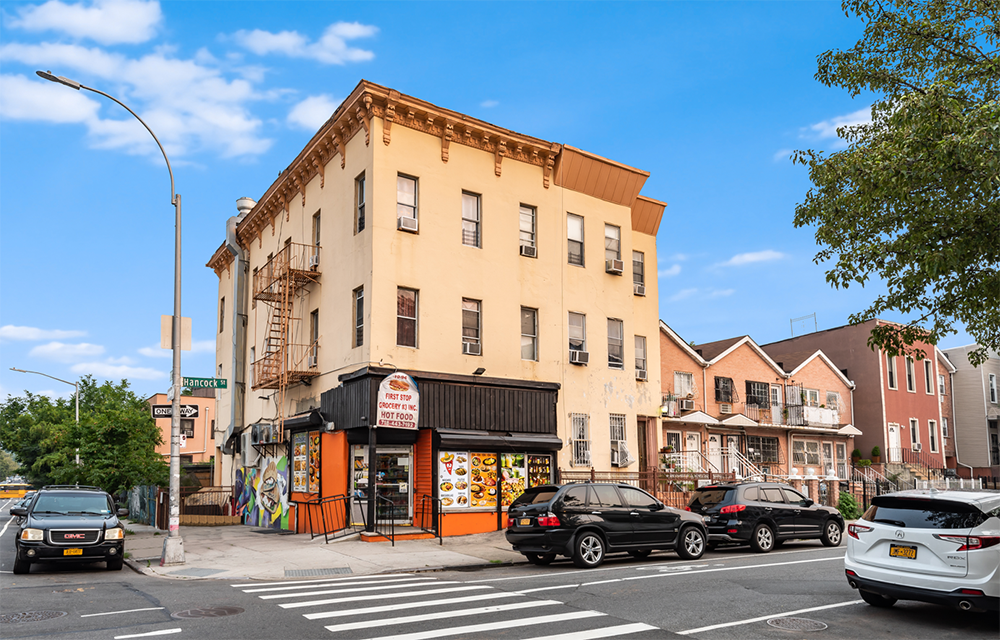
Investment Property Realty Group closes $1.75 million sale of 1094 Hancock Street in Brooklyn
Brooklyn, NY Investment Property Realty Group (IPRG), a New York-based commercial investment firm, has closed the sale of 1094 Hancock St., a mixed-use building in the Bushwick section, for $1.75 million.




Quick Hits
 (2).gif)

Columns and Thought Leadership

A guide to finding the right NYC property management company - by Sanjay Gandhi
Being a small to midsize landlord in NYC is an increasingly demanding endeavor. From navigating complex regulations, increased compliance demands to dealing with tenant issues and remediating violations. It is wise to enlist the assistance of a partner, a professional

Hunt commercial real estate question and answer: Fortune 500 wisdom - by David Hunt
Yes, there are lessons to be learned from the largest companies in America when comes to managing your real estate. But the decision to buy or lease real estate may not be one of

Hunt CRE question and answer: Choosing a real estate agent - by David Hunt
First, we will only work with one agent exclusively. The primary reason is that we want that agent to legally represent our client’s interests. In New York State, a real estate agent has a fiduciary

New York’s streets are full again, and the retail numbers prove it - by Noam Aziz
Walk down any New York block this year and you can feel it. The sidewalks are crowded, the storefronts are lit, and the energy that defines this city is back at full volume.
.gif)