



News:
Brokerage
Posted: November 7, 2008
Forest City Ratner Cos. inks two leases at New York Times building
According to Forest City Ratner Cos., (FCRC) the Government of Flanders, and Autonomy, Inc., have signed leases for space in The New York Times Building at 620 Eighth Ave.
The Government of Flanders, which represents Belgium's Flemish-speaking community of 6 million people, is leasing 7,400 s/f on the 44th floor for an Investment and Trade Office, an Office of Tourism, and Flanders House, dedicated to cultural promotion.
Autonomy, Inc., which utilizes a combination of technologies developed from research conducted at Cambridge University, is leasing 5,375 s/f on the 38th floor.
Bruce Ratner, chairman and CEO of FCRC said, "I'm very pleased that The New York Times Building has been so successful in continuing to attract a diverse group of distinguished tenants, especially in this challenging real estate market."
The Government of Flanders was represented by Andrew Simon, executive managing director at NAI Global New York City and Robert Kluge, associate.
Autonomy, Inc.'s lease was handled by Ross Zimbalist of CB Richard Ellis (CBRE).
FCRC was represented in both transactions by the CBRE brokerage team including CEO Mary Ann Tighe; vice chairman Howard Fiddle; executive VPs Peter Turchin and Tim Dempsey; senior VP Jason Pollen; and senior associate Evan Haskell.
The 1.5 million s/f New York Times Building is jointly owned, as condominiums, by The New York Times Co. and FCRC. The Times Co. owns floors 2 through 27 and FCRC owns floors 29 through 50 and floor 52, as well as 21,000 s/f of retail space on the ground floor. Floors 28 and 51 are jointly owned by The Times Co. and FCRC.
Forest City Ratner Cos. (FCRC), a wholly owned subsidiary of Forest City Enterprises, Inc. owns and operates 32 properties in the New York metropolitan area. Forest City Enterprises, Inc. is a $10.9 -billion NYSE-listed national real estate company. The company is principally engaged in the ownership, development, management and acquisition of commercial and residential real estate and land throughout the U.S.
Tags:
Brokerage
MORE FROM Brokerage
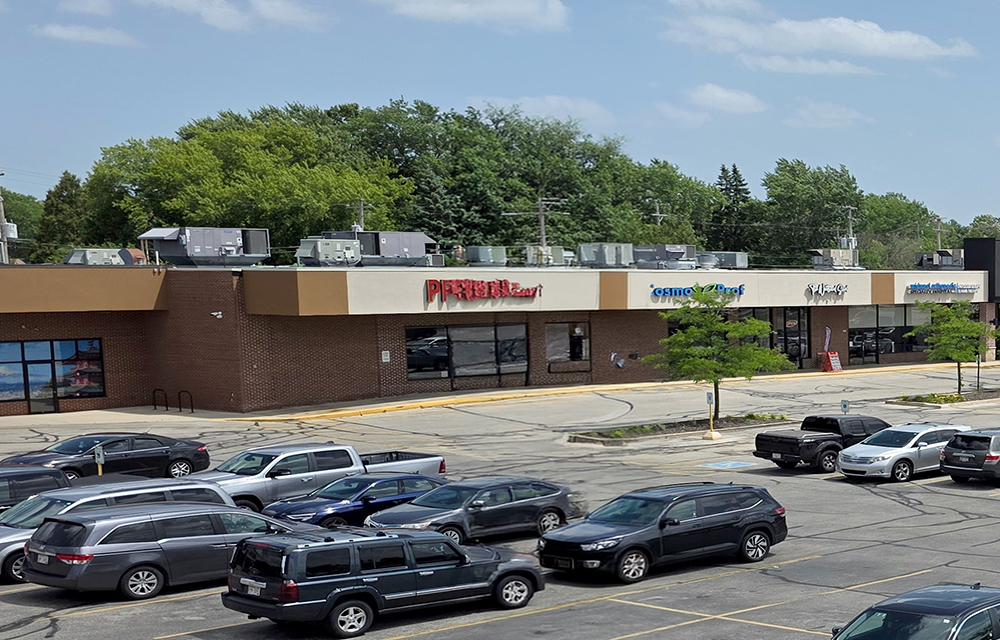
United Properties Corp. expands Wisconsin and Illinois retail presence adding 200,000 s/f
West Allis, WI United Properties Corp. completed two retail acquisitions totaling $27.4 million across Illinois and Wisconsin, adding 205,000 s/f of shopping center space to its portfolio


Quick Hits
 (2).gif)

Columns and Thought Leadership

Hunt commercial real estate question and answer: Fortune 500 wisdom - by David Hunt
Yes, there are lessons to be learned from the largest companies in America when comes to managing your real estate. But the decision to buy or lease real estate may not be one of

New York’s streets are full again, and the retail numbers prove it - by Noam Aziz
Walk down any New York block this year and you can feel it. The sidewalks are crowded, the storefronts are lit, and the energy that defines this city is back at full volume.

Positive forecast for New York’s pro-housing push? - by Philip Butler
New York’s housing crisis remains a hot button topic despite growing consensus that varied and affordable housing is desperately needed statewide. Governor Hochul has recently introduced several initiatives to overcome N.Y.’s anti-housing

A guide to finding the right NYC property management company - by Sanjay Gandhi
Being a small to midsize landlord in NYC is an increasingly demanding endeavor. From navigating complex regulations, increased compliance demands to dealing with tenant issues and remediating violations. It is wise to enlist the assistance of a partner, a professional
.gif)