



News:
Brokerage
Posted: October 15, 2019
Featured Development: Hastings Capital begins 25,560 s/f industrial development project for Queue Solutions
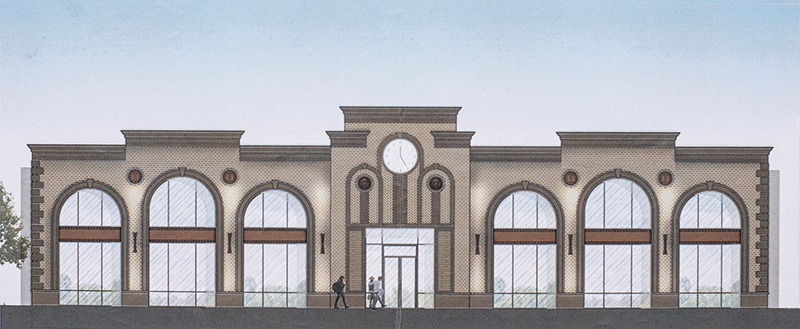
Bohemia, NY According to Hastings Capital, LLC, development is underway for a 25,560 s/f industrial warehouse for Queue Solutions, a PRM Group Co., at 175 Knickerbocker Ave. Queue Solutions has two current warehouses in the area, and was looking to build a new facility from the ground up to accommodate its growing business. The company produces stanchions for crowd control.
“Hastings has been working with Queue Solutions as tenants for ten years. They outgrew the current space but plan to continue to maintain the other two buildings as well,” said Hastings Capital owner Bob Birnbaum. “We were happy to be able to accommodate their need to build from the ground up.”
“Queue Solutions is thrilled to be able to construct a new building in this location. What’s more, we value our working relationship with Hastings Capital and are excited to move in to the building in 2020,” said Richard Prigg, principal of Queue Solutions.
“Queue Solutions manufactures QueuePro retracting belt barriers which feature design innovations in materials, braking technology, belt lock design and base profile. We look forward to completing our new facility in Bohemia so that we can continue to be the leader in customer queue design,” said Pedro Rivera. “We appreciate Bob’s attention to every detail, and are confident that the new facility will meet our growing needs for industrial space.”
The new building is comprised of a one-story warehouse with two loading doors and a tailboard dock. The design features a Beaux-Arts style exterior, high vaulted arched windows in the front – with a bumped out entrance. There is a plaza entry in the front, and the ceiling height will be 22’6” to accommodate industrial uses such as cranes and lifts. Birnbaum was heavily involved the design. The building will be completed in the summer of 2020.
“New construction is still alive and well on Long Island. We hope to work with other companies looking for similar build-to-suit projects,” Birnbaum said.
Project team members included:
- Able DaPonte, Arrow Cement;
- Arditto Construction;
- Randy Augusiewicz, Augusiewicz Contracting;
- Frank Milicia, Milicia Electric;
- RS Painting;
- Alex Weik Contractors;
- Paul Perez, Impact Media Production;
- Nick Romano, managing partner, Metro Realty Services;
- Ira Levine, attorney;
- Vera Spinelli, project coordinator; and
- Kenny Giordano, Six G’s Roofing.
Tags:
Brokerage
MORE FROM Brokerage
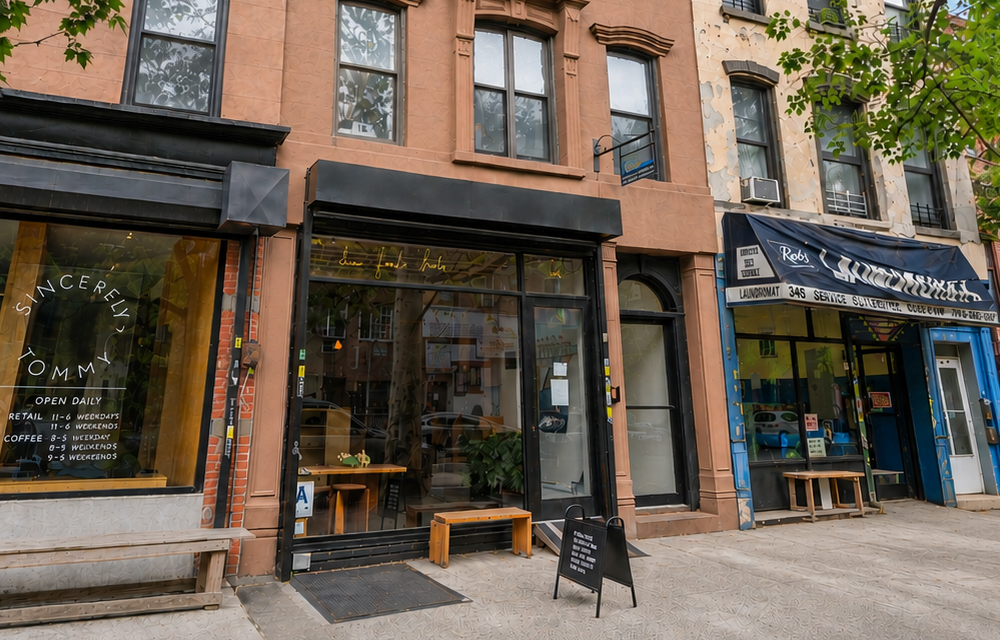
Bestreich, Reynolds, Davila, and Flaherty of Investment Property Realty Group close $1.97 million sale of 343A Tompkins Ave. in Bed-Stuy
Brooklyn, NY Investment Property Realty Group (IPRG) closed the sale of 343A Tompkins Ave., a mixed-use building located in the Bed-Stuy section of the borough, for $1.97 million.


Quick Hits

Columns and Thought Leadership

A guide to finding the right NYC property management company - by Sanjay Gandhi
Being a small to midsize landlord in NYC is an increasingly demanding endeavor. From navigating complex regulations, increased compliance demands to dealing with tenant issues and remediating violations. It is wise to enlist the assistance of a partner, a professional

Hunt commercial real estate question and answer: Fortune 500 wisdom - by David Hunt
Yes, there are lessons to be learned from the largest companies in America when comes to managing your real estate. But the decision to buy or lease real estate may not be one of

New York’s streets are full again, and the retail numbers prove it - by Noam Aziz
Walk down any New York block this year and you can feel it. The sidewalks are crowded, the storefronts are lit, and the energy that defines this city is back at full volume.

Hunt CRE question and answer: Choosing a real estate agent - by David Hunt
First, we will only work with one agent exclusively. The primary reason is that we want that agent to legally represent our client’s interests. In New York State, a real estate agent has a fiduciary
.gif)