



News:
Brokerage
Posted: May 23, 2011
Cuddy of CBRE reps owner in 13,336 s/f lease at the Gateway; Baker of C&W reps tenant, Rabobank
In a transaction arranged by CB Richard Ellis' Westchester/Fairfield operations, Rabobank has expanded and extended its lease at Gateway, a class A office building located at One North Lexington Ave. This expansion will bring Rabobank's total office space in the property to 13,336 s/f.
William Cuddy of CBRE's Westchester/Fairfield operations acted on behalf of the building ownership. Steve Baker of Cushman & Wakefield represented Rabobank in the lease negotiations.
Rabobank extended its lease for an additional 10 years at the property. The Netherlands-headquartered bank, which has a 30-year presence in the U.S., opted for the lease extension and expansion as a result of Gateway One's prime downtown location, building amenities, regional accessibility and commitment to install a co-generation system, which includes a 2,055 KW gas powered generator. The additional back-up power will help Rabobank to assure continuous operation of its data centers.
"The co-generator, which will provide additional back-up power to Rabobank, will also increase the efficiency of the energy production and usage in the building," Cuddy said. By producing a significant portion of the energy consumed within the building locally within the facility, the line loss associated with the transmission of electricity will be mitigated. In addition, the heat energy generated in this process, which would be wasted in a central utility production environment, will be recaptured for heating and cooling the building. Finally, the co-generator will reduce the amount of generating capacity which the utility would otherwise be required to provide.
"Gateway once again leads the pack in innovation and exploiting green technologies," Cuddy said.
Gateway is a 530,000 s/f, class A office building located across from the White Plains Metro-North Train Station and County TransCenter Bus Terminal in downtown White Plains. The property boasts such convenient amenities as a secure adjacent parking garage; a full-service, on-site cafeteria; on-site management headed by Cushman & Wakefield; and 24-hour security. Just 35 minutes outside of Manhattan, Gateway benefits greatly from its surroundings as it is within reach of a number of high-end retail centers and top restaurants.
Tags:
Brokerage
MORE FROM Brokerage
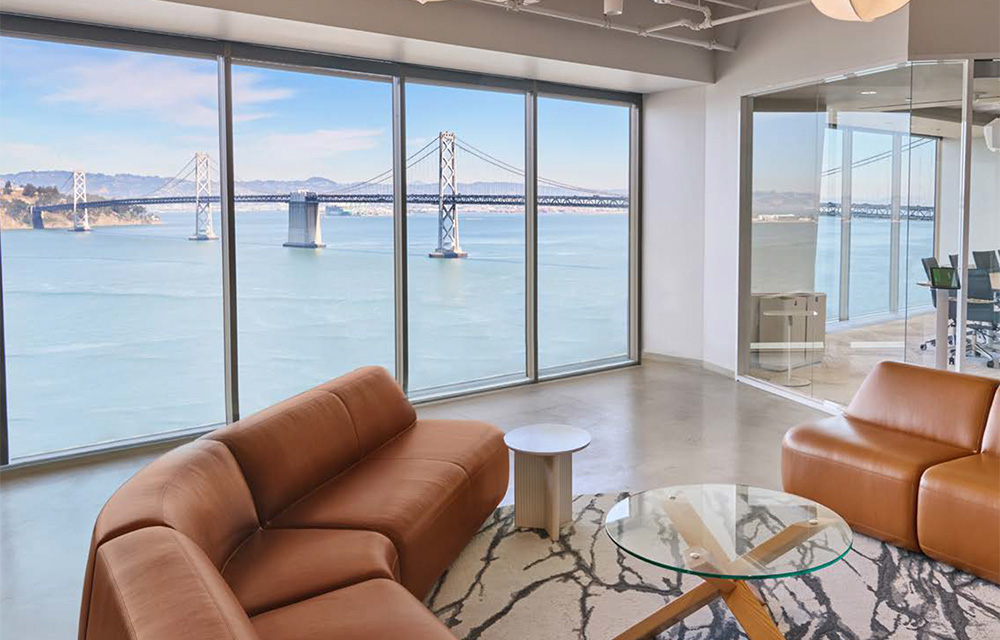
Elecor Properties executes 150,000 s/f of leases at One Market Plaza
San Francisco, CA Elecor Properties has secured four leases comprising 149,914 s/f at One Market Plaza since the beginning of the year, underscoring strong demand for premier office





Quick Hits


Columns and Thought Leadership

A fresh start - by Shallini Mehra and Amit Doshi
For the past several years, the New York City multifamily housing market has been defined by disruption. The combined impact of the HSTPA rent laws and a sharply higher interest rate environment has fundamentally reduced

The death of the generic offering memorandum: What buyers expect in 2025 - by Kimberly Zar Bloorian
There was a time when an offering memorandum (OM) was pretty bare bones, some photos, a few bullet points on income, and a rent roll thrown in at the back. That used to get the job done. Not anymore. In 2025, buyers are sharper, faster, and more selective. They’re looking

The anticipated effect of Basel III and ISO 20022 implementation on commercial real estate - by Michael Zysman
July 1, 2025 is the deadline for US banks to begin to adopt Basel III banking standards and July 14, 2025 is the deadline for U.S. banks to adopt ISO 20022 messaging standards. Both will have a significant effect on the banking and commercial real estate (CRE) finance sectors.

Tri-state capital migrates nationally amid regulation pressure - by Reese Weaver
New York tri-state multifamily investors are increasingly reallocating capital to less-regulated markets across the U.S. as rent control and legislative risk erode returns at home. With over 60% of New York City’s rental housing stock classified as rent-stabilized, the traditional value-add model — buying under-performing buildings,
.gif)