



News:
Brokerage
Posted: June 24, 2025
Commercial real estate comes together to fight heart disease - by Peter Riguardi
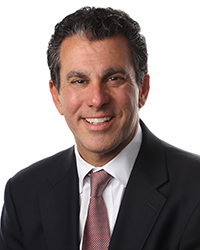
Every year, more than 350,000 people suffer a cardiac arrest outside of hospital – less than half get life-saving treatment that could double, or even triple, their chance of survival. The American Heart Association (AHA) aims to change that and JLL is proud to be leading the city’s real estate industry in supporting this effort.
With over 100 years of lifesaving service, the AHA is building momentum across the country to turn bystanders into lifesavers, teaching them to administer CPR and to use defibrillators, known as AEDs, during life-threatening emergencies.
Cardiovascular disease is the leading cause of death among Americans. It’s responsible for around 436,000 U.S. deaths per year – more than cancer, accidents, and infectious diseases combined. It can cause both heart attacks and cardiac arrest, two distinct conditions that are often confused: a heart attack occurs when blood-flow to the heart is blocked, while cardiac arrest happens when the heart suddenly stops beating.
Cardiopulmonary resuscitation (CPR) after cardiac arrest can keep blood flowing to the heart and brain for a time. But, in many cases, only defibrillation can restore the heartbeat. Together these treatments can radically improve the chances of survival.
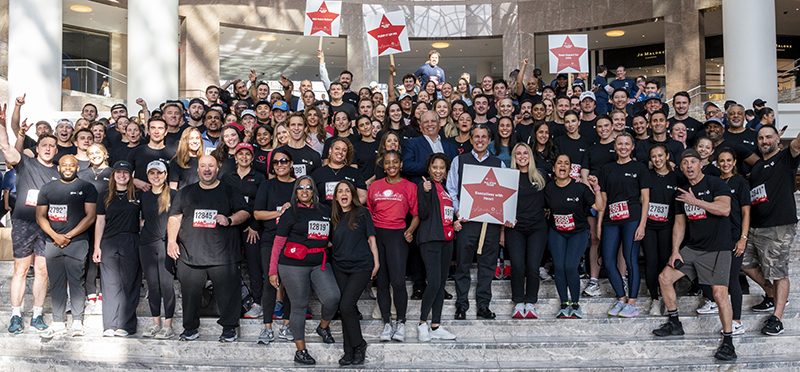
This year, New York City’s commercial real estate industry is working with the AHA to raise awareness of the thousands of cardiac arrests that occur in the workplace and the promotion of CPR and AED training to support the association’s goal to double survival rates by 2030.
Survey data from the AHA shows that 39% of US adults feel they have the confidence to perform CPR – up from 30% in 2023, but still a critically low number. The skill to perform CPR and use a defibrillator are the foundational components of preparing bystanders to respond to cardiac arrest. People also need to feel emotionally prepared to respond and be able to cope with the aftermath of actually performing CPR.
The AHA offers multiple ways to learn CPR and join its nation of lifesavers, as an individual, family, organization or community.
Hands-Only CPR has just two simple steps, performed in this order: 1) Call 911 if you see a teen or adult suddenly collapse; and 2) Push hard and fast in the center of the chest to the beat of a familiar song that has 100 to 120 beats per minute like “Stayin’ Alive” by the BeeGees, “The Man” by Taylor Swift or “Jolene” – with both Dolly Parton and Beyonce’s versions being the correct beats per minute.
Immerse yourself. Through the Association’s new VR app, learn how to perform Hands-Only CPR and use an AED, then put your skills to the test in three real-life scenarios.
Learn at home. Learn basic lifesaving skills in about 20 minutes from the comfort and privacy of home with the CPR Anytime kits. The Infant CPR Anytime program is for new parents, grandparents, babysitters, nannies and anyone who wants to learn lifesaving infant CPR and choking relief skills.
The Adult & Child CPR Anytime Training kit teaches adult/teen Hands-Only CPR, child CPR with breaths, adult and child choking relief and general awareness of automated external defibrillators – or AEDs. CPR Anytime now includes the Adult & Child CPR Anytime Interactive app to provide a comprehensive, self-facilitated training solution in one web-based app that allows students to elevate their CPR and AED training experience through gamification.
Take a course. Find a class nearby to learn the lifesaving skills of CPR, first aid and AED use. Encourage others by sharing on social media with #NationofLifesavers.
Turn employees and coworkers into lifesavers. Help make your workplace and community safer one step at a time by forming a Heart Walk team and committing to CPR training for your employees.
Become an advocate. Join You’re the Cure, the American Heart Association grassroots network and show your support for public policies that can save lives from cardiac arrest. Together with the Smart Heart Sports Coalition, the Association is working to pass laws in all 50 states that will ensure schools, school athletic facilities and school events have a cardiac emergency response plan and require training in CPR and AED for school athletic coaches.
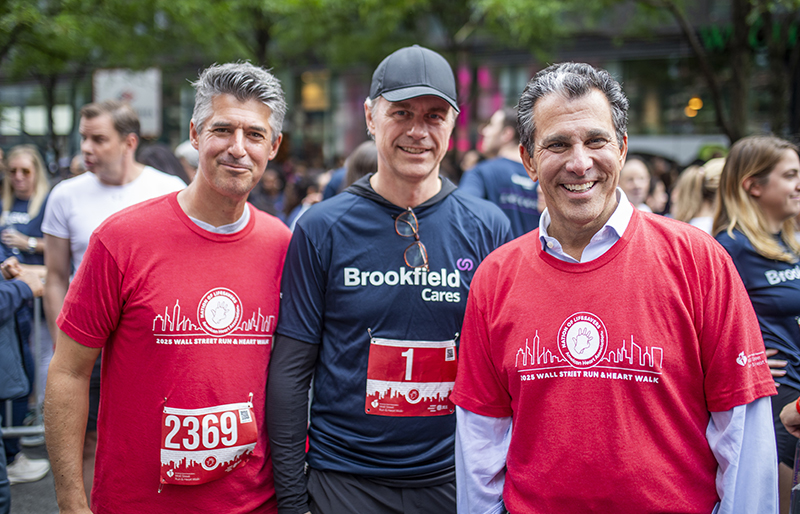
Since 2012, 11 million people have learned CPR from the American Heart Association via events, training kiosks and video education. This year, New York City’s commercial real estate industry is supporting the New York City Heart Challenge, participating in a range of fundraisers and CPR and AED training events.
For more information or to get involved in upcoming events, visit www.heart.org or contact the American Heart Association at 212-878-5900. Together, we can create a healthier, heart-safe future for all.
Peter Riguardi is serving as 2025 chair of the American Heart Association (AHA)’s 2025 New York City Heart Challenge and is chairman and president of JLL New York region, Manhattan, N.Y.
Tags:
Brokerage
MORE FROM Brokerage
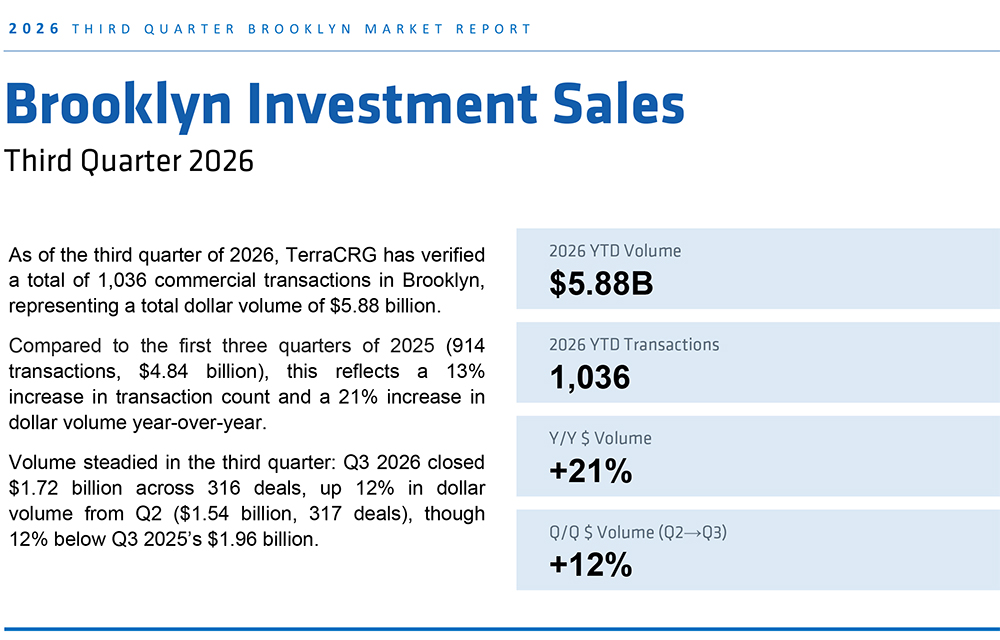
TerraCRG releases 3Q 2026 Brooklyn Market Report: Investment sales reach $5.88 billion tear-to-date, up 21%
Brooklyn, NY TerraCRG released its 3Q 2026 Brooklyn Market Report. Through the first three quarters of 2026, TerraCRG verified 1,036 commercial investment sales in Brooklyn





Quick Hits
 (2).gif)

Columns and Thought Leadership

New York’s streets are full again, and the retail numbers prove it - by Noam Aziz
Walk down any New York block this year and you can feel it. The sidewalks are crowded, the storefronts are lit, and the energy that defines this city is back at full volume.

Hunt commercial real estate question and answer: Fortune 500 wisdom - by David Hunt
Yes, there are lessons to be learned from the largest companies in America when comes to managing your real estate. But the decision to buy or lease real estate may not be one of

The art of investing in real estate - by Thomas Donovan
Real estate investing is as much an art as it is a skill. No one can time the market, or the factors that drive it, perfectly. Location, zoning, size, transportation, and neighborhood density give you a baseline for

Hunt CRE question and answer: Choosing a real estate agent - by David Hunt
First, we will only work with one agent exclusively. The primary reason is that we want that agent to legally represent our client’s interests. In New York State, a real estate agent has a fiduciary
.gif)