



News:
Brokerage
Posted: April 14, 2026
Blairs of Cushman & Wakefield lease 8,841 s/f office space to Zoller Equity Partners at 600 Lexington Ave.
Manhattan, NY According to Cushman & Wakefield, Zoller Equity Partners LLC signed a seven-year, 8,841 s/f lease at 600 Lexington Ave. in Midtown’s Plaza District.
Harry Blair and Harry Blair IV of Cushman & Wakefield represented the landlord, Lex NY Equities, LLC, while Jason Greenstein and Dylan Weissman of Newmark negotiated on behalf of Zoller.
“Financial services firms are making deliberate decisions about where they operate,” said the property’s landlord, George Cantrell, president of Capitol Crossing Advisors. “600 Lexington delivers what matters – premier Plaza District positioning, efficient floor plates, and solid ownership that is committed to the asset. Zoller Equity Partners’ lease reflects continued demand for quality buildings that support long-term growth.”
“One of the defining strengths of 600 Lexington is ownership’s ability to make thoughtful, timely decisions,” said Blair, executive managing director at Cushman & Wakefield. “They are pragmatic, broker-friendly, and focused on getting transactions done. That clarity and efficiency make a meaningful difference in competitive situations.”
600 Lexington Ave. is a Class A office tower located at the corner of Lexington Ave. and East 52nd St. The property has efficient floor plates and access to Grand Central Terminal and multiple subway lines. Amenities include a second-floor tenant lounge with a golf simulator, as well as a concourse level fitness center with locker rooms and showers.
Zoller Equity Partners LLC is a private equity-focused advisory firm specializing in GP seeding, private fund placement, and strategic investor relations. The firm’s relocation to 600 Lexington Avenue supports its continued expansion and positions it in the heart of Midtown’s core financial corridor
MORE FROM Brokerage
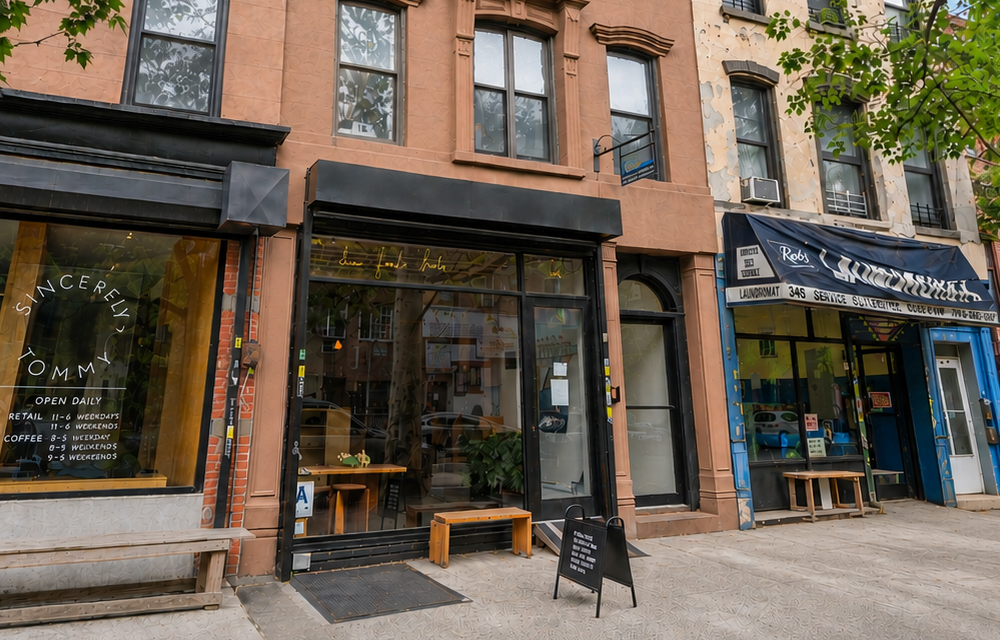
Bestreich, Reynolds, Davila, and Flaherty of Investment Property Realty Group close $1.97 million sale of 343A Tompkins Ave. in Bed-Stuy
Brooklyn, NY Investment Property Realty Group (IPRG) closed the sale of 343A Tompkins Ave., a mixed-use building located in the Bed-Stuy section of the borough, for $1.97 million.


Quick Hits
 (2).gif)

Columns and Thought Leadership

New York’s streets are full again, and the retail numbers prove it - by Noam Aziz
Walk down any New York block this year and you can feel it. The sidewalks are crowded, the storefronts are lit, and the energy that defines this city is back at full volume.

Hunt commercial real estate question and answer: Fortune 500 wisdom - by David Hunt
Yes, there are lessons to be learned from the largest companies in America when comes to managing your real estate. But the decision to buy or lease real estate may not be one of

A guide to finding the right NYC property management company - by Sanjay Gandhi
Being a small to midsize landlord in NYC is an increasingly demanding endeavor. From navigating complex regulations, increased compliance demands to dealing with tenant issues and remediating violations. It is wise to enlist the assistance of a partner, a professional

Hunt CRE question and answer: Choosing a real estate agent - by David Hunt
First, we will only work with one agent exclusively. The primary reason is that we want that agent to legally represent our client’s interests. In New York State, a real estate agent has a fiduciary
.gif)