



News:
Brokerage
Posted: August 25, 2008
Manhattan office market update: Vacancy remains low, but Wall Street job cuts expected
Following an extended period of strengthening property fundamentals, the Manhattan office market is now faced with some near-term uncertainty. Employment, the key determinant of space demand, remains positive when viewed during the past 12 months. Recent reductions by Wall Street firms, however, have yet to be fully accounted for in current statistics. Vacancy has inched up recently as a result of decelerated leasing activity, and rent gains have slowed from the extreme pace of growth recorded in 2007, due in large part to competition from available sublease space. Unlike the last economic slowdown, many tenants may decide to retain their excess space rather than pay higher rents under new leases when they expand. Alternatively, some tenants could attempt to capture some of the value of unused space, especially if the economic downturn further erodes profitability.
By the numbers, citywide, employers are projected to trim 14,000 jobs from payrolls this year, compared to a gain of 44,600 new hires in 2007. One year after adding 31,100 positions, employers in Manhattan will cut 10,000 jobs in 2008, including 12,000 office-using workers. Builders completed 708,000 s/f of competitive for-lease office space in 2007, but deliveries will increase to 2.3 million s/f this year. Most of the space is attributable to the One Bryant Park project, which is 96% pre-leased. Expected staffing cuts in the securities industry will curtail office space demand, leading to a 60 basis point jump in the vacancy rate to a still-tight 6.2% by year-end 2008. Despite easing demand, owners are unlikely to cede ground to tenants in the near term.
Asking rents are forecast to climb 6.2% this year to $67.52 per s/f, and effective rents will add 6.4% to $59.94 per s/f. Subdued rent growth and greater concessions are expected in 2009. Concessions in the Downtown submarket are currently 11.7% of asking rents, down from more than 13% one year ago. Future rent growth may come under pressure, though, due to the availability of sublease space.
A total of 1 million s/f of sublease space is being marketed at 77 Water St. and 7 World Trade Center. Construction continues on two speculative office buildings: 11 Times Sq., which measures 1.1 million s/f, and the 350,000 s/f 510 Madison Ave. Both projects are slated for completion in 2009. Midtown buildings continue to account for more than half of all assets sold in Manhattan. During the past 12 months, the median price in Midtown has risen 28% to $627 per s/f, although the median price in the last six months was $822 per s/f. Much of the activity since the beginning of the year has involved class B/C properties.
Despite softer demand, office property transactions continue to be executed, albeit at a slower pace than a year ago. Cap rates for recent deals have ranged from 4.5% to 5%, while new listings are pricing at rates in the low-5% area. First-year rates of return are expected to inch up in the quarters ahead, slowing the pace of price appreciation as investors adjust assumptions concerning future space demand and rent growth. Despite recent credit market disruptions, the median price of properties sold has risen 27% during the past 12 months, led by a surge in the price of class B/C assets to $628 per s/f. Much of the gain in the median price for lower-tiered assets has occurred in the last six months. Class A properties have traded at a median price of $721 per s/f year over year, an increase of 12% from the preceding 12-month period. Foreign investors especially have stepped up their acquisitions of top assets in the borough.
Edward Jordan is the regional manager of the Manhattan and New Haven offices of Marcus & Millichap Real Estate Investment Services.
Tags:
Brokerage
MORE FROM Brokerage

AmTrustRE secures 5,754 s/f lease with GKV Architects at 360 Lexington Avenue
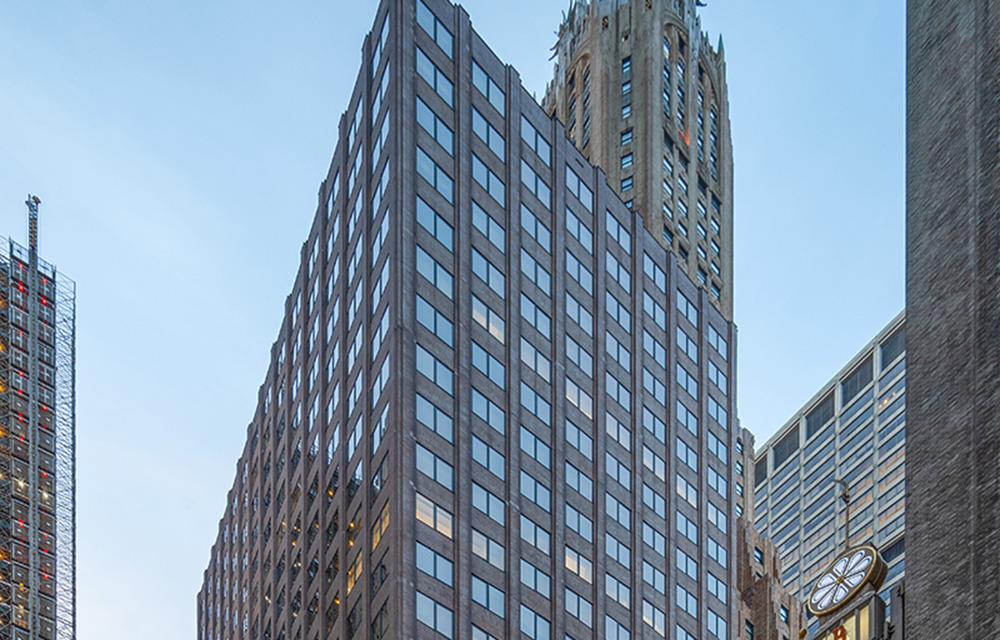
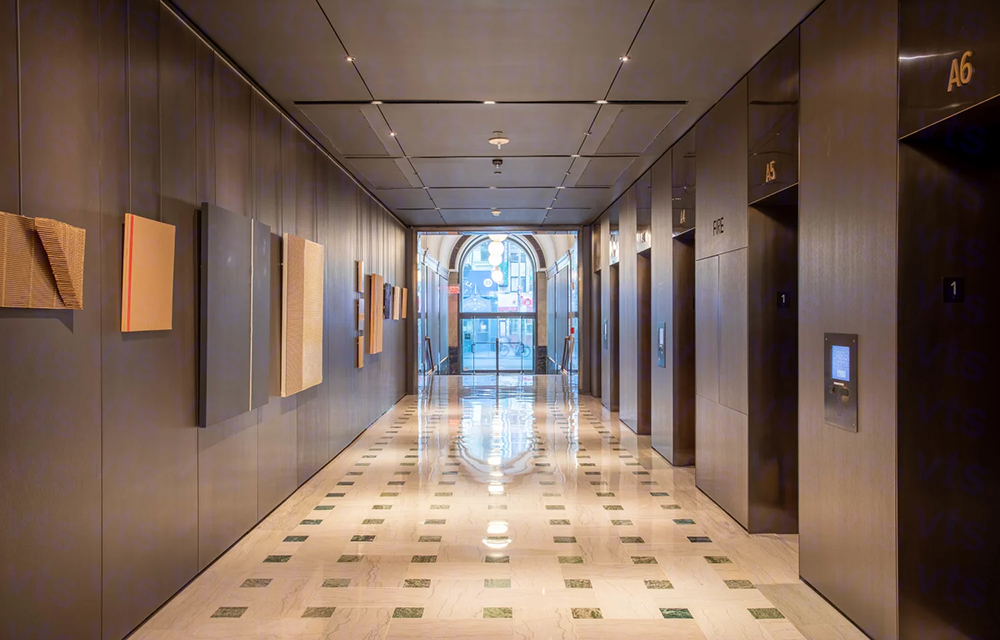
Manhattan, NY AmTrustRE has executed a 5,754 s/f lease at its premier boutique Midtown East office tower, 360 Lexington Ave., with longtime partner GKV Architects. The award-winning firm will occupy a portion of the 14th floor. >“GKV Architects has been a trusted partner to AmTrustRE for over two decades, playing an integral role in shaping and elevating several





Columns and Thought Leadership

The anticipated effect of Basel III and ISO 20022 implementation on commercial real estate - by Michael Zysman
July 1, 2025 is the deadline for US banks to begin to adopt Basel III banking standards and July 14, 2025 is the deadline for U.S. banks to adopt ISO 20022 messaging standards. Both will have a significant effect on the banking and commercial real estate (CRE) finance sectors.

A fresh start - by Shallini Mehra and Amit Doshi
For the past several years, the New York City multifamily housing market has been defined by disruption. The combined impact of the HSTPA rent laws and a sharply higher interest rate environment has fundamentally reduced

The death of the generic offering memorandum: What buyers expect in 2025 - by Kimberly Zar Bloorian
There was a time when an offering memorandum (OM) was pretty bare bones, some photos, a few bullet points on income, and a rent roll thrown in at the back. That used to get the job done. Not anymore. In 2025, buyers are sharper, faster, and more selective. They’re looking

Tri-state capital migrates nationally amid regulation pressure - by Reese Weaver
New York tri-state multifamily investors are increasingly reallocating capital to less-regulated markets across the U.S. as rent control and legislative risk erode returns at home. With over 60% of New York City’s rental housing stock classified as rent-stabilized, the traditional value-add model — buying under-performing buildings,
