



News:
Brokerage
Posted: October 1, 2007
Whatever happened to Greenwich Village?
While always considered a prime residential neighborhood, the phrase "Greenwich Village," as an area description, has quietly fallen into the backdrop of its more talked about offsprings, the West Village, The Meat Packing District, and the East Village, which have now all taken center stage.
Residents, developers, brokers and owners, alike, have blurred the lines of demarcation, as various parts of this area become more popular and the real estate much more valuable.
Greenwich Village, sometimes, also called simply the Village, is a largely residential area of downtown Manhattan in New York City. The neighborhood of Greenwich Village, is actually bounded by Broadway on the east, the Hudson River on the west, Houston St. (pronounced House-ton) on the south, and 14th St. on the north.
The neighborhoods surrounding it are the East Village to the east, SoHo to the south, and Chelsea to the north. Stretching from the East River towards the Hudson River to the west, what was once limited to Greenwich Village, "The Village," now encompasses several neighborhoods, including a core Greenwich Village neighborhood and an East and West Village spreading out from the epicenter in either direction. Today, the neighborhood has spread out from its roots and is moving north toward Chelsea on the west side.
The East Village, which was formerly known as the Bowery is actually part of the Lower East Side. It is sometimes incorrectly referred to as part of Greenwich Village, but it is actually its own neighborhood. The East Village's boundaries are the East River to Broadway, north to 14th St. and south to Houston St. This area directly east of Greenwich Village was coined the East Village in the '80s in order to capitalize on the cachet of Greenwich Village Proper and separate itself from the negative image of the Bowery.
Many Manhattanites argue that the East Village is still a subsection of the Lower East Side. Contrarily, the West Village is actually part of Greenwich Village. It is that part of the Village that is west of Seventh Ave. To be even more technical, the Meatpacking District is actually a part of the West Village. If we were to summarize, then, there are actually only two "villages:" Greenwich Village and the East Village.
The West Village is the western portion of Greenwich Village, bounded by the Hudson River on the west and Seventh Avenue to the east, extending north from 14th Street, and south down to Houston Street. Bordering neighborhoods include Chelsea to the north, SoHo to the south, and the center, or Greenwich Village Proper, to the east.
The Meatpacking District, also known as Gansevoort Market, and the Far West Village, runs from West 15th Street, (technically Chelsea ), south to Gansevoort Street, and from the Hudson River east to Hudson Street. It is actually a subsection of the West Village.
It is with great regard that Greenwich Village can boast that, due to its popularity and charm, it has actually evolved into smaller villages, each as exciting, yet still related to, the original Greenwich Village. They say it takes a village to raise a child. Manhattan has many villages and they are flourishing with families, who have chosen to remain here. Trading the suburbs for the Village, takes confidence in the future of Manhattan. It is because of this tightness and connectedness, that Greenwich Village and all of its offspring , continue to be the gateway to New York City's downtown living.
Adelaide Polsinelli is a senior executive broker, with the Platinum Team of Besen & Associates, Inc. New York, N.Y.
Tags:
Brokerage
MORE FROM Brokerage
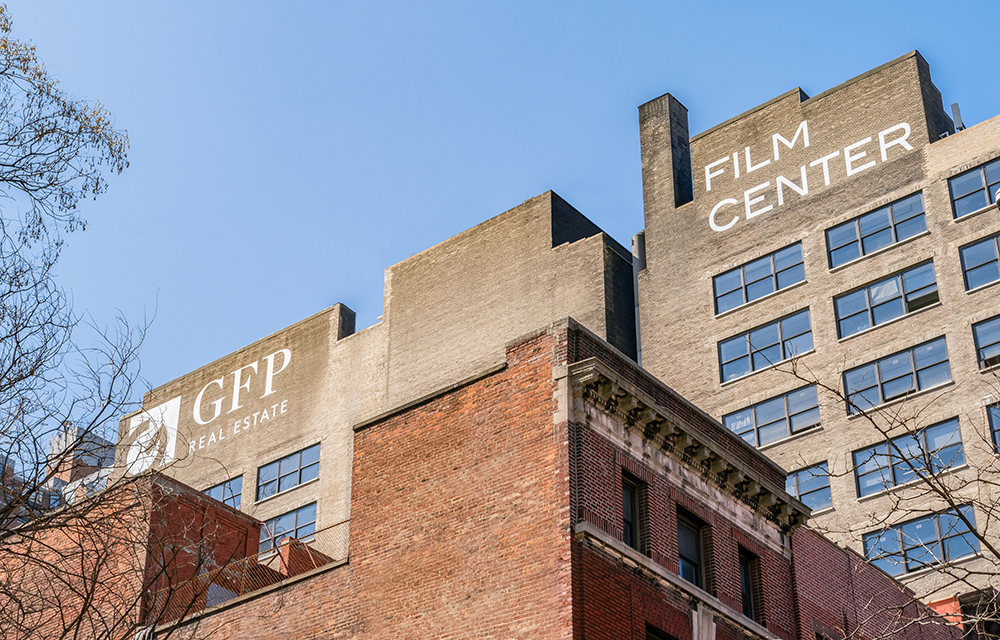
GFP Real Estate signs 11,078 s/f of leasing activity at 630 Ninth Ave.
Manhattan, NY GFP Real Estate closed three office leasing transactions totaling 11,078 s/f at 630 Ninth Ave. in Midtown, including a new lease with Irish Arts Center and extensions by existing


Quick Hits
 (2).gif)

Columns and Thought Leadership

New York’s streets are full again, and the retail numbers prove it - by Noam Aziz
Walk down any New York block this year and you can feel it. The sidewalks are crowded, the storefronts are lit, and the energy that defines this city is back at full volume.

Hunt commercial real estate question and answer: Fortune 500 wisdom - by David Hunt
Yes, there are lessons to be learned from the largest companies in America when comes to managing your real estate. But the decision to buy or lease real estate may not be one of

Positive forecast for New York’s pro-housing push? - by Philip Butler
New York’s housing crisis remains a hot button topic despite growing consensus that varied and affordable housing is desperately needed statewide. Governor Hochul has recently introduced several initiatives to overcome N.Y.’s anti-housing

A guide to finding the right NYC property management company - by Sanjay Gandhi
Being a small to midsize landlord in NYC is an increasingly demanding endeavor. From navigating complex regulations, increased compliance demands to dealing with tenant issues and remediating violations. It is wise to enlist the assistance of a partner, a professional
.gif)
September Promotion
