



News:
Brokerage
Posted: February 18, 2020
Turnbridge Equities acquires 240,000 s/f dist. center for $23.5 million
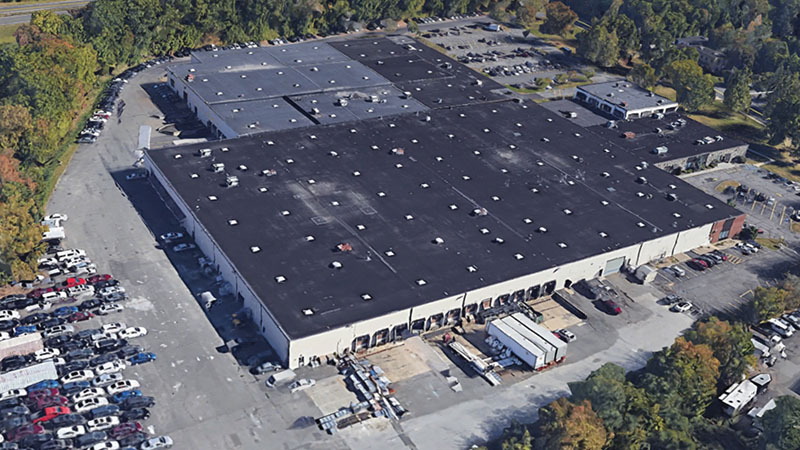
West Nyack, NY In an off-market transaction, Turnbridge Equities has purchased a 240,000 s/f distribution and office center at 250 West Nyack Rd., about 20 miles north of New York City, in Rockland County.
The property was acquired from a local partnership for $23.5 million. A major upgrading and a repositioning are planned.
Debt financing for the acquisition was provided by CIT Bank. Gina Mavica, partner at Baker Hostetler, represented Turnbridge in the transaction. Tom Cisco and Joel Feinberg of Feinberg Bros. represented Turnbridge and Bert Distelburger of Georgetown Investing represented the seller.
Situated on 15 acres, the center consists of 210,000 s/f of distribution and warehouse space and 30,000 s/f of offices. The property features five loading docks, 20’+ clear heights, 42’ x 42’ column spacing, and potential for several drive-in doors. It is currently 96% leased.
Upgrading plans include a new roof, new asphalt, solar panels, and exterior and aesthetic upgrades.
“Our immediate goal is two-fold,” said Turnbridge managing principal Ryan Nelson. “It is to upgrade the property to a class A facility with significant physical improvements, and to bring institutional standards of management and leasing to a property that is extremely well-located to serve today’s demanding last-mile delivery environment. We plan to reposition this property to achieve its full potential.”
Noting that the New York Thruway, Garden State Pkwy., Palisades Pkwy., and the Mario Cuomo (Tappan Zee) and George Washington Bridges are all minutes from the property, Nelson says the distribution center enables its tenants to reach some 15 million people comprising the entire Greater New York Metropolitan area.
“Light industrial property in the submarkets immediately outside of New York City will be big beneficiaries of the strong rent growth we’ve seen in the boroughs,” said Nelson. “We’ve now grown our last-mile portfolio to over three million square feet and believe that this property, and its close proximity to large and affluent population centers, will help us capitalize on the explosive growth of e-commerce and same-day delivery and the scarcity of supply to accommodate those users.”
Tags:
Brokerage
MORE FROM Brokerage

Adirondack Capital Partners arranges $45 million sale of West Chelsea development site to Toll Brothers
Manhattan, NY Adirondack Capital Partners (ACP) closed the $45 million sale of 126/128 Tenth Ave. and 456 W. 18th St. to Toll Brothers City Living. The acquisition forms part of a broader





Quick Hits
 (2).gif)

Columns and Thought Leadership

Hunt commercial real estate question and answer: Fortune 500 wisdom - by David Hunt
Yes, there are lessons to be learned from the largest companies in America when comes to managing your real estate. But the decision to buy or lease real estate may not be one of

New York’s streets are full again, and the retail numbers prove it - by Noam Aziz
Walk down any New York block this year and you can feel it. The sidewalks are crowded, the storefronts are lit, and the energy that defines this city is back at full volume.

A guide to finding the right NYC property management company - by Sanjay Gandhi
Being a small to midsize landlord in NYC is an increasingly demanding endeavor. From navigating complex regulations, increased compliance demands to dealing with tenant issues and remediating violations. It is wise to enlist the assistance of a partner, a professional

Positive forecast for New York’s pro-housing push? - by Philip Butler
New York’s housing crisis remains a hot button topic despite growing consensus that varied and affordable housing is desperately needed statewide. Governor Hochul has recently introduced several initiatives to overcome N.Y.’s anti-housing
.gif)