



News:
Brokerage
Posted: February 10, 2026
Tishman Speyer secures headquarters lease with Graphite
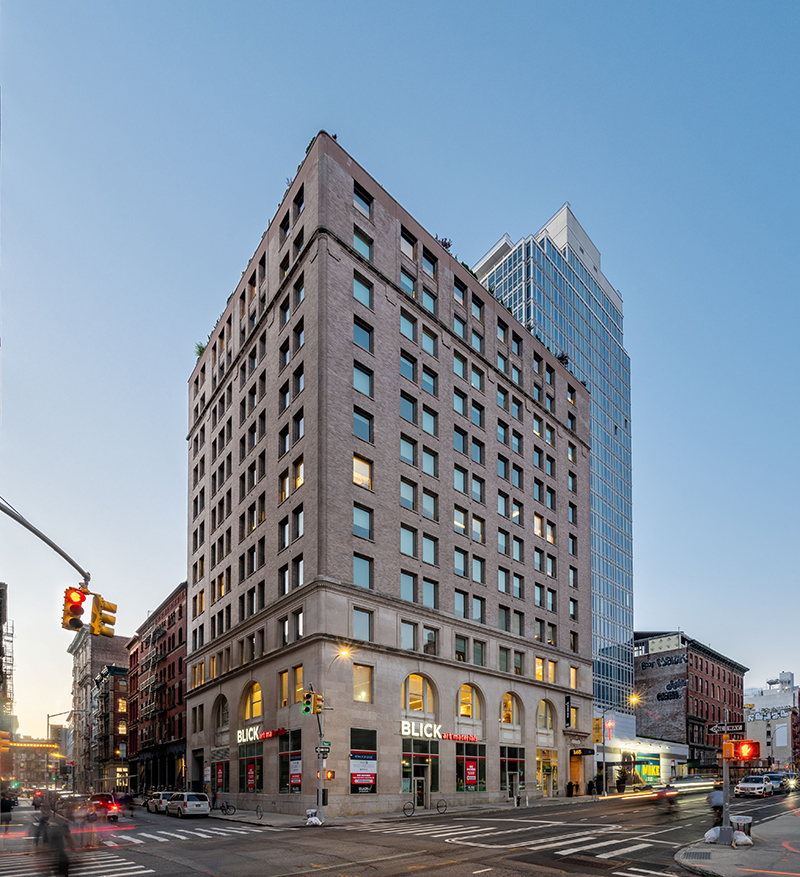 Manhattan, NY According to Tishman Speyer, AI code review platform Graphite will establish a new headquarters at 148 Lafayette St., its 12-story Class A office tower in the borough’s SoHo neighborhood.
Graphite will occupy 24,829 s/f across the entire sixth and seventh floors at 148 Lafayette. The software developer will more than triple its current 7,000 s/f footprint when it moves from 434 Bdwy.
Tishman Speyer was represented in-house by Samantha Augarten. Graphite was represented by Jon Franzel and Leo Kone of Newmark.
Tishman Speyer acquired 148 Lafayette in June 2025, its first office acquisition in New York City since 2019 and first in the United States since 2021. The boutique office building is now fully leased to a diverse range of companies across the finance, fashion, beauty and e-commerce industries.
“We acquired 148 Lafayette with the conviction that demand remains strong for top-quality, well-located office properties,” said Tishman Speyer senior managing director Chris Shehadeh. “Our ability to lease these two floors almost immediately after becoming available reinforces that confidence.”
Built in 1913 and renovated in 2017, the 153,000 s/f tower features efficient floor plates, light-filled workspaces, 12-foot ceiling heights, two outdoor terraces and great city views. Tishman Speyer plans to undertake targeted enhancements to the lobby and elevators.
Located on the corner of Lafayette and Howard Sts., 148 Lafayette is near seven subway lines. The property is also situated in proximity to SoHo’s range of lresidences, as well as shopping, dining, educational and cultural venues.
Notable office customers at 148 Lafayette include venture capital firm General Catalyst and beauty and cosmetics firm Charlotte Tilbury. The building’s street-level retail is fully occupied by boxing gym Five Points Academy and clothing store 260 Sample.
Tags:
Brokerage
New York City
MORE FROM Brokerage

Adirondack Capital Partners arranges $45 million sale of West Chelsea development site to Toll Brothers
Manhattan, NY Adirondack Capital Partners (ACP) closed the $45 million sale of 126/128 Tenth Ave. and 456 W. 18th St. to Toll Brothers City Living. The acquisition forms part of a broader






Quick Hits

Columns and Thought Leadership

Positive forecast for New York’s pro-housing push? - by Philip Butler
New York’s housing crisis remains a hot button topic despite growing consensus that varied and affordable housing is desperately needed statewide. Governor Hochul has recently introduced several initiatives to overcome N.Y.’s anti-housing

Hunt commercial real estate question and answer: Fortune 500 wisdom - by David Hunt
Yes, there are lessons to be learned from the largest companies in America when comes to managing your real estate. But the decision to buy or lease real estate may not be one of

New York’s streets are full again, and the retail numbers prove it - by Noam Aziz
Walk down any New York block this year and you can feel it. The sidewalks are crowded, the storefronts are lit, and the energy that defines this city is back at full volume.

A guide to finding the right NYC property management company - by Sanjay Gandhi
Being a small to midsize landlord in NYC is an increasingly demanding endeavor. From navigating complex regulations, increased compliance demands to dealing with tenant issues and remediating violations. It is wise to enlist the assistance of a partner, a professional
.gif)