



News:
Brokerage
Posted: July 17, 2026
Taft takes full floor at The Durst Organization’s 1155 Avenue of The Americas
Manhattan, NY According to the Durst Organization, national law firm Taft signed a lease at 1155 Avenue of the Americas for the entire 16,563 s/f 24th floor to launch its New York office.
“1155 Avenue of the Americas is one of Midtown’s premier buildings, ideally located near Bryant Park and multiple transit hubs. We are sincerely grateful Taft has decided to call 1155 home,” said Jody Durst, president of The Durst Organization.
One of the fastest-growing law firms in the country, Taft has more than 1,250 attorneys across 25 offices and revenues exceeding $1 billion. Taft plans to scale its New York presence to more than 100 lawyers over the next five years, consistent with its size in existing primary markets.
“New York was the biggest missing piece for Taft as we continue to build a firm that truly serves clients nationwide,” said Taft firmwide chairman and managing partner, Robert Hicks. “This is the perfect spot for us to get started in New York and establish a strong foundation for continued growth.”
1155 Avenue of the Americas, a 42-story office tower in Midtown, stands on the western blockfront of Avenue of the Americas between 44th and 45th St., within the Bryant Park submarket. Other tenants at 1155 Avenue of the Americas include Global Relay, Perkins Coie, Jenner & Block, and TransUnion.
The Durst Organization completed a $130 million transformation at the property with significant architectural enhancements including a unique landscaped entry plaza on West 44th St., an award-winning light-filled lobby with reception desks clad in distinctive back-lit sea glass, turnstile security access, destination dispatch elevator controls, newly appointed elevator cabs, and luminous chamfered corners featuring 9-ft. tall windows on all four corners of the tower floors.
The Durst Organization was represented in house by Tom Bow, Rocco Romeo, and Nora Caliban. Taft was represented by Sheena Gohil, Andrew Urban, and Jack Senske of Colliers.
Tags:
Brokerage
New York City
MORE FROM Brokerage
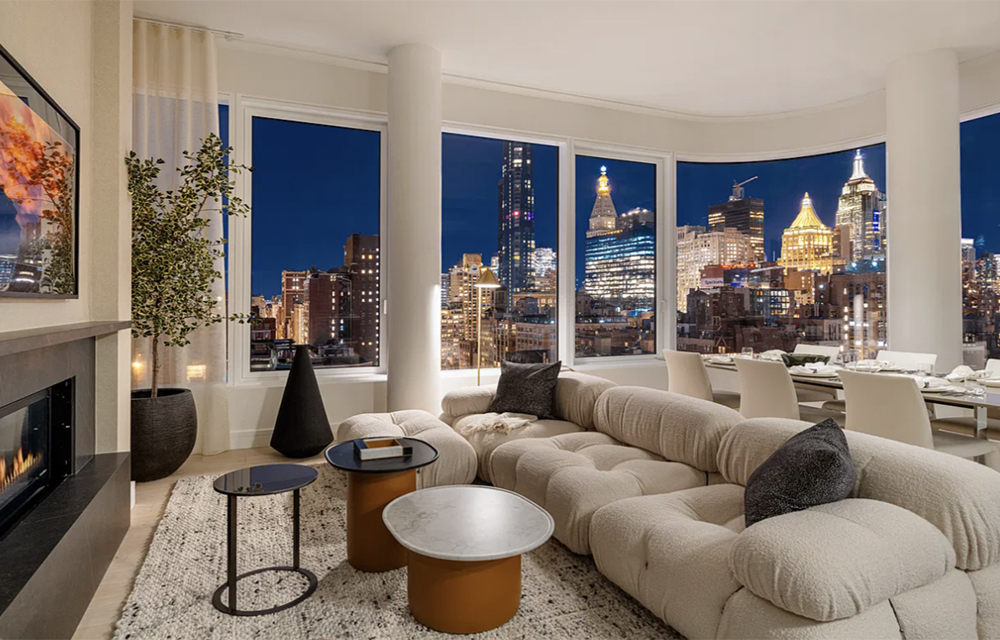
200E20TH sells out in Gramercy, penthouse A closes out sales at the CetraRuddy-designed condominium residences
Manhattan, NY 200E20TH, the CetraRuddy-designed architectural masterwork that brought a curved, contemporary sensibility to Gramercy’s Beaux-Arts streetscape, has



Quick Hits

Columns and Thought Leadership

Hunt commercial real estate question and answer: Fortune 500 wisdom - by David Hunt
Yes, there are lessons to be learned from the largest companies in America when comes to managing your real estate. But the decision to buy or lease real estate may not be one of

The art of investing in real estate - by Thomas Donovan
Real estate investing is as much an art as it is a skill. No one can time the market, or the factors that drive it, perfectly. Location, zoning, size, transportation, and neighborhood density give you a baseline for

Hunt CRE question and answer: Choosing a real estate agent - by David Hunt
First, we will only work with one agent exclusively. The primary reason is that we want that agent to legally represent our client’s interests. In New York State, a real estate agent has a fiduciary

New York’s streets are full again, and the retail numbers prove it - by Noam Aziz
Walk down any New York block this year and you can feel it. The sidewalks are crowded, the storefronts are lit, and the energy that defines this city is back at full volume.
.gif)