



News:
Brokerage
Posted: July 8, 2025
Sunrise Multifamily Summit returns October 30 with top industry leaders and Economic Insight
Latham, NY After a six-year hiatus, the Sunrise Multifamily Summit returns on Thursday, October 30, 2025, bringing together multifamily real estate professionals from across the capital region for a morning of expert insight, industry dialogue, and community impact. Organized by Sunrise Management & Consulting, the event will take place from 7:30 to 10:00 AM at The Century House.
Last held in 2018 and 2019, the Sunrise Multifamily Summit quickly established itself as a go-to event for multifamily developers, owners, lenders, brokers, and property managers navigating an evolving real estate market. The 2025 Summit is designed to address new challenges and opportunities facing the industry today.
This year’s event features a keynote address from Hugh Johnson, chairman and chief economist at Hugh Johnson Economics, who will share an economic outlook with a focus on Upstate New York and the multifamily housing sector.
A panel discussion will follow, moderated by Michael DeMasi, reporter at the Albany Business Review, featuring regional leaders with diverse perspectives:
• Jesse Holland, president, Sunrise Management & Consulting, AMO
• Edward Jennings, SVP, commercial lending, Broadview Federal Credit Union
• Stephen Obermayer, CFO/principal, BBL
• Jessica Richer, licensed associate real estate broker, The Richer Team at Hanna Commercial Real Estate
“This event is about more than market data. It’s about building connections and sharing strategies that help our region thrive,” said Heather Schechter, chief strategy officer of Sunrise Management & Consulting. “We’re proud to relaunch the Sunrise Multifamily Summit as a place where industry leaders come together to learn from each other and give back.”
In keeping with that mission, the Summit will support the Regional Food Bank of Northeastern New York. For each $35 ticket sold, $20 will be donated to the Food Bank to help fight hunger across the region.
Sponsors of the 2025 Sunrise Multifamily Summit include: BBL, Broadview Federal Credit Union, Howard Hanna Real Estate Services, The Richer Team at Hanna Commercial Real Estate, and Sunrise Management & Consulting.
Registration is now open at SunriseMC.com/Summit. Seating is limited! The event includes a hot breakfast, networking, and timely content for professionals involved in apartment development, investment, lending, and management.
Tags:
Brokerage
MORE FROM Brokerage
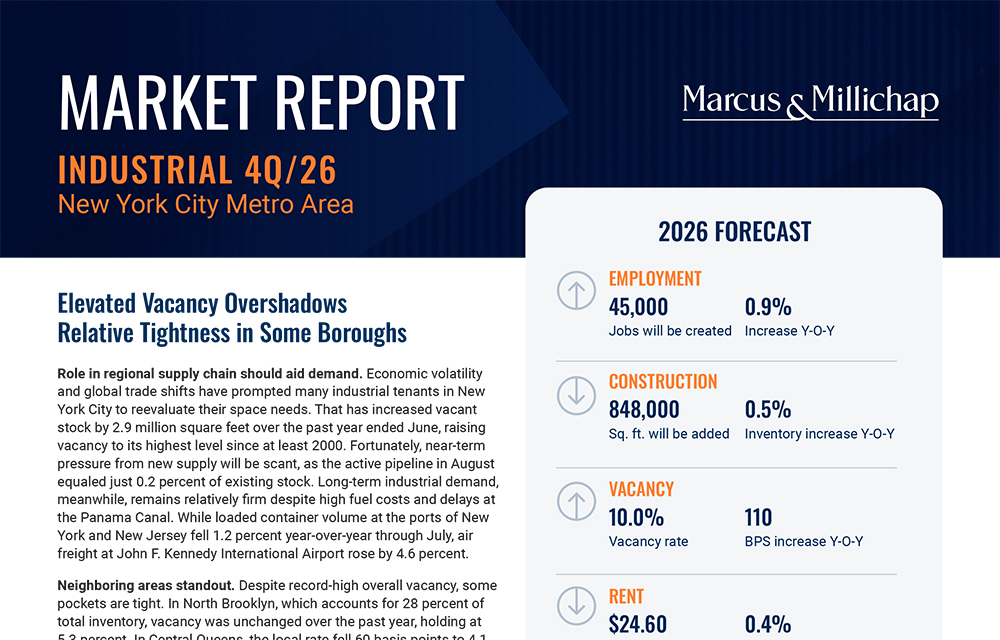
Marcus & Millichap releases fourth-quarter 2026 NYC industrial market report
Manhattan, NY Marcus & Millichap has published its fourth-quarter 2026 New York City Industrial Market Report. “New York City’s industrial market is showing a clear




Quick Hits
 (2).gif)

Columns and Thought Leadership

The art of investing in real estate - by Thomas Donovan
Real estate investing is as much an art as it is a skill. No one can time the market, or the factors that drive it, perfectly. Location, zoning, size, transportation, and neighborhood density give you a baseline for

Hunt commercial real estate question and answer: Fortune 500 wisdom - by David Hunt
Yes, there are lessons to be learned from the largest companies in America when comes to managing your real estate. But the decision to buy or lease real estate may not be one of

Hunt CRE question and answer: Choosing a real estate agent - by David Hunt
First, we will only work with one agent exclusively. The primary reason is that we want that agent to legally represent our client’s interests. In New York State, a real estate agent has a fiduciary

New York’s streets are full again, and the retail numbers prove it - by Noam Aziz
Walk down any New York block this year and you can feel it. The sidewalks are crowded, the storefronts are lit, and the energy that defines this city is back at full volume.
.gif)