



News:
Brokerage
Posted: May 12, 2026
SummitTX Capital relocates to Rudin’s 560 Lexington Ave.
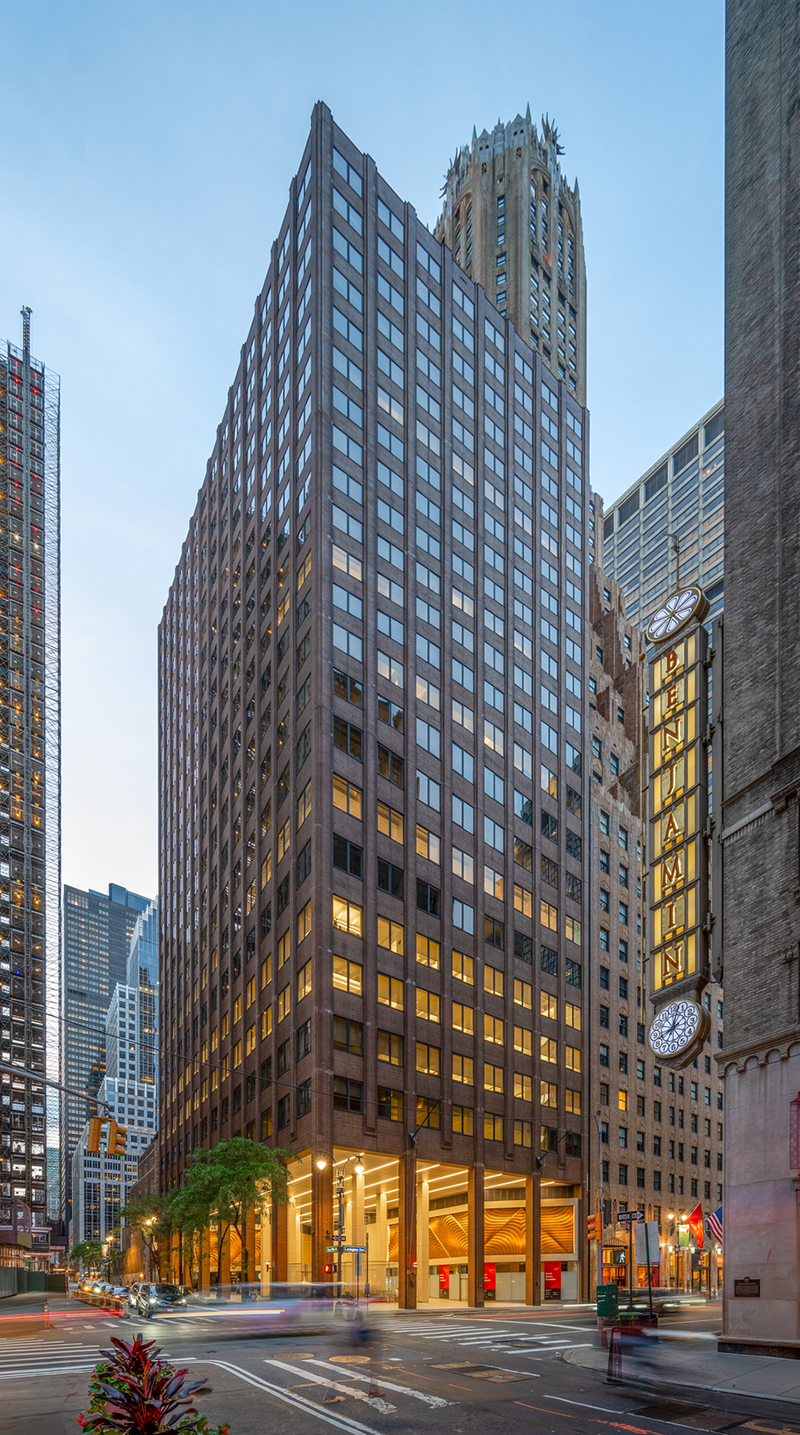
Manhattan, NY Rudin finalized a lease agreement with hedge fund SummitTX Capital at 560 Lexington Ave., its 22-story, 380,000 s/f office tower in the Plaza District.
SummitTX signed an 11-year lease for 17,778 s/f on the 19th floor. SummitTX will relocate from its offices at 75 Rockefeller Plaza this fall.
Rudin was represented in-house by Kevin Daly, in addition to the CBRE team of Peter Turchin, Brett Shannon, Eric Deutsch, Jacob Rosenthal and Lauren Levy. SummitTX was represented by Cushman & Wakefield.
“SummitTX’s relocation to 560 Lexington Ave. speaks to the strength of their business and the quality of the environment we’ve created here,” said Kevin Daly, vice president of office leasing at Rudin. “Our significant investments in the property’s amenity program, combined with its prime location just a block off Park Avenue and a short walk to Grand Central, make 560 Lexington a compelling home for growing firms.”
“Our move to 560 Lexington reflects the continued expansion of our team and our long-term commitment to growing our presence in New York,” said Brian Peller, managing director and chief operating officer at SummitTX Capital. “As we add talent across investment and operational functions, securing an expanded physical footprint provides the flexibility and infrastructure to support our growth, including attracting and retaining top-tier professionals while fostering collaboration across our platform.”
Set for completion this April, SummitTX employees will benefit from 560 Lexington’s brand-new 6th floor amenity suite with a multi-purpose conference room, private meeting room, lounge, an indoor/outdoor terrace and food and drink offerings. With wood flooring, marble backsplashes and contemporary furnishings, the space offers a sleek environment to support collaboration and client engagement. In addition, the tower features on-site subway access and is located just two blocks from Grand Central.
MORE FROM Brokerage

200E20TH sells out in Gramercy, penthouse A closes out sales at the CetraRuddy-designed condominium residences
Manhattan, NY 200E20TH, the CetraRuddy-designed architectural masterwork that brought a curved, contemporary sensibility to Gramercy’s Beaux-Arts streetscape, has





Quick Hits
 (2).gif)

Columns and Thought Leadership

New York’s streets are full again, and the retail numbers prove it - by Noam Aziz
Walk down any New York block this year and you can feel it. The sidewalks are crowded, the storefronts are lit, and the energy that defines this city is back at full volume.

The art of investing in real estate - by Thomas Donovan
Real estate investing is as much an art as it is a skill. No one can time the market, or the factors that drive it, perfectly. Location, zoning, size, transportation, and neighborhood density give you a baseline for

Hunt commercial real estate question and answer: Fortune 500 wisdom - by David Hunt
Yes, there are lessons to be learned from the largest companies in America when comes to managing your real estate. But the decision to buy or lease real estate may not be one of

Hunt CRE question and answer: Choosing a real estate agent - by David Hunt
First, we will only work with one agent exclusively. The primary reason is that we want that agent to legally represent our client’s interests. In New York State, a real estate agent has a fiduciary
.gif)