



News:
Brokerage
Posted: October 3, 2017
Seeking infrastructure: When disaster strikes - by Barbara Champoux
Communities rely on a number of infrastructure systems for carrying out basic social and economic functions. Those systems which are “critical” will have a significant impact on the economic and social well being of a community, if disrupted (e.g., electric power, potable water, and transportation and communication networks) because they play such an important role in supporting such communities, and reducing the impact of natural disasters (e.g., routes and bridges for evacuation and public buildings for sheltering).
This reliance becomes painfully evident when critical infrastructure systems fail during natural “disasters,” which are generally considered to involve extensive damage to people and physical infrastructure that is unforeseen in nature, scale and extent. Because of the network properties of infrastructure, natural disasters impacting them often result in disproportionately high societal disruption in relation to actual physical damage.
These natural disasters can evoke detrimental damage to infrastructure with untold human casualties. Moreover, the frequency and relative ferocity of natural disasters on a global scale has increased, leading to higher losses of life, and rising material damage costs to society. Infrastructure failure is often a primary cause of economic and human losses in disasters. Furthermore, such failure prevents or limits the implementation of vital state functions (governance, health, education, energy, economic, social, and general security functions).
The term “natural disaster,” by its nature, often implies that their risk of occurrence has not been properly assessed, and a large share of the damage is the outcome of a lack of preparedness, and recent disasters have demonstrated that urban infrastructure systems, even in the U.S. and other developed countries, remain highly vulnerable to them.
An analysis of natural disaster events commonly reveals:
(a) The inadequacy of critical infrastructure to withstand the forces of natural calamities; and
(b) The lack of mitigation strategies when they occur on the part of emergency-related organizations, industries, and communities.
So, while it is obvious that not much can be done to prevent these natural disasters, a number of steps can be taken to minimize the nature and extent of their impact on people and critical infrastructure.
For example:
Improving mechanisms for prediction and early warning of natural disasters, including a better understanding of environmental and climatic patterns and their effect thereon.
Implementing laws requiring higher standards on infrastructure development, operation, maintenance and repairs, inspection and overall quality should be implemented.
Developing and implementing comprehensive disaster emergency response, contingency and recovery planning, as well as sound risk management policies and procedures, with respect to all aspects of the infrastructure system, and other structures and systems affecting them, including appropriate training to lead, support and implement such plans and procedures.
Pursuing strategies for increasing resiliency (ability to maintain and quickly regain operational capacity, and recover relatively quickly and at low cost).
Identifying and addressing legal, procedural, physical and communications gaps in disaster preparedness and response, and coordinating both interagency, and public/private cooperation, including first responders and the physical structures needed to support emergency work.
Barbara Champoux is principal at Champoux Law Group, New York, N.Y.
Tags:
Brokerage
MORE FROM Brokerage
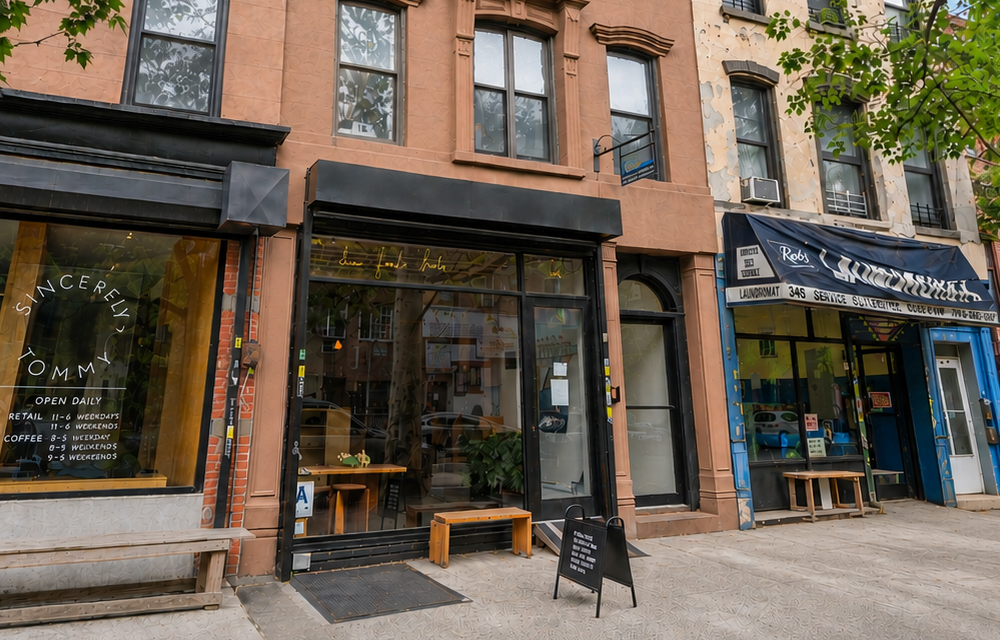
Bestreich, Reynolds, Davila, and Flaherty of Investment Property Realty Group close $1.97 million sale of 343A Tompkins Ave. in Bed-Stuy
Brooklyn, NY Investment Property Realty Group (IPRG) closed the sale of 343A Tompkins Ave., a mixed-use building located in the Bed-Stuy section of the borough, for $1.97 million.


Quick Hits

Columns and Thought Leadership

New York’s streets are full again, and the retail numbers prove it - by Noam Aziz
Walk down any New York block this year and you can feel it. The sidewalks are crowded, the storefronts are lit, and the energy that defines this city is back at full volume.

Hunt commercial real estate question and answer: Fortune 500 wisdom - by David Hunt
Yes, there are lessons to be learned from the largest companies in America when comes to managing your real estate. But the decision to buy or lease real estate may not be one of

A guide to finding the right NYC property management company - by Sanjay Gandhi
Being a small to midsize landlord in NYC is an increasingly demanding endeavor. From navigating complex regulations, increased compliance demands to dealing with tenant issues and remediating violations. It is wise to enlist the assistance of a partner, a professional

Hunt CRE question and answer: Choosing a real estate agent - by David Hunt
First, we will only work with one agent exclusively. The primary reason is that we want that agent to legally represent our client’s interests. In New York State, a real estate agent has a fiduciary
.gif)