



News:
Brokerage
Posted: July 21, 2008
Rogers of SWBR earns LEED certification
Nicole Rogers, a design technician at SWBR Architects, has recently received her Leadership in Energy and Environmental Design (LEED) certification, offered through the U.S. Green Building Council (USGBC). This certification recognizes those who have completed the necessary training, education and testing to apply green architecture standards to their designs. Green architecture is a term used to describe economical, energy saving, environmentally friendly, and sustainable development. Sustainable architecture meets the needs of people today without destroying the resources that will be needed in the future. For the designer, this means being aware of the consequences of choosing particular materials, the waste created, the impact on immediate and future environments, and the health of those involved (the manufacturers, suppliers, installers, building occupants), over the life of the facility. "We're thrilled for Nicole and proud of her accomplishment in obtaining her LEED(r) certification. LEED principles are an everyday part of our firm's designs and she truly stands behind what we believe in as a company," said David Beinetti, president of SWBR. "We're strongly committed to training our entire staff in sustainable design and encourage them all to get certification to help us improve on the best practices we have used for years. There are a myriad of benefits to sustainable design including increased environmental quality; economic benefits such as lower operating costs; and health and community benefits including enhanced occupant health and comfort." Rogers earned her B.S. in Architecture from Lawrence Technological University and her masters in Architecture from the University of Cincinnati, where she received an Excellence in Design Award for her graduate thesis project.
Tags:
Brokerage
MORE FROM Brokerage
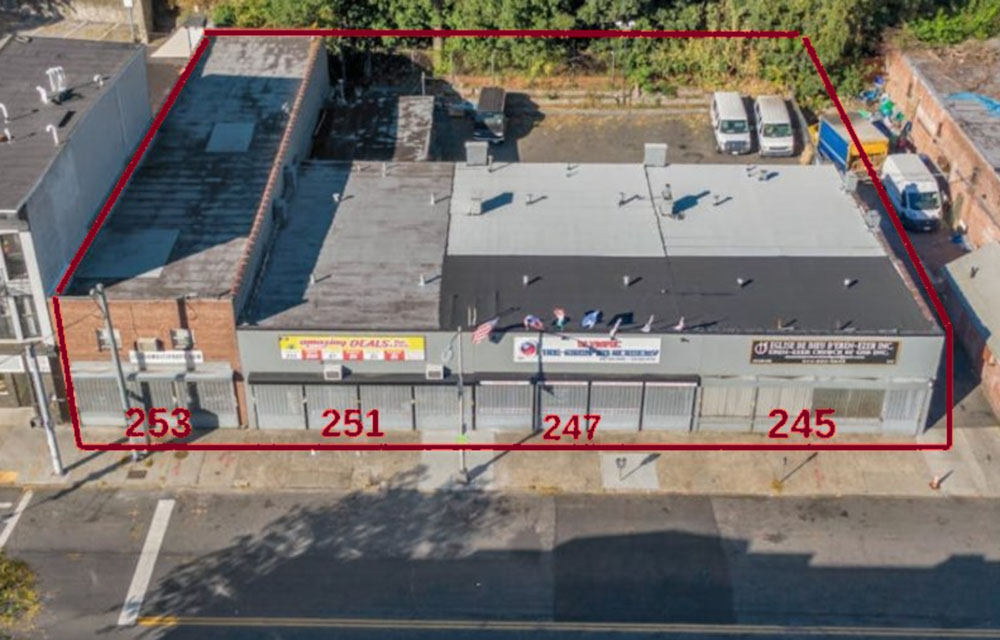
Adler of Rand Commercial brokers $2.3 million sale of retail assemblage in Yonkers
Yonkers, NY Rand Commercial negotiated the June 12, 2026 sale of an 11,000 s/f retail assemblage at 245, 247, 251, and 253 South Bdwy. for $2.3 million to an owner-user.






Columns and Thought Leadership

Tri-state capital migrates nationally amid regulation pressure - by Reese Weaver
New York tri-state multifamily investors are increasingly reallocating capital to less-regulated markets across the U.S. as rent control and legislative risk erode returns at home. With over 60% of New York City’s rental housing stock classified as rent-stabilized, the traditional value-add model — buying under-performing buildings,

The anticipated effect of Basel III and ISO 20022 implementation on commercial real estate - by Michael Zysman
July 1, 2025 is the deadline for US banks to begin to adopt Basel III banking standards and July 14, 2025 is the deadline for U.S. banks to adopt ISO 20022 messaging standards. Both will have a significant effect on the banking and commercial real estate (CRE) finance sectors.

The death of the generic offering memorandum: What buyers expect in 2025 - by Kimberly Zar Bloorian
There was a time when an offering memorandum (OM) was pretty bare bones, some photos, a few bullet points on income, and a rent roll thrown in at the back. That used to get the job done. Not anymore. In 2025, buyers are sharper, faster, and more selective. They’re looking

A fresh start - by Shallini Mehra and Amit Doshi
For the past several years, the New York City multifamily housing market has been defined by disruption. The combined impact of the HSTPA rent laws and a sharply higher interest rate environment has fundamentally reduced
