



News:
Brokerage
Posted: August 9, 2022
REBNY announces nominees for 24th Annual Retail Deal of the Year awards competition
New York, NY The Real Estate Board of New York (REBNY) has announced the eleven retail deals of 2021 that will compete for the annual Retail Deal of the Year Awards.
Two deals out of the nominations will be named winners of either The Most Ingenious Retail Deal of the Year, which demonstrates exceptional broker acumen, or The Most Impactful Retail Deal of the Year, which represents the most meaningful retail transaction in its overall characteristics and importance to the New York City retail market.
“The deals submitted represent the most impressive transactions during a challenging period for the retail industry in New York City. We are so pleased to be able to welcome our industry peers back in-person to celebrate the ingenuity of our industry,” said Fred Posniak, Retail Committee co-chair and senior vice president at Empire State Realty Trust.
“To be able to complete the level of deals represented in these nominations during one of the most challenging periods for retail real estate in our city is amazing. Selecting just two winners is a difficult task, and I am proud of our industry peers for holding strong in the face of adversity,” said Steve Soutendijk, Retail Committee co-chair and executive managing director at Cushman & Wakefield.
The winners will be announced by Posniak and Soutendijk at an in-person ceremony and celebratory cocktail party.
Submissions under consideration for the 2021 competition are:
- "World Class, Whole Foods Market at One Wall St." – One Wall St., New York, NY. Submitting Brokers: Chase Welles and Jacqueline Klinger of The Shopping Center Group; Peter Whitenack of Newmark Retail.
- "Community-Focused Learning Center Revitalizes Entire City Block (Dwight School)" – 705 Columbus Ave., New York, NY. Submitting Brokers: Darrell Rubens and Ariel Schuster of Newmark Retail.
- "Against All Odds: The Lease of 83,000 s/f to Wegmans at 770 Broadway” – 770 Broadway, New York, NY. Submitting Brokers: Peter Ripka and Gene Spiegelman of RIPCO Real Estate LLC.
- "Once Upon a Time in Times Square: Planet Hollywood Reinvents and Relocates to 140 West 42nd St.”– 140 West 42nd St., New York, NY. Submitting Brokers: Jeffrey Roseman, Drew Weiss and Marc Leber of Newmark.
- "All the Retail News That's Fit to Print: Starbucks and Amazon Double Down on Retail at the NY Times Tower”– 620 Eighth Ave., New York, NY. Submitting Brokers: David Firestein and Jenna Heidenberg of The Shopping Center Group.
- "A Flatiron District Transformation: From Subterranean Parking to Peaceful Tranquility." – 7 West 21st St. (a.k.a. 6 West 22nd St.) New York, NY. Submitting Brokers: Lucas Kooyman and Jason Pruger of Newmark.
- "Revival of the Fittest: JLL Works Out Deal for Chelsea Piers Fitness at One Madison Ave." – 1 Madison Ave., New York, NY (a.k.a. One Madison). Submitting Brokers: Erin Grace and Matthew Ogle of JLL.
- "Pappas: Restoring Authentic Greek Culture in Downtown Manhattan" – 103-105 MacDougal St., New York, NY. Submitting Broker: James Famularo of Meridian Capital Group.
- "Breathing Fresh Life Into Times Square: Brooklyn Chop House" – 253 West 47th St., New York, NY. Submitting Broker: James Famularo of Meridian Capital Group.
- "House of Meatpacking: The Luxurious Lease-Up of 45 Ninth Ave." – 45 Ninth Ave., New York, NY (a.k.a 400 West 14th St.). Submitting Brokers: Brandon L. Singer and Michael Cody MONA Retail Holdings, LLC.
- "Timothy Oulton – A Long Road to the Perfect Flagship" – 901 Broadway, New York, NY. Submitting Brokers: Robin Abrams of Compass/Abrams Retail Strategies and Rebecca Olshan of Compass.
Last year’s winners for the Most Ingenious Retail Deal of the Year were Eric Gelber and Jordan Kaplan of CBRE and Gary Trock and Zach Parisi of the Rockefeller Group for “‘OPA’ AVRA Lands Mega Restaurant Deal at 1271 Ave. of the Americas.” At 17,000 s/f, this transaction was the largest restaurant deal completed in New York City from the start of the pandemic through the close of nominations. The Most Impactful Retail Deal of the Year went to Matthew Leon of Newmark for the execution of a 30,000 s/f lease for CultureSpaces at the landmarked 49 Chambers St. to launch the Hall des Lumières CULTURESPACES DIGITAL® art center.
Tags:
Brokerage
MORE FROM Brokerage
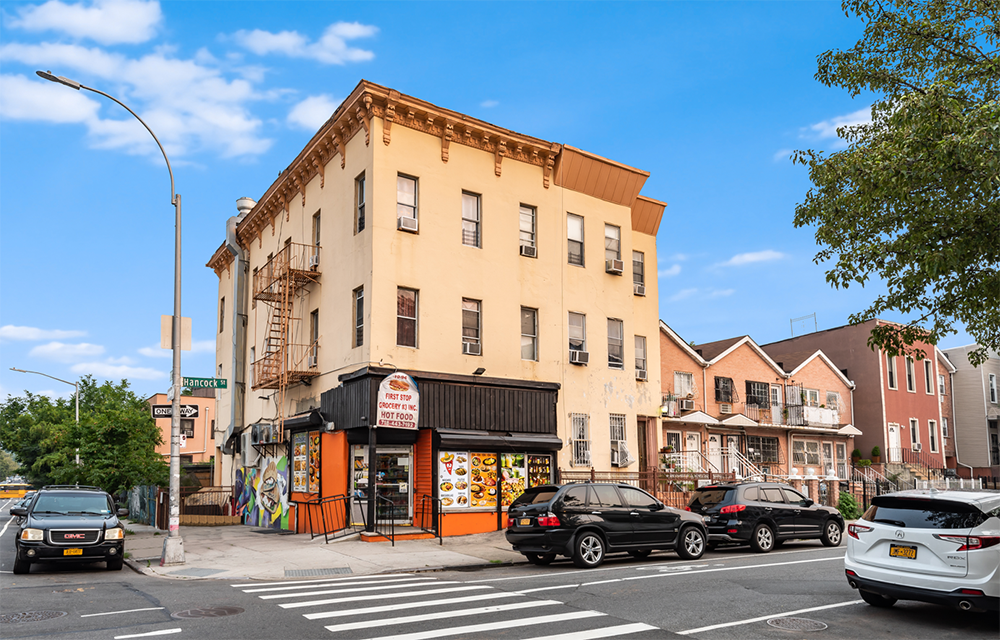
Investment Property Realty Group closes $1.75 million sale of 1094 Hancock Street in Brooklyn
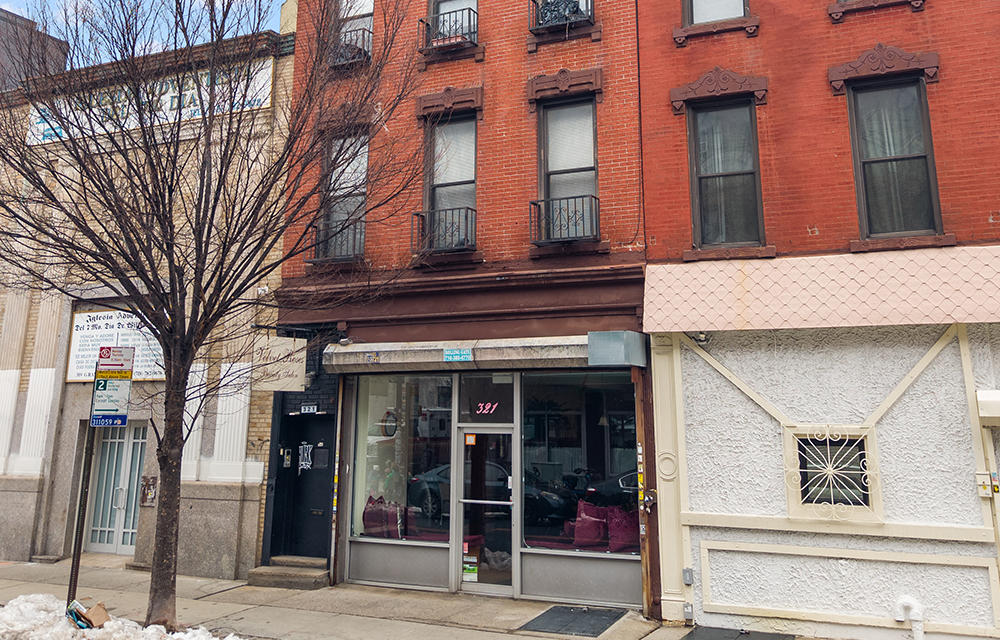
Brooklyn, NY Investment Property Realty Group (IPRG), a New York-based commercial investment firm, has closed the sale of 1094 Hancock St., a mixed-use building in the Bushwick section, for $1.75 million.


Quick Hits

Columns and Thought Leadership

A guide to finding the right NYC property management company - by Sanjay Gandhi
Being a small to midsize landlord in NYC is an increasingly demanding endeavor. From navigating complex regulations, increased compliance demands to dealing with tenant issues and remediating violations. It is wise to enlist the assistance of a partner, a professional

Hunt commercial real estate question and answer: Fortune 500 wisdom - by David Hunt
Yes, there are lessons to be learned from the largest companies in America when comes to managing your real estate. But the decision to buy or lease real estate may not be one of

Hunt CRE question and answer: Choosing a real estate agent - by David Hunt
First, we will only work with one agent exclusively. The primary reason is that we want that agent to legally represent our client’s interests. In New York State, a real estate agent has a fiduciary

New York’s streets are full again, and the retail numbers prove it - by Noam Aziz
Walk down any New York block this year and you can feel it. The sidewalks are crowded, the storefronts are lit, and the energy that defines this city is back at full volume.
.gif)