



News:
Brokerage
Posted: June 18, 2019
Outside the Region: New Providence Gardens sells for $58.5 million; arranged by Gebroe-Hammer
New Providence, NJ New Providence Gardens, a 232-unit garden-apartment community, has been sold for $58.5 million in a trade arranged by Gebroe-Hammer Associates.
Executive vice president Nicholas Nicolaou exclusively represented the seller, a private investment group, and the unnamed out-of-state institutional buyer, in the transaction. Financing for the project was provided by IPA, a division of Marcus & Millichap. The lead brokers were Anita Paryani, Rick Lechtman and Daniel Lisser.
Built in 1951, the apartment-home community is on the northwestern edge of Union County. The property is near New Providence Train Station, and major highways that facilitate movement of the area’s concentrated out-commuter residential base.
“New Providence Gardens is well-poised for considerable value-add repositioning associated with in-demand market-unique layouts, convenient proximity to mass transit links and high-end lifestyle services,” said Nicolaou. “This is a transit-rich region where an established Millennial and executive-level out-commuter residential base fill the borough’s population-growth pipeline. The apartment-rental market is extremely supply constricted and is expected to see little if any new product delivered to market for the foreseeable future.”
Located at 43 Gales Dr., the community has 232 apartment homes, of which 164 are one-bedroom and 68 are two-bedroom layouts. New Providence Gardens is close to schools, shopping districts, cultural centers and recreation venues and mass transit services. New Providence Station provides 45-minute Midtown-Manhattan direct service to New York Penn Station as well as Hoboken Terminal and Newark Broad St. Station.
New Providence Gardens’ historic Borough Center neighborhood ranks among the top 15% highest-income neighborhoods in the nation where more than half of the working population is employed in executive, management and professional occupations. The borough is in the Short Hills Region, which features some of the finest amenities small, affluent municipalities can offer.
Tags:
Brokerage
MORE FROM Brokerage
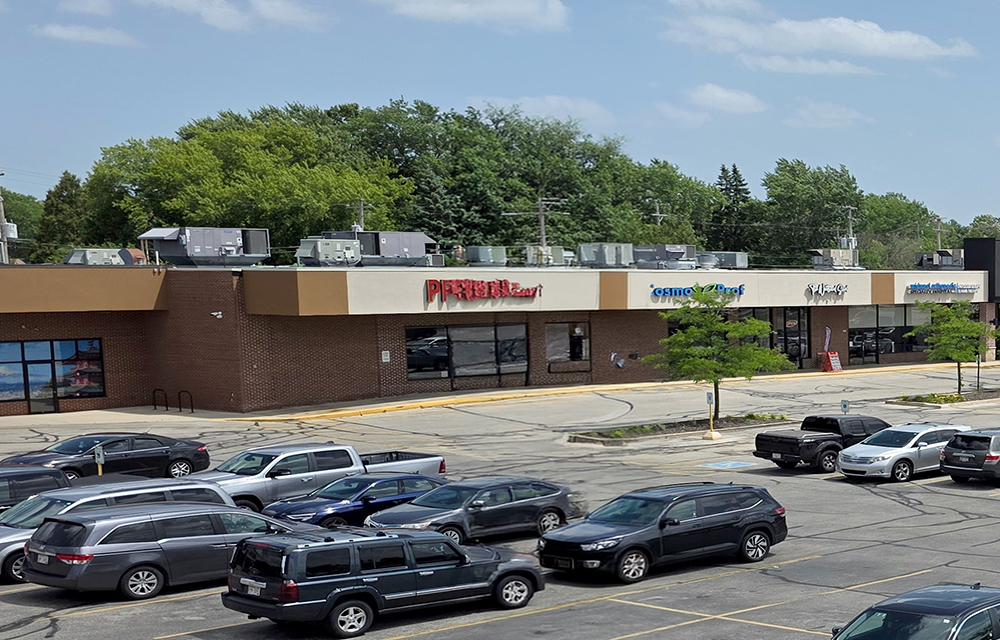
United Properties Corp. expands Wisconsin and Illinois retail presence adding 200,000 s/f
West Allis, WI United Properties Corp. completed two retail acquisitions totaling $27.4 million across Illinois and Wisconsin, adding 205,000 s/f of shopping center space to its portfolio


Quick Hits

Columns and Thought Leadership

A guide to finding the right NYC property management company - by Sanjay Gandhi
Being a small to midsize landlord in NYC is an increasingly demanding endeavor. From navigating complex regulations, increased compliance demands to dealing with tenant issues and remediating violations. It is wise to enlist the assistance of a partner, a professional

Hunt commercial real estate question and answer: Fortune 500 wisdom - by David Hunt
Yes, there are lessons to be learned from the largest companies in America when comes to managing your real estate. But the decision to buy or lease real estate may not be one of

New York’s streets are full again, and the retail numbers prove it - by Noam Aziz
Walk down any New York block this year and you can feel it. The sidewalks are crowded, the storefronts are lit, and the energy that defines this city is back at full volume.

Positive forecast for New York’s pro-housing push? - by Philip Butler
New York’s housing crisis remains a hot button topic despite growing consensus that varied and affordable housing is desperately needed statewide. Governor Hochul has recently introduced several initiatives to overcome N.Y.’s anti-housing
.gif)