



News:
Brokerage
Posted: June 18, 2019
Outside the Region: CetraRuddy completes adaptive reuse of NJ Bell building with L+M Development, Prudential Financial and Goldman Sachs Urban Inv.
Newark, NJ CetraRuddy is completing its third adaptation of a landmark by architect Ralph Walker, known for Art Deco buildings built mainly around New York City in the 1920s and 1930s. The latest project–an adaptive reuse of the original 1929 New Jersey Bell building at 540 Broad St., downtown–has just launched leasing for 260 units of housing, including affordable housing, as well as 60,000 s/f of office, retail and other nonresidential uses. The adaptation, called Walker House, is designed by CetraRuddy with executive architect Inglese Architecture and Engineering.
The development group, a partnership L+M Development Partners, Prudential Financial Inc. and the Goldman Sachs Urban Investment Group, has reimagined the 436,000 s/f tower at the corner of Lombardy and Broad Sts., while also preserving its historic character.
Walker, lauded by Frank Lloyd Wright and hailed in The New York Times as the “architect of the century,” is attracting the eye of architecture-minded homebuyers, said John Cetra, FAIA, founding principal of CetraRuddy, the architect for award-winning adaptations of two other Ralph Walker buildings, both in New York City: Walker Tower and Stella Tower.
“Of the three Ralph Walker buildings we have adapted from commercial to residential use, Walker House presents the most exuberant and magical details both on the exterior and interior,” says Nancy J. Ruddy, founding principal of CetraRuddy. In 2005, the brick-and-sandstone building’s exterior and majestic lobby were added to the U.S. National Register of Historic Places, adds Ruddy.
“This is an incredible landmark of this city, and we are delighted to help bring it new life,” says the architect Cetra, noting that the project is among the largest conversion projects underway in Newark, a fast-growing market for residences and commercial space. “The visionary adaptation brings new vibrancy and economic vitality to Newark’s downtown center, while also preserving its important historic character.”
“Our design emphasizes the refurbishment of the building’s façade to create an exciting pedestrian experience while reinforcing the existing community in many ways and restore a landmark building that reflects the great history of Newark,” adds Ruddy.
CetraRuddy is the only firm in the world having converted more than one building by Walker. Other historic adaptive reuse projects by CetraRuddy include the Barbizon Hotel, 141 Fifth Ave., the Stanhope Hotel, and 443 Greenwich, all in New York City.
Tags:
Brokerage
MORE FROM Brokerage
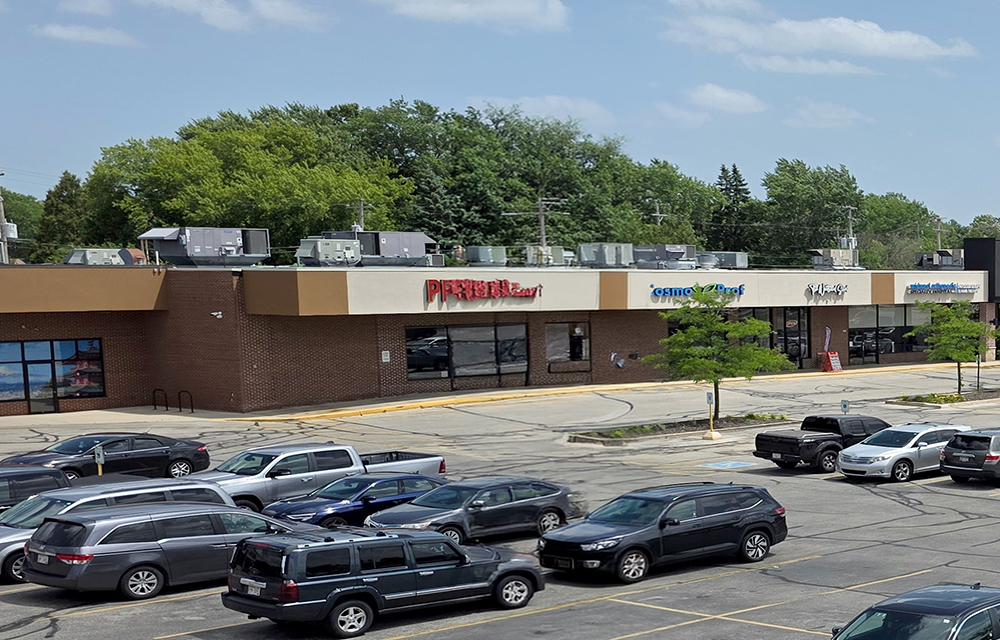
United Properties Corp. expands Wisconsin and Illinois retail presence adding 200,000 s/f
West Allis, WI United Properties Corp. completed two retail acquisitions totaling $27.4 million across Illinois and Wisconsin, adding 205,000 s/f of shopping center space to its portfolio



Quick Hits

Columns and Thought Leadership

Hunt commercial real estate question and answer: Fortune 500 wisdom - by David Hunt
Yes, there are lessons to be learned from the largest companies in America when comes to managing your real estate. But the decision to buy or lease real estate may not be one of

Positive forecast for New York’s pro-housing push? - by Philip Butler
New York’s housing crisis remains a hot button topic despite growing consensus that varied and affordable housing is desperately needed statewide. Governor Hochul has recently introduced several initiatives to overcome N.Y.’s anti-housing

New York’s streets are full again, and the retail numbers prove it - by Noam Aziz
Walk down any New York block this year and you can feel it. The sidewalks are crowded, the storefronts are lit, and the energy that defines this city is back at full volume.

A guide to finding the right NYC property management company - by Sanjay Gandhi
Being a small to midsize landlord in NYC is an increasingly demanding endeavor. From navigating complex regulations, increased compliance demands to dealing with tenant issues and remediating violations. It is wise to enlist the assistance of a partner, a professional
.gif)