



News:
Brokerage
Posted: September 18, 2018
Outside the Region: ArborCrowd facilitates sale of Southern States Multifamily Portfolio
Huntsville, AL According to ArborCrowd, one of the only online platforms that enables individuals to make equity investments in institutional-quality commercial real estate, its Southern States Multifamily Portfolio (SSMP) investment has been realized ahead of schedule, outpacing targeted return estimates. The aggregate portfolio sales price was $25.85 million, generating an internal rate of return of over 29% for its investors.
The portfolio–Twickenham Village and Hillside Village, and Gardens of Canal Park in Robinsonville, Miss.,–was acquired by affiliates of the sponsor, Varden Capital Properties, LLC (VCP) and ArborCrowd, in late 2016.
Following a capital improvement plan and operational enhancements, VCP sold the portfolio.
The transaction marks the first of ArborCrowd’s six deals to complete its investment cycle, and its success is a great sign of the long-term viability of the Company’s growing platform. The SSMP investment opportunity was quickly oversubscribed when ArborCrowd presented the deal on its platform in February 2017, raising over $2.1 million in just 5 days. The over 29% IRR generated by the sale of the portfolio far exceeded the targeted 17% to 20% IRR projected by ArborCrowd at the time of the offering.
One of the properties in the portfolio is located in Mississippi and sold in late 2017. The two remaining properties, located in Alabama, recently sold.
“It’s incredibly gratifying to be able to deliver such strong returns for our investors. This milestone transaction reflects exactly the type of outcome we strive for and validates the rigorous underwriting process we employ on every deal we bring to the crowd,” said Adam Kaufman, co-founder and managing director of ArborCrowd. “The Southern States Multifamily Portfolio exemplifies our investment strategy of partnering with successful, experienced sponsors on multifamily projects with tremendous upside potential in markets where fundamentals and consumer demand are aligned.”
Kaufman said, “The delta in the realized returns compared to the projected returns reflects ArborCrowd’s focus on realistic outcomes in its underwriting. While other platforms may tout targeted returns that are unlikely to be achieved, ArborCrowd would rather employ realistic underwriting and outperform those projections. No one is ever upset to receive a greater return than they were anticipating.”
Tags:
Brokerage
MORE FROM Brokerage
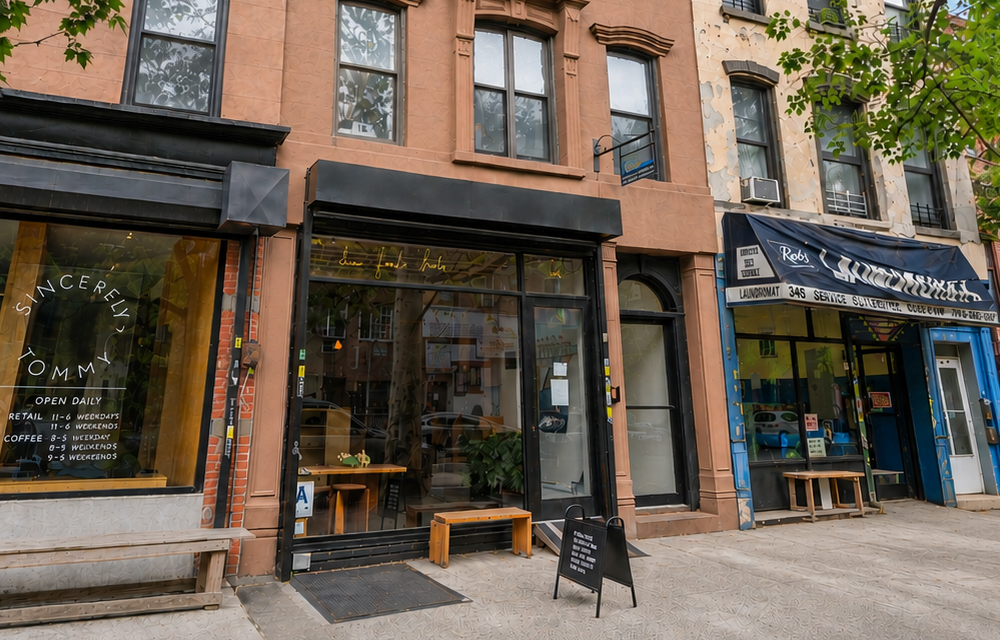
Bestreich, Reynolds, Davila, and Flaherty of Investment Property Realty Group close $1.97 million sale of 343A Tompkins Ave. in Bed-Stuy
Brooklyn, NY Investment Property Realty Group (IPRG) closed the sale of 343A Tompkins Ave., a mixed-use building located in the Bed-Stuy section of the borough, for $1.97 million.



Columns and Thought Leadership

Hunt commercial real estate question and answer: Fortune 500 wisdom - by David Hunt
Yes, there are lessons to be learned from the largest companies in America when comes to managing your real estate. But the decision to buy or lease real estate may not be one of

A guide to finding the right NYC property management company - by Sanjay Gandhi
Being a small to midsize landlord in NYC is an increasingly demanding endeavor. From navigating complex regulations, increased compliance demands to dealing with tenant issues and remediating violations. It is wise to enlist the assistance of a partner, a professional

New York’s streets are full again, and the retail numbers prove it - by Noam Aziz
Walk down any New York block this year and you can feel it. The sidewalks are crowded, the storefronts are lit, and the energy that defines this city is back at full volume.

Hunt CRE question and answer: Choosing a real estate agent - by David Hunt
First, we will only work with one agent exclusively. The primary reason is that we want that agent to legally represent our client’s interests. In New York State, a real estate agent has a fiduciary
.gif)