



News:
Brokerage
Posted: November 28, 2008
Marek is moderator of recent Commercial Crossfire panel
The current economic crisis was on everyone's mind at the Real Estate Board of New York's recent Commercial "Crossfire" where four commercial real estate industry leaders discussed Manhattan's office leasing market and predicted a soft 2009 market with a recovery time that ranged from two to three years to as much as five to seven years. Dozens of REBNY members attended the Thursday, Oct. 23 event, which was hosted by the REBNY Commercial Board of Directors and held at The Mendik Education Center.
The panelists were Thomas Bow, senior vice president of The Durst Organization, Inc.; Augustus Field IV, executive vice president of Cushman & Wakefield, Inc.; David Goldstein, executive vice president and director of Studley, Inc. and Glen Weiss of Vornado Realty Trust. Frederick Marek of the Vortex Group, LLC served as moderator.
Marek noted that unlike other times in the past, people and businesses are being drawn to New York on both the residential and commercial sides. "If you are not in New York, you are not a major player," he said.
Questions that the panel addressed included topics such as security deposits, the future of new commercial construction, tightening of lending institutions, Lehman Brothers and other major financial firms that have failed, and the current state of lease negotiations.
The experts agreed that landlords are staying ahead when it comes to lease renewals and in many instances accepting shorter lease terms to avoid vacancies. They noted also that they are seeing more small transactions from 3,000, to 5,000, to 10,000 s/f.
"It is an interesting time to be in our business," said Field. The panelists also observed that during times like these there is always a flight to quality, so there will still be some tenants looking for space and making deals.  
Commenting on the future of the office market and the impact of companies like Lehman Brothers, which has been a major tenant, Bow said, "The stronger firms will survive and thrive." He also said, "The landscape will look a lot different when it all settles."
The Real Estate Board of New York is the city's leading real estate trade association with over 12,000 members.  REBNY represents major commercial and residential property owners and builders, brokers and managers, banks, financial service companies, utilities, attorneys, architects, contractors and other individuals and institutions professionally interested in the City's real estate. REBNY is involved in crucial municipal matters including tax policy, city planning and zoning, rental conditions, land use policy, building codes and legislation.  In addition, REBNY publishes reports providing indicators of market prices for both the residential and commercial sectors.
Tags:
Brokerage
MORE FROM Brokerage
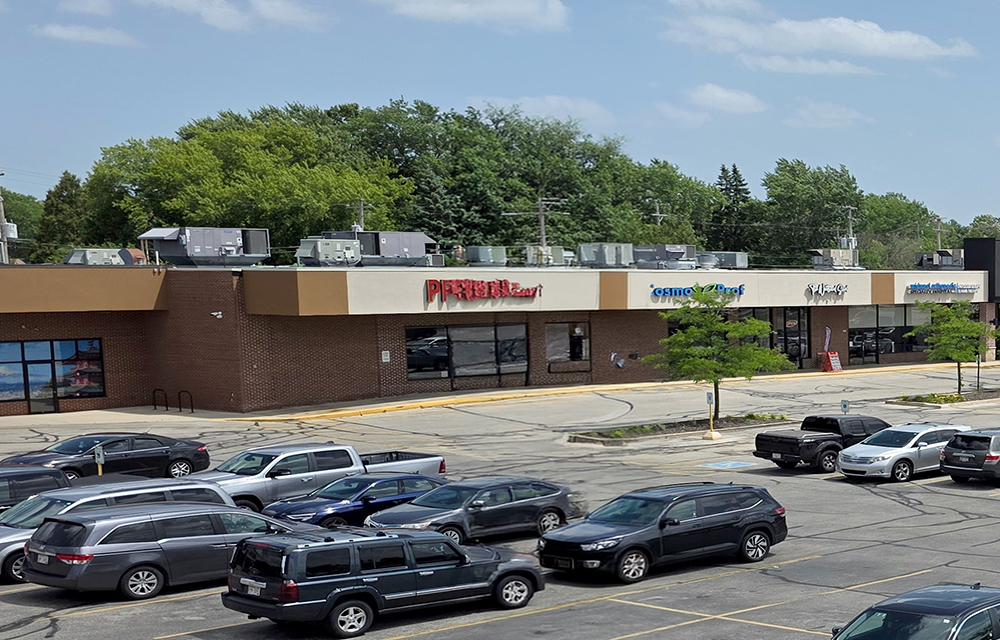
United Properties Corp. expands Wisconsin and Illinois retail presence adding 200,000 s/f
West Allis, WI United Properties Corp. completed two retail acquisitions totaling $27.4 million across Illinois and Wisconsin, adding 205,000 s/f of shopping center space to its portfolio


Quick Hits

Columns and Thought Leadership

A guide to finding the right NYC property management company - by Sanjay Gandhi
Being a small to midsize landlord in NYC is an increasingly demanding endeavor. From navigating complex regulations, increased compliance demands to dealing with tenant issues and remediating violations. It is wise to enlist the assistance of a partner, a professional
Positive forecast for New York’s pro-housing push? - by Philip Butler
New York’s housing crisis remains a hot button topic despite growing consensus that varied and affordable housing is desperately needed statewide. Governor Hochul has recently introduced several initiatives to overcome N.Y.’s anti-housing

Hunt commercial real estate question and answer: Fortune 500 wisdom - by David Hunt
Yes, there are lessons to be learned from the largest companies in America when comes to managing your real estate. But the decision to buy or lease real estate may not be one of

New York’s streets are full again, and the retail numbers prove it - by Noam Aziz
Walk down any New York block this year and you can feel it. The sidewalks are crowded, the storefronts are lit, and the energy that defines this city is back at full volume.
.gif)