



News:
Brokerage
Posted: May 2, 2017
Manhattan’s Third Ave. retail corridor is seeing much change - by Joseph Aquino
 JAACRES NB.jpg" width="200" />
Joseph Aquino Commercial
Real Estate Services
There is much change going on in the 60s through 70s area of Third Ave. This very viable residential neighborhood, is showing signs of struggling retail sales, bankruptcies, sales of companies, switching brands within the company–which in some cases has caused store closures. Stores who haven’t left us have been forced to downsize like Gracious Homes, which had stores on both sides of the street along 70th and 71st Sts., and now just have a small corner presence on Third Ave. and East 70th St.
A (recently) new restaurant called Theo, which had just opened before the holidays, closed its Third Ave. and 62nd location at no. 1048. This space closed after the holidays, only to reopen (and rebranded itself) as a new restaurant, The Eastside Café.
On the same block, at no. 1030 on the corner of 60th St., was American Apparel. They closed since they were just bought by a Canadian company who decided to close all the U.S. stores. Last year, Teavana closed to reopen a Starbucks sister store within the same company. They have two other Starbucks within a two block radius. In this scenario, all three stores appear to be doing well.
The French Pastierrie Payard closed after being open for a few years. Word has it they took an offer from the developer who had assembled the adjacent buildings for a residential development. We also know chef Payard is going through a divorce, so he may have had to take the cash and sell. They were located at Third Ave. between 74th and 75th Sts., at no. 1295.
Reebok closed at no. 1130 at 66th St. and, on the same block, Caché closed at no. 1144 at 67th St., taking out two major corners. Additionally, the Talbots flagship, no. 1251 at the corner of 72nd St. closed, as did Chicos at no. 1308 at the corner of 75th St. Food Emporium also changed hands and has been replaced by Morton’s Supermarket at no. 1066 between 63rd and 64th St.
As we can see, there were many closures on Third Ave. and I may be still missing a few. Coming home last night while writing this article, I noticed Urban Outfitters had closed across from Bloomingdales at Third Ave. between 59th and 60th Sts. next to the movie theater. All the retailers have been complaining about poor sales. So how is this possible? We can’t blame it all on the Internet, that would not be fair. We have to look at the overall economy, jobs, income etc., etc. Let’s try and look at it from the retailers perspective…We all know rents have doubled in the last five years, if not tripled in the last ten. Have consumers’ income gone up in proportion? The cost of goods certainly has and the retailers have been seeing thinner margins. One of my customers told me that department stores normally sell 35-40% of their inventory and return the balance. This year some of them only sold 15% of the goods displayed on the floor and 85% were returned. One cannot forget rent is a derivative of sales. We all know the market is desperately in need of a correction. The question is when, and what will it take to make the bubble pop? I know from my urban experience, retail sales are never a topic of conversation with the property owner(s) when setting the price(s) for their new stores. It’s much different at a suburban shopping mall. There, the property owner is keyed into the register and knows exactly what the retailers are doing in the sales category. That property owner wants their tenants to flourish and they set a rent based on their projected sales. This may not be done when the sales team is pitching space, but it is done in the backroom where the property owner does their forecasts. These property owners also produce a healthy shopping environment and assist in marketing the center to the community.
It’s a hard to tell a New York property owner to lower their rent(s), however you have to be blind not to see the present spotty retail landscape with store closures every other week. Maybe now, property owners will be willing to lower rent(s) voluntarily, rather than being faced with another real estate bubble bursting. Further, if the property owners are willing to show some flexibility, it could bring some retailers with the “wait and see attitude” back into the marketplace. Remember, it’s all perception. If a retailer thinks he will get a better deal next year, he will sit this dance out.
Retailers are like geese that lay golden eggs. Let’s try avoiding the temptation to eat the goose!
Joseph Aquino is the proprietor of Joseph Aquino Commercial Real Estate Services, New York, N.Y.
Tags:
Brokerage
MORE FROM Brokerage
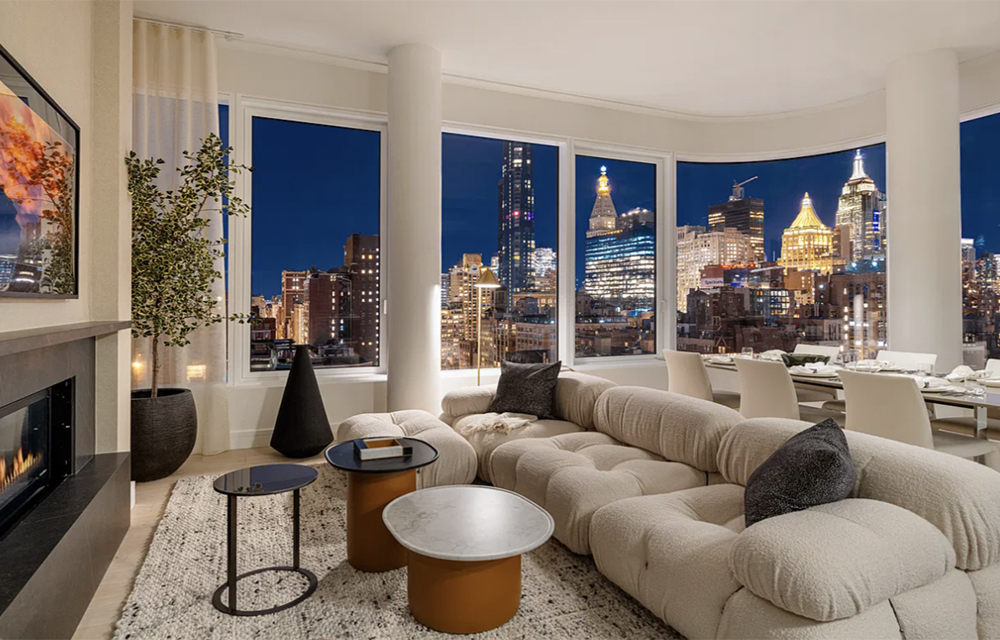
200E20TH sells out in Gramercy, penthouse A closes out sales at the CetraRuddy-designed condominium residences
Manhattan, NY 200E20TH, the CetraRuddy-designed architectural masterwork that brought a curved, contemporary sensibility to Gramercy’s Beaux-Arts streetscape, has





 (2).gif)

Columns and Thought Leadership

Hunt commercial real estate question and answer: Fortune 500 wisdom - by David Hunt
Yes, there are lessons to be learned from the largest companies in America when comes to managing your real estate. But the decision to buy or lease real estate may not be one of

Hunt CRE question and answer: Choosing a real estate agent - by David Hunt
First, we will only work with one agent exclusively. The primary reason is that we want that agent to legally represent our client’s interests. In New York State, a real estate agent has a fiduciary

The art of investing in real estate - by Thomas Donovan
Real estate investing is as much an art as it is a skill. No one can time the market, or the factors that drive it, perfectly. Location, zoning, size, transportation, and neighborhood density give you a baseline for

New York’s streets are full again, and the retail numbers prove it - by Noam Aziz
Walk down any New York block this year and you can feel it. The sidewalks are crowded, the storefronts are lit, and the energy that defines this city is back at full volume.
.gif)