



News:
Brokerage
Posted: March 12, 2012
Long Island Lobby Coalition gathers for 4th annual Lobby Day
According to the Long Island Lobby Coalition, over 40 individuals and a representative group of 55 organizations gathered on Wednesday, February 15th for the fourth annual Long Island Lobby Day. The message was clear: though Long Islanders have diverse interests, they have come together collectively to promote a common vision for their future. The coalition continues to expand, with business leaders, environmentalists, civic associations, human services, senior advocates, Smart Growth planners, labor groups, transportation advocates and others working together to develop and advance the platform. Issues included transportation, energy and environment, human services, small businesses and economic development and sewer infrastructure. Throughout the day, meetings were held with all nine Long Island senators, over a dozen Long Island assembly members, senate minority leadership, assembly leadership and the governor's staff. The Albany reps was receptive to their issues and the coalition looks forward to moving forward with their agenda items in future months.
Coalition members currently include: AARP, American Communities Institute at Dowling College, Citizens Campaign for the Environment, Empire State Future, Huntington Township Chamber of Commerce, Long Island Business Council, Long Island Federation of Labor, Long Island Hispanic Chamber of Commerce, Long Island Software and Technology Network, Nassau Council of Chambers of Commerce, Tri-State Transportation Campaign and Vision Long Island. Additional participating organizations include: American Planning Association—LI Chapter, Child Care Council of Nassau, Child Care Council of Suffolk, Concern for Independent Living, Concerned Citizens of the Plainview-Old Bethpage Community, Congress for the New Urbanism—New York Chapter, Coram Civic Association, Cornerstone Church of God in Christ, Corridor Magazine, Dowling College, Elmont Chamber of Commerce, EmPower Solar, Friends of the Bay, Glen Cove Downtown Business Improvement District, Good Harvest Financial Group, Greater Smithtown Chamber of Commerce, Greenman-Pedersen, Inc., HIA-LI, Hicksville Chamber of Commerce, Laible and Fitzsimmons Inc., Lake Ronkonkoma Civic Organization, Long Island Housing Partnership, Long Island Minority AIDS Coalition, Longwood Alliance, Mastic Beach Property Owners Association, Mastics-Moriches-Shirley Community Library, Middle Island Civic Association, Neighborhood Network, NY Committee for Occupational Safety and Health, New York League of Conservation Voters, Plainview/Old Bethpage Chamber of Commerce, Renaissance Downtowns, Roel Resources, Save the Forge River, Selden Civic Association, Signature Organization, South Yaphank Civic Association, Sustainability Institute at Molloy College, them TV, Uniondale Community Council, US Green Building Council—Long Island Chapter, Verizon, Wading River Civic Association, Workforce Development Institute and Youth of Ethical Societies, Long Island Chapter.
To date, the Coalition has made significant progress with our state elected officials, having played a major part in the passage of the Complete Streets law, the Smart Growth Public Infrastructure Policy Law and the School Grounds Pesticide ban.
Here is a summary of this year's agenda items:
1) TRANSPORTATION
a. Commuter Transit Benefits: S.2728.C /A. 6157
b. Transportation Financing
c. Support More Red Light Cameras in Nassau & Suffolk Counties: S. 4197/A.6751 & S.2580/A.4763 with revenue financing traffic calming projects
d. Multimodal Transportation and Infrastructure Solutions for Nassau Hub and Pilgrim State
2) ENERGY AND ENVIRONMENT
a. Offshore Wind
b. Solar Industry Development & Jobs Act S.4178/A. 5713
c. NYISO Reform: S.3307/A.5307 & S.665/A.6035
3) HUMAN SERVICES
a. Inclusive Design
b. Child Care
c. Food Insecurity
4) SMALL BUSINESSES, JOBS, & ECONOMIC DEVELOPMENT
a. Introduce tax deferred IRA accounts for small businesses
b. Offer subsidies for the costs of rental space for start-ups
c. Reduce utility costs for small businesses
d. Create incentives to emphasize development of downtowns as hubs for small business
e. Support Mixed-Use Development
f. SEQRA Reform
5) SEWAGE & INFRASTRUCTURE
a. Sewage Pollution Right to Know S.6268 to inform citizens of hazardous conditions
b. Increase Sewer Funding through the EFC and Long Island Sewer Priorities: Mastic/Shirley, Bay Park STP, Northport, Hempstead, Smithtown/Kings Park.
The first meeting of the day was held with all nine Long Island Senators: Kenneth LaValle, John Flanagan, Lee Zeldin, Owen Johnson, Carl Marcellino, Kemp Hannon, Jack Martins, Charles Fuschillo and Majority Leader Dean Skelos. Senator Skelos led the meeting and was very receptive to our message, noting that "we'll continue to work with you...we've had a great relationship in the past and accomplished good things." Senator Martins added that this was not the first time the Senators had heard from the group, and that many of the issues are being worked on over time. Senator Skelos also pointed out that the bottom line for the government right now is creating jobs, and that our platform seems to do that by connecting environmental and development issues. "We take these [issues] all seriously," concluded Skelos. "Sometimes it takes time up here, but we will look carefully for this year."
The next meeting was with our Assembly delegation, including Robert Sweeney, Joseph Saladino, Fred Thiele, Michael Fitzpatrick, Andrew Raia, Tom McKevitt, Ed Ra, Michelle Schimel and staff for Harvey Weisenberg and James Conte. In addition, some members of the coalition were able to meet separately with Assembly members Dan Losquadro, Dean Murray, Steve Englebright, Phil Boyle and Charles Lavine. Assemblyman Sweeney said that it was important for the Assembly delegation to hear from the Coalition on our issues. "This is a worthwhile trip from our perspective," he said. In terms of sewer funding, he noted that Long Islanders were not applying enough to receive funding and that we have to work together to get the word out that these funds are available. (With 15% of the state's population, Long Island receives only 3.5% of funding from the Environmental Facilities Corporation.) Both Sweeney and Assemblyman Thiele said that an environmental bond act will help immensely, but we have to wait for the economy to turn around to accomplish this. Thiele added that we need federal involvement and grant money for sewers.
The coalition met with Senate Minority Leader John Sampson, who noted that we were doing good work and said that "your priorities are our priorities." He discussed the importance of de-politicizing the Senate's work and how many of our issues are good for all people in New York State and not just our region. He agreed that access to capital for small businesses is very important yet difficult to do and also noted that we need to focus infrastructure beyond the state and federal level and really look at how to invest in local communities. Senator Sampson observed that all of our issues are interconnected and that our platform is about providing opportunities for people to excel in New York State.
We also met with several members of Assembly Speaker Sheldon Silver's staff, who were receptive to our platform and looked forward to working with us in the future.
Our final meeting of the day was with members of the Governor's staff for economic development and energy & environment. We met with Leecia Eve, Deputy Secretary for Economic Development, as well as Brandon Fitzgerald and Andrew Kennedy from the same department. After presenting our economic issues, we met with Bob Hallman, Deputy Secretary for Energy and Tom Congdon, Assistant Secretary for Energy.
Ms. Eve, a Buffalo native, was very interested in learning about Long Island's issues. She was enthusiastic about our idea to fund traffic calming projects with red light camera revenues and agreed that the state would partner with us this year to lobby in Washington for sewer funding. We mentioned the need to match new infrastructure efforts, like NY Works, with community efforts. Ms. Eve also told us about a federal allocation to NY of $55 million that will be used in part to expand a capital access program that targets small businesses, which is one of the Coalition's priorities. She noted, "It is in our best interest to get those resources out the door quickly, or else the federal government says you lose them." Ms. Eve said that SEQRA reform is one of the top priorities for the Governor and that a group is working internally to improve the process. She concluded that in her 38 years in state and federal government, she has "never seen an effort like this" that collaborates so forcefully for a common agenda for a region.
The energy discussion began with Mr. Hallman, new to his position, expressing shock over the fact that there are no DEC regulations that require residents be notified of spills or toxic conditions, which would be alleviated under the Sewage Pollution Right to Know bill. Mr. Congdon said that the Governor has made infrastructure investments a priority this year, with new commitments to parks, roads, bridges, wastewater infrastructure and more. The State is doing additional outreach to municipalities to inform them of funding. The duo talked about new efforts to get agencies out of their silos by, for example, trying to coordinate road repaving project with sewer infrastructure so you don't have to tear up a road twice. Congdon also discussed LIPA as a player in the State's quest to get more solar power in place. The Coalition discussed the importance of local control of projects under SEQRA, which seems to be threatened in a report issued by the LI Regional Economic Development Council. Mr. Congdon said that "not every proposal from economic development reports is being implemented" and that they have heard from many LI municipalities regarding this issue. The Coalition also noted that we want projects that enhance downtowns and mixed-use development to be prioritized more under SEQRA.
The 4th annual Long Island Lobby Day was a major success this year, with a tremendously focused mission to help Long Island thrive. The Coalition impressed upon our elected officials that Long Island gets things done in a bottom-up, community-based manner and that we need the state to partner in that mindset while also fighting for regional resources and policies. The Coalition is eager to work on passing legislation and influencing policy shifts in the coming months!
Read media coverage from the Long island Press, LI Business News, and LI Business News' Young Island blog. View pictures from the event on Vision's Facebook page.
Tags:
Brokerage
MORE FROM Brokerage
United Properties Corp. expands Wisconsin and Illinois retail presence adding 200,000 s/f
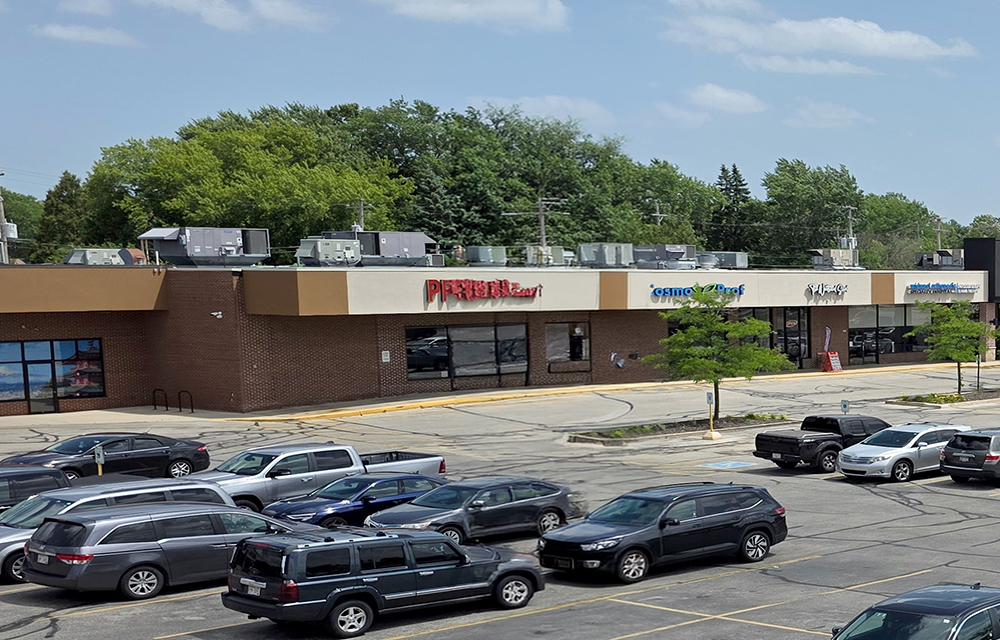
West Allis, WI United Properties Corp. completed two retail acquisitions totaling $27.4 million across Illinois and Wisconsin, adding 205,000 s/f of shopping center space to its portfolio


Quick Hits
 (2).gif)

Columns and Thought Leadership

Positive forecast for New York’s pro-housing push? - by Philip Butler
New York’s housing crisis remains a hot button topic despite growing consensus that varied and affordable housing is desperately needed statewide. Governor Hochul has recently introduced several initiatives to overcome N.Y.’s anti-housing

Hunt commercial real estate question and answer: Fortune 500 wisdom - by David Hunt
Yes, there are lessons to be learned from the largest companies in America when comes to managing your real estate. But the decision to buy or lease real estate may not be one of

New York’s streets are full again, and the retail numbers prove it - by Noam Aziz
Walk down any New York block this year and you can feel it. The sidewalks are crowded, the storefronts are lit, and the energy that defines this city is back at full volume.

A guide to finding the right NYC property management company - by Sanjay Gandhi
Being a small to midsize landlord in NYC is an increasingly demanding endeavor. From navigating complex regulations, increased compliance demands to dealing with tenant issues and remediating violations. It is wise to enlist the assistance of a partner, a professional
.gif)