



News:
Brokerage
Posted: December 15, 2020
Law: Nassau County reassessment: What we know so far - Robert Renda

On November 1, 2020, the 2020/21 School Tax bills were mailed to property owners across Nassau County. These were the first tax bills to be based upon the much anticipated “Nassau County Reassessment.” The Reassessment was the first countywide reassessment in nearly a decade. From tax year 2011/12 through 2019/20, real estate tax assessments were based on a “frozen roll” in Nassau County. While real estate tax assessments were subject to change as a result of assessment challenges, as well as the construction and destruction of improvements, Nassau County did not update property tax assessments to reflect the ebb and flow of the real estate market.
As a result, the 2020/21 School Tax was not only a source of great anticipation and angst, it was also viewed as a bellwether for commercial real estate taxes for the years to come. So, what have we learned from the recently issued tax bills? The answer is, unfortunately, we have not learned enough. While there are property owners who have experienced dramatic changes in their tax bills as a result of the Reassessment, the Reassessment’s full impact has not yet been felt. This is due to state and local statutes which require the Reassessment to be “phased-in” over a 5-year period. Consequently, while the 2020/21 School Tax bills provide some insight as to what can be expected, they do not paint a complete picture for property owners. Over the next five years, things will continue to change for property owners, in some cases significantly, as the Reassessment is “phased-in”.
Given the uncertainty that continues to linger relative to the full impact of the Reassessment, it is more important than ever for property owners to speak with a tax certiorari attorney to ensure they are taking all of the necessary steps to minimize their commercial real estate tax burden.
Robert Renda is a tax certiorari and real estate attorney at Forchelli Deegan Terrana LLP in Uniondale, N.Y.
Tags:
Brokerage
MORE FROM Brokerage
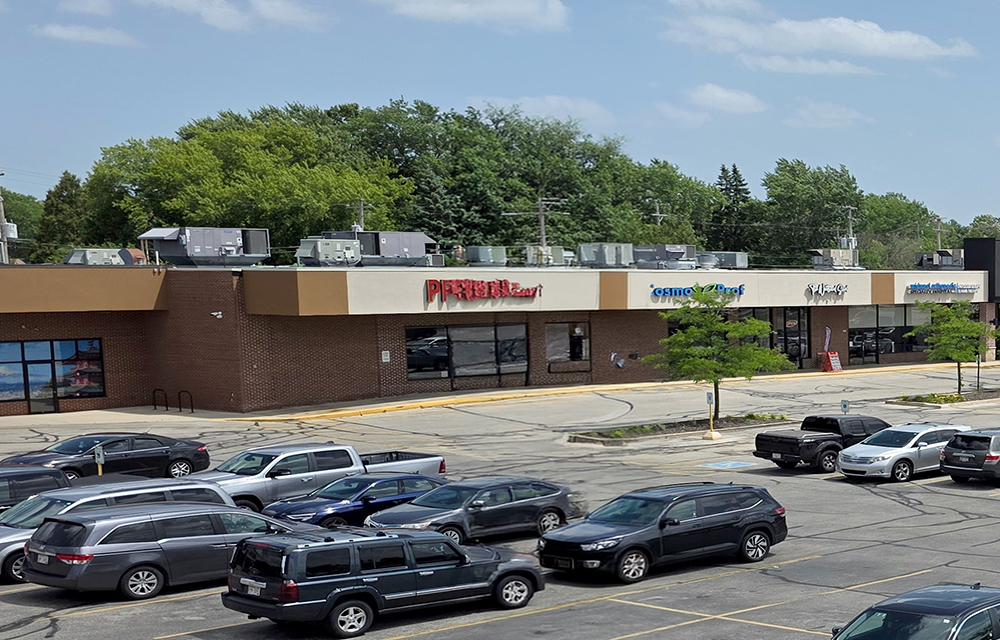
United Properties Corp. expands Wisconsin and Illinois retail presence adding 200,000 s/f
West Allis, WI United Properties Corp. completed two retail acquisitions totaling $27.4 million across Illinois and Wisconsin, adding 205,000 s/f of shopping center space to its portfolio




Quick Hits

Columns and Thought Leadership

Positive forecast for New York’s pro-housing push? - by Philip Butler
New York’s housing crisis remains a hot button topic despite growing consensus that varied and affordable housing is desperately needed statewide. Governor Hochul has recently introduced several initiatives to overcome N.Y.’s anti-housing

Hunt commercial real estate question and answer: Fortune 500 wisdom - by David Hunt
Yes, there are lessons to be learned from the largest companies in America when comes to managing your real estate. But the decision to buy or lease real estate may not be one of

A guide to finding the right NYC property management company - by Sanjay Gandhi
Being a small to midsize landlord in NYC is an increasingly demanding endeavor. From navigating complex regulations, increased compliance demands to dealing with tenant issues and remediating violations. It is wise to enlist the assistance of a partner, a professional

New York’s streets are full again, and the retail numbers prove it - by Noam Aziz
Walk down any New York block this year and you can feel it. The sidewalks are crowded, the storefronts are lit, and the energy that defines this city is back at full volume.
.gif)