



News:
Brokerage
Posted: June 18, 2019
Hudson Gateway Association of Realtors and RISMedia co-host forum, “The State of Real Estate Data in NYC”
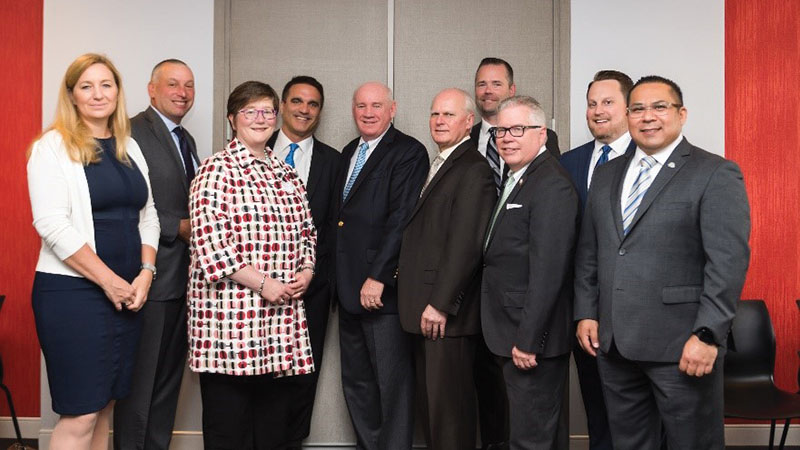
New York, NY Top real estate experts joined the Hudson Gateway Association of Realtors (HGAR) and RISMedia at “The State of Real Estate Data in NYC” on May 20th in Manhattan to discuss the importance of accurate data in residential listings and the need for a unified system.
Richard Haggerty, CEO of HGAR and president of the New York MLS, the multiple listing service that includes the New York metro area and the five boroughs, welcomed the 75-plus industry professionals in attendance at Convene NYC.
“At HGAR and New York MLS, we are staunch believers in accurate and clean data and how it can better our industry,” said Haggerty. “We are thrilled to partner with RISMedia and host some of the leading minds in real estate to brainstorm where we are and where we could be.”
During his remarks, Haggerty outlined the costs of disparate data and also pointed to several factors “disrupting” the industry, including litigation against brokerages, an increasing infusion of venture capital, technology and artificial intelligence. “We have to embrace technology. We have to embrace change,” he said. “We have to figure out how to make it work for us all, recognizing that it’s going to enable us to give a better level of service to the consumer.”
Haggerty said inaccurate data is the key driver of “monetary and time drains” for industry professionals, and NewYorkMLS.com could change that. “We can help with this challenge. New York MLS will make it easier for brokers to access accurate data that covers the entire region. The New York MLS will encompass listing information from the Hamptons through Manhattan and the boroughs into the Hudson Valley. New York MLS will make a difference. Let’s make this happen.”
John Featherston, founder, CEO and publisher of RISMedia, moderated a thought-provoking discussion on the benefits and pitfalls of an MLS, with Mitch Skinner, Esq., managing member at Larson Skinner; Rene Galicia, director of MLS engagement at the National Association of Realtors; and Sam DeBord, CEO of Real Estate Standards Org.
“We’re talking about ways to thrive, not just survive,” Featherston said, and emphasized the value of organized data. “Your word is your bond. Your reputation is what you’re presenting. Your brokers and agents need the most accurate and up-to-date data to compete in this marketplace.”
The city doesn’t “have a common repository of information, shared by everybody,” Rand said, citing examples of incomplete and inconsistent data, and getting “different reads on the market” by some of the top companies. “This is not a tolerable state of affairs for a market as critical as Manhattan. It’s not the fault of any particular broker – it’s the fault of the industry.”
Featherston then guided a discussion on the “uniqueness” of Manhattan’s real estate market with Rory Golod, general manager, Compass; Bess Freedman, CEO, Brown Harris Stevens; and Jed Garfield, managing partner, Leslie J. Garfield & Co.
The participants came together for a Town Hall discussion and Q&A moderated by Featherston. He asked the audience about the future of the market and whether they have the right tools to be efficient and profitable. “You’ll be doomed if you don’t solve your data problems to increase your value to customers,” he said. “Get control of your data.”
Tags:
Brokerage
MORE FROM Brokerage
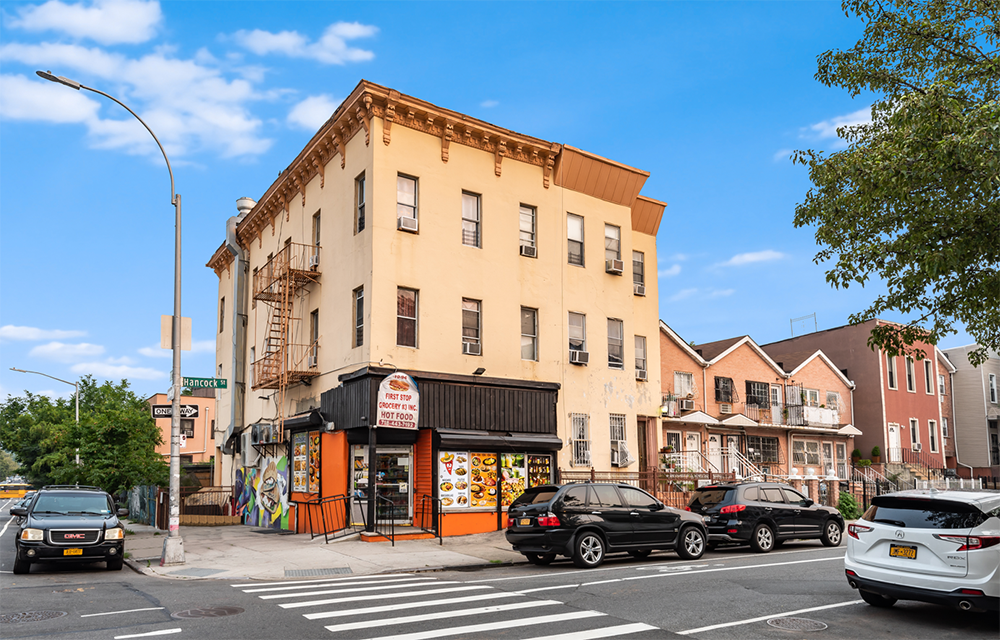
Investment Property Realty Group closes $1.75 million sale of 1094 Hancock Street in Brooklyn
Brooklyn, NY Investment Property Realty Group (IPRG), a New York-based commercial investment firm, has closed the sale of 1094 Hancock St., a mixed-use building in the Bushwick section, for $1.75 million.




Quick Hits

Columns and Thought Leadership

Hunt CRE question and answer: Choosing a real estate agent - by David Hunt
First, we will only work with one agent exclusively. The primary reason is that we want that agent to legally represent our client’s interests. In New York State, a real estate agent has a fiduciary

Hunt commercial real estate question and answer: Fortune 500 wisdom - by David Hunt
Yes, there are lessons to be learned from the largest companies in America when comes to managing your real estate. But the decision to buy or lease real estate may not be one of

A guide to finding the right NYC property management company - by Sanjay Gandhi
Being a small to midsize landlord in NYC is an increasingly demanding endeavor. From navigating complex regulations, increased compliance demands to dealing with tenant issues and remediating violations. It is wise to enlist the assistance of a partner, a professional

New York’s streets are full again, and the retail numbers prove it - by Noam Aziz
Walk down any New York block this year and you can feel it. The sidewalks are crowded, the storefronts are lit, and the energy that defines this city is back at full volume.
.gif)