




The timeless saying “location, location, location” remains a fundamental principle in real estate valuation today. However, the way location influences the property tax burden for a commercial property is more complex. Commercial property taxes can differ depending on the taxable jurisdiction in which the property is located. Various factors — such as access, visibility, drive-thru capability, parking, and proximity to key infrastructure — not only impact property values but also affect the property’s tax obligation. For those in commercial real estate, understanding how these factors influence property tax calculations is crucial.
Commercial properties are taxed at varying rates based on the specific taxing entities governing their location. It is important to analyze these rates carefully, with particular attention to the school district, as it typically accounts for the largest portion of the tax bill. On Long Island, the highly fragmented system includes 124 different school districts, meaning that even comparable properties within the same town can face significantly different tax burdens depending on school district boundaries.
The tax burden is determined by an income analysis that considers the property’s revenue stream. Rental income is influenced by factors such as the property’s size, location, accessibility, and the types of businesses it can accommodate. Ironically, higher property values do not always translate to higher taxes, as this depends on the taxing jurisdiction. When more properties are developed in an area, the tax burden is distributed among a larger number of taxpayers. As a result, the total revenue needed to fund local services — such as schools, roads, and emergency services — is shared more widely, potentially leading to lower tax rates.
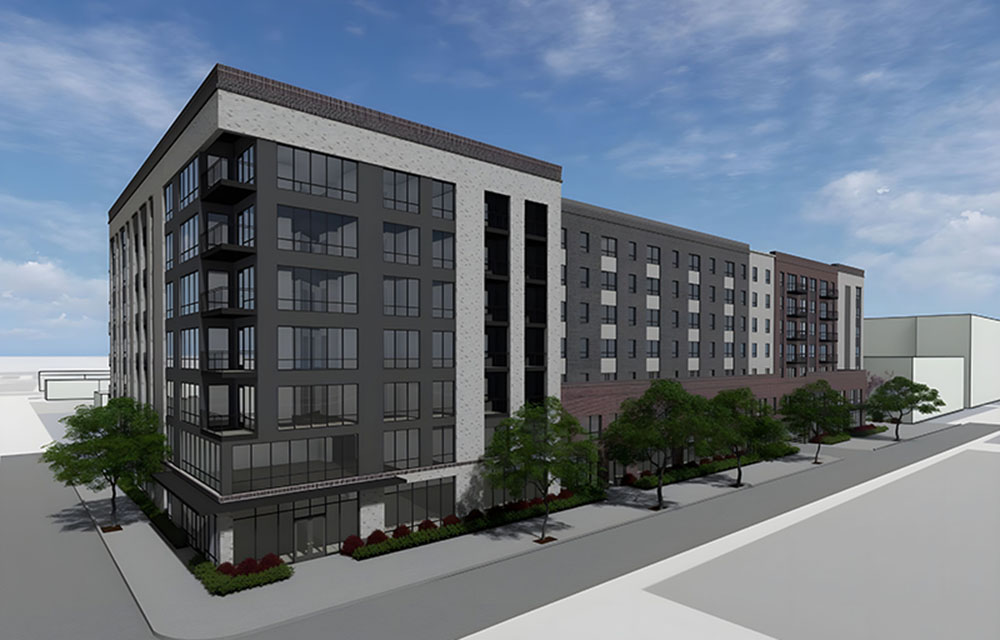
This is why jurisdictions partnering with industrial development agencies to promote housing and new developments play a crucial role on Long Island. The same applies to villages and downtown areas that have eased zoning restrictions to encourage growth. These areas are fostering overall growth beyond the high-profile new construction projects. By increasing property values and expanding the tax base, they distribute the financial burden across a larger number of property owners, helping to fund local budgets more sustainably than areas that have remained unchanged.
Some jurisdictions have taken proactive steps by implementing “master plans” or “overlay districts.” A recent example is Melville, which recognized the decline in the office market and developed a strategic roadmap for growth. The town board passed a resolution establishing an expedited approval process for developments in an area traditionally reserved for office buildings. This forward-thinking approach enables municipalities to adapt to changing market conditions rather than reacting out of necessity after their tax base has eroded.
Proximity to high-traffic areas significantly impacts commercial property values, as these locations offer greater customer foot traffic and revenue potential. Visibility is also crucial — properties easily seen by passing vehicles or pedestrians tend to attract more customers and hold higher value. For example, a retail store or restaurant at a busy intersection is far more desirable than a similar property in a less prominent location.
Accessibility is a key factor in determining property values and their associated tax obligations. Properties near major transportation hubs, such as train stations, are highly valued due to their convenience for both customers and employees. Conversely, commercial properties in areas with limited public transportation access often have lower values, as they attract less foot traffic, ultimately resulting in a reduced property tax burden.
For businesses like fast-food restaurants, banks, and coffee shops, drive-thru accessibility and parking are critical factors. Properties that can accommodate drive-thru services are often more valuable, as they appeal to customers seeking convenience. In some sectors, drive-thru access has become essential for competitiveness. Properties without a drive-thru, or those unable to accommodate one due to their size or layout, may be entitled to a significant tax reduction to account for their limited functionality.
After identifying the jurisdiction and school district a property falls within, it is essential to consider detailed location factors. Local development trends, visibility, accessibility, parking, and proximity to key infrastructure all impact property values for tax purposes. Understanding these elements is crucial for commercial property owners when making decisions about purchasing, leasing, or business operations. Properties lacking these value-enhancing features will typically be entitled to tax reductions, as they generate lower rental income and carry greater risk compared to more desirable properties.
Brad Cronin, Esq., and Sean Cronin, Esq., are partners at Cronin & Cronin Law Firm, PLLC, Mineola, N.Y.

.png)

 (2).gif)