



News:
Brokerage
Posted: July 21, 2008
Historic preservation and sustainability of our architectural past may be a key to a greener future
Buffalo's wealth of historic architecture tends to surprise first-time visitors, with its turn-of-the-century landmark buildings designed by some of the country's leading architects, and highly sought-after century-old homes in historic residential districts like Elmwood Village and Allentown. The historic and cultural value of these properties is tremendous for the city, but few people probably look at these buildings and think about how green they are. Historic buildings - green? Absolutely.
A common saying amongst sustainability professionals is that the greenest building is the one that is never built. It may also be true that the greenest building is the one that is already built. Sustainability is about more than building new "leading-edge" green buildings. It involves people (social sustainability), profit (economic sustainability), and planet (environmental sustainability) - this is the triple bottom-line philosophy promoted by the U.S.Green Building Council (USGBC). Preservation deals also with cultural sustainability - the conservation of our cultural resources for future generations. Historic preservation and sustainability therefore share similar goals: while preservation is about protecting the past, sustainability is about protecting the future, and both advocate making the best possible use of our existing resources, both natural and built.
The significant amount of materials and labor represented by historic buildings has both an environmental and economic value. This is an example of embodied energy - energy and resources already expended - which would have to be replaced if the building were demolished. Embodied energy is defined by the USGBC as: "energy that is used during the entire life cycle of the commodity for manufacturing, transporting, and disposing of the commodity as well as the inherent energy captured within the product itself." Translation: existing buildings have greater value beyond their historic façades.
Some of the passive environmental features of buildings constructed prior to World War II are finding their way back into modern green designs, including natural ventilation, daylighting, and operable windows. Daylighting in particular shaped the architecture of many turn-of-the-century buildings in cities like Chicago and New York. With improvements in mechanical systems and building envelopes throughout the latter half of the 20th century, we lost touch with that connection between the interior and exterior environments. Light, air, and views are once again influencing architectural form.
The economics of preservation and sustainability rely on the same long-term thinking, with the focus on durability and building for the longer term. The philosophy of repair before replacement supports local business and economic sustainability by utilizing local materials and labor. The quality and durability of materials used on historic buildings such as thick masonry walls, heavy timber and old-growth wood, are highly valuable in today's sustainably-designed projects, and hard to replace. The quality of craftsmanship is hard to match with modern techniques and traditional skills that are not readily available today, so replication of historic building elements can be costly and difficult to achieve. There is tremendous cultural, economic, and environmental value tied up in our existing historic building stock.
With more local and state governments and agencies requiring Leadership in Energy & Environmental Design (LEED) certification, the pressure is on owners, developers and architects to incorporate green features into their projects. For historic renovation and restoration, that can be a significant challenge. High-performance design has often been seen as contradictory to the Secretary of the Interior's Standards for Rehabilitation, the benchmark for preservation over the past 30 years. The Gerding Theater in Portland, Oregon was the first National Register building to be awarded LEED platinum certification. It wasn't easy to balance the demands of historic preservation of the former Oregon National Guard Armory (built in 1891) with the high expectations of a LEED platinum rating, but the project's success proves that the two objectives do not have to be mutually exclusive.
The greatest challenge to greening many historic buildings is to seek such a balance between preservation and high-performance standards. Installing more efficient mechanical systems may have a significant impact upon the building's interior or roof, which could be in conflict with preservation goals. Replacing historic windows with more energy efficient ones could alter the building's exterior if not done with attention to historic detail.
Where new construction can take advantage of modern renewable or recycled materials, incorporating "green" materials into a preservation project may be difficult because of rehabilitation standards that require original materials to be matched if replaced. Traditional roof materials are favored by preservationists over high-albedo materials or green roofs because of their visual impact and compliance with heritage standards. Antique lighting that uses inefficient incandescent lamps can't always be retrofitted with more efficient bulbs without losing some of the original character. A creative lighting designer can make recommendations that both preserve the historic intent while making the fixture as efficient as possible or supplementing it with other more efficient fixtures. In all of these examples, the importance of integrated design - which is at the core of sustainable design - cannot be overemphasized.
There are several areas where existing buildings have the advantage over new construction when applying the USGBC's LEED Rating System. LEED rewards projects that reuse existing buildings in whole or in part, are close to public transit, and use already developed sites. Older buildings can achieve better daylighting values due to their window heights and room proportions. Urban buildings score a point simply by their location, which also takes advantage of existing urban infrastructure.
The next version of LEED, due out in 2009, will award additional points that will benefit existing buildings, including additional points for building reuse. Urban sprawl will be addressed through more points for building or renovating in densely developed areas. Access to public transportation also will be rewarded with additional points. LEED 2009 is studying an alternative compliance path that will support the reuse of existing buildings by addressing the value of durable materials and embodied energy through life cycle analysis.
While it's implied that reusing existing buildings is environmentally preferable, the preservation of an historic building is not specifically recognized by LEED. The points system doesn't distinguish a 10 year old building from a 100 year old one, yet there are vast differences in the quality and durability of their construction. The USGBC has been working with such organizations as the National Trust for Historic Preservation to promote the sustainability of historic preservation, according to Brendan Owens, VP of technical development for the council. How to incorporate that into future versions of LEED will take more study and collaboration, but the link between sustainability and historic preservation has been recognized by such organizations as the AIA and the National Trust for Historic Preservation. Several conferences in the past two years have focused attention on this relationship, and recent articles in such publications as GreenSource and Environmental Building News have talked about the commonalities between the two movements. There is much to learn from advocates on both sides, and tremendous opportunities to be had when we can work together. One of the keys to a greener future just might be in the preservation of our architectural past.
Roxanne Button, AIA, MRAIC, LEED AP, is an architect with Architectural Resources in Buffalo, N.Y. and a member of the board of directors for the N.Y. upstate chapter of USGBC.
Tags:
Brokerage
MORE FROM Brokerage
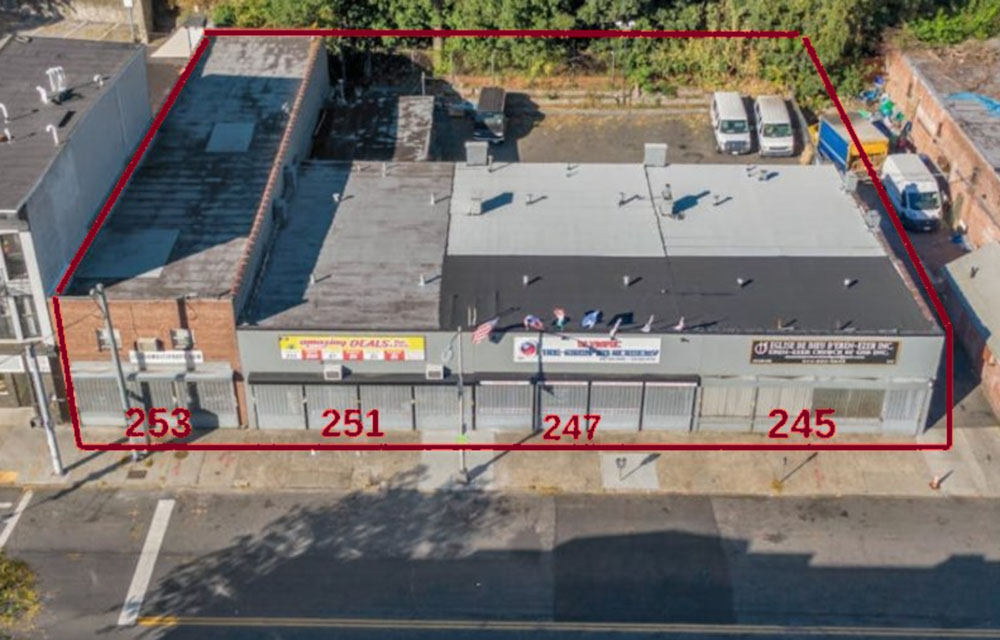
Adler of Rand Commercial brokers $2.3 million sale of retail assemblage in Yonkers
Yonkers, NY Rand Commercial negotiated the June 12, 2026 sale of an 11,000 s/f retail assemblage at 245, 247, 251, and 253 South Bdwy. for $2.3 million to an owner-user.




Quick Hits


Columns and Thought Leadership

The anticipated effect of Basel III and ISO 20022 implementation on commercial real estate - by Michael Zysman
July 1, 2025 is the deadline for US banks to begin to adopt Basel III banking standards and July 14, 2025 is the deadline for U.S. banks to adopt ISO 20022 messaging standards. Both will have a significant effect on the banking and commercial real estate (CRE) finance sectors.

A fresh start - by Shallini Mehra and Amit Doshi
For the past several years, the New York City multifamily housing market has been defined by disruption. The combined impact of the HSTPA rent laws and a sharply higher interest rate environment has fundamentally reduced

Tri-state capital migrates nationally amid regulation pressure - by Reese Weaver
New York tri-state multifamily investors are increasingly reallocating capital to less-regulated markets across the U.S. as rent control and legislative risk erode returns at home. With over 60% of New York City’s rental housing stock classified as rent-stabilized, the traditional value-add model — buying under-performing buildings,

The death of the generic offering memorandum: What buyers expect in 2025 - by Kimberly Zar Bloorian
There was a time when an offering memorandum (OM) was pretty bare bones, some photos, a few bullet points on income, and a rent roll thrown in at the back. That used to get the job done. Not anymore. In 2025, buyers are sharper, faster, and more selective. They’re looking
