



News:
Brokerage
Posted: July 21, 2008
Don't wreck New York state's current Industrial Development Agency (IDA) rules
Industrial Development Agencies (IDAs) are empowered by NYS to take title to properties so that property taxes are, for a time, eliminated in exchange for much lower "payments in lieu of taxes" (PILOTs) and to issue tax exempt bonds for financing which yield lower mortgage interest costs to borrowers than may be obtained conventionally through banks. There are 116 such agencies in NYS, most often working on behalf of counties but sometimes for towns. While following the enabling legislation there is some flexibility within which each IDA may adopt different policies as to which businesses may take advantage of IDA benefits and whether those tax savings may be applied to either or all, of town, village, county, or school portions of the tax bill otherwise due. The existence of IDAs is itself an acknowledgment that the weight of ordinary assessments and tax rates is too high in NYS to allow businesses to grow at an adequate rate, but also, that NYS and local governments have set policies that some businesses are to be so encouraged, and others not. IDA benefits are thus not available to all businesses and, as the almost total empowerment is for new construction and "industrial" businesses, the vast majority of ordinary prospective business growth in NYS must do so in the face of property tax rates (and regulations) which are higher than basically the rest of the country. (Statistics about NYS's relative national position are available at the Tax Foundation, www.taxfoundation.org).
The continuing use of IDAs is being debated widely in NYS and specific legislation is being considered in the NYS legislature which would dramatically reduce the terms of their use. A bill sponsored by Sam Hoyt of the Buffalo area passed in the NYS assembly January 23 which, if its companion NYS senate legislation sponsored by George Maziarz passes, would impose new strenuous regulations on IDAs. The stated purpose of these regulations is to promote "accountability" "transparency" and "efficiency" of the IDA assistance process but the effect of the an eventual law, if passed by the senate, would be to slow a business's application and IDA review dramatically, while increasing costs for the applicant to a level which would render it financially pointless to pursue the IDA benefits at all. Hoyt's bill, A08703, among many other things:
* "Establishes requirements for [IDA] board membership to include local government, school boards, organized labor, and environmental groups."
* "Requires project applicants to complete an application form including... a statement as to whether or nor officers or major shareholders have been found to have violated any federal, state, or local law, rule, or regulation related to environmental protection, taxations, financial assistance, protection of workers or minority and women-owned enterprises."
* "Requires ... a community impact report to include an analysis of transportation and existing in-site infrastructure."
* "Requires the payment of prevailing wages" on IDA funded projects.
* "Requires all employees to be paid no less than the median hourly wage for 'all occupations' for the duration of the financial assistance and for five years thereafter."
* "Requires successor contractors, in cases where a previous contract has been terminated, to retain all service employees for ninety days after the contract termination and prohibits the discharge of such employees without cause."
* "Establishes an IDA complaint process [with] the Department of Economic Development"
* "Establishes a compliance schedule for green building standards..."
* "Prohibits IDA funds from being used for projects not on a brownfield, served by existing public sewer and water, or on lands designated as suitable for conservation, unless the agency can demonstrate there is no viable alternative"
* "Requires deviations from the uniform PILOT policy to be approved in writing by the affected governments."
* "Consolidates the sub-county IDAs of Erie County."
Obviously, this bill extends the functions of IDAs, and the requirements of local and state government of their supervision, way beyond their original purpose to encourage economic development, while, at the same time, making economic development more circumscribed and burdened. If this legislation is passed, IDAs would be in the business of environmental, infrastructure, and social analysis which will dramatically increase time and expense, for both the applicant and the IDA, for project review, beyond the already draconian requirements of the State Environmental Quality Review Act for all larger new construction projects. The IDAs and the government would also be meddling with contracts between employees and employers and exposing companies to intolerable public exposure to all parts of their wage policies. It is estimated by the Amherst IDA and others that such "prevailing" and "living" wage requirements alone would add 15-30% to a project's cost, thus eliminating any financial reason to use IDA benefits in the first place. Through its brownfield and current sewer use requirements, it would effectively eliminate expansion of businesses into newer NYS communities perhaps preferred by those businesses. They would, however, be free to leave NYS.
NYS income, sales, and property taxes are collectively about the highest in the country. In the case of property taxes, IDA benefits are about the only way to mitigate their job-destroying burden which helps to push people from NYS, and especially upstate N.Y. IDAs, instead of being seen as a vehicle to help business development, are, instead, also being attacked as underpaying for local municipal and school services created by IDA supported business benefits. Our WNY chapter of the NYS Commercial Association of Realtors has joined with the Buffalo Niagara Builders Association, Buffalo Niagara Realtors Assocation, The Amherst Chamber of Commerce, the Amherst IDA, and National Association of Industrial and Office Parks to financially support a study of the effect of IDA benefits on a community's continuing municipal and school costs.
The real shame, however, is that the IDAs are all NYS business has to mitigate oppressive property taxes when the crying need is for general income, sales, and property tax relief ,which doesn't have to be justified with convoluted industrial policy and social welfare philosophy. Commercial and residential taxes (typically at a rate of about 4% of full market value) should be reduced for any investment in real estate, instead, of, as is the current practice, increasing assessments shortly after the time for which building permits for improvements are applied. Such a policy change would especially benefit poor cities like Buffalo, where the current business and residential real estate stock is crumbling and, in huge numbers, abandoned. Keeping the IDAs functioning without the anti-business burden of Hoyt's and Maziarz's proposed legislation is the bare minimum NYS must do to keep the finger in the dam of continued job loss. If anything, the scope and flexibility of IDAs should be increased, along with general, easily administered, relief by the amount invested in the current commercial and residential real estate stock.
Stephen Hunt is a commercial sales and leasing agent at Hunt Commercial Real Estate, Buffalo, N.Y.
Tags:
Brokerage
MORE FROM Brokerage
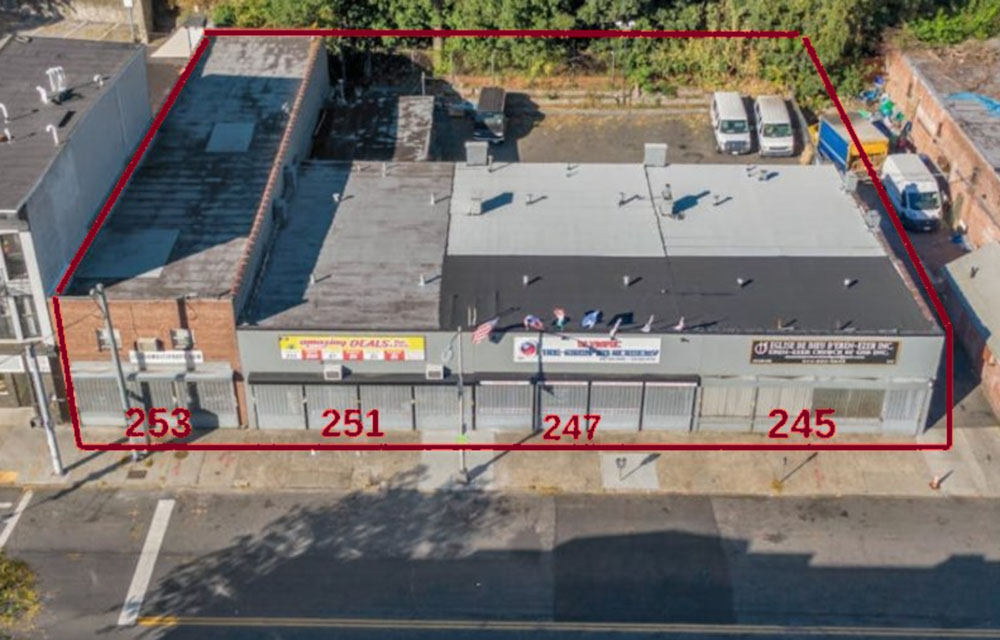
Adler of Rand Commercial brokers $2.3 million sale of retail assemblage in Yonkers
Yonkers, NY Rand Commercial negotiated the June 12, 2026 sale of an 11,000 s/f retail assemblage at 245, 247, 251, and 253 South Bdwy. for $2.3 million to an owner-user.






Quick Hits


Columns and Thought Leadership

Tri-state capital migrates nationally amid regulation pressure - by Reese Weaver
New York tri-state multifamily investors are increasingly reallocating capital to less-regulated markets across the U.S. as rent control and legislative risk erode returns at home. With over 60% of New York City’s rental housing stock classified as rent-stabilized, the traditional value-add model — buying under-performing buildings,

The anticipated effect of Basel III and ISO 20022 implementation on commercial real estate - by Michael Zysman
July 1, 2025 is the deadline for US banks to begin to adopt Basel III banking standards and July 14, 2025 is the deadline for U.S. banks to adopt ISO 20022 messaging standards. Both will have a significant effect on the banking and commercial real estate (CRE) finance sectors.

The death of the generic offering memorandum: What buyers expect in 2025 - by Kimberly Zar Bloorian
There was a time when an offering memorandum (OM) was pretty bare bones, some photos, a few bullet points on income, and a rent roll thrown in at the back. That used to get the job done. Not anymore. In 2025, buyers are sharper, faster, and more selective. They’re looking

A fresh start - by Shallini Mehra and Amit Doshi
For the past several years, the New York City multifamily housing market has been defined by disruption. The combined impact of the HSTPA rent laws and a sharply higher interest rate environment has fundamentally reduced
