



News:
Brokerage
Posted: October 18, 2016
Governor Cuomo unveils proposed regulations for “zombie properties”
Albany, NY According to governor Andrew Cuomo, the Department of Financial Services has proposed a regulation that mandates banks and mortgage services report vacant and abandoned properties in accordance with the new law. The proposal comes on the heels of a law signed by the governor in June that curbs the threat posed to communities by “zombie properties” by expediting foreclosure proceedings, improving the efficiency and integrity of the mandatory settlement conferences, and obligating banks and mortgage servicers to secure, protect and maintain vacant and abandoned properties before and during foreclosure proceedings. The new law goes into effect on December 20, 2016.
“Abandoned homes are a blight on New York communities, and the longer they are allowed to fall in disrepair, the lower property values for entire neighborhoods are dragged down,” governor Cuomo said. “This regulation is another step toward combatting the scourge of vacant and neglected properties, and will ensure that banks and mortgage servicers are held fully accountable for complying with their obligations under this new law.”
Under the law, bank and mortgage servicers must complete an inspection of a property subject to delinquency within 90 days and must secure and maintain the property where the bank or servicer has a reasonable basis to believe that the property is vacant and abandoned. Banks and mortgage servicers are required to report all such vacant and abandoned properties to the Department of Financial Services and submit quarterly reports detailing their efforts to secure and maintain the properties and any foreclosure proceedings. If the Department of Financial Services determines that a property that has been deemed vacant and abandoned is not being properly maintained by the relevant bank or mortgage servicer, the superintendent will exercise her authority to hold the bank or mortgage servicer accountable. Violations are subject to a civil penalty of $500 per day per property.
The proposed regulation is subject to a 45-day notice and public comment period following the October 12, 2016 publication in the New York State register before its final issuance.
The regulation is part of several provisions that will help to prevent New Yorkers from losing their homes and address the scope of unoccupied and ill-maintained properties, which based on voluntary reporting, is estimated to be over 6,000. Under the new law, reporting by banks and mortgage servicers is now mandatory, and the number of abandoned homes is anticipated to be even higher. The law also requires the creation of a zombie hotline to allow New Yorkers to report vacant or abandoned properties. New Yorkers can contact the Department of Financial Services hotline at (800) 342-3736 or online at www.dfs.ny.gov to report vacant or abandoned properties.
The “zombie properties” legislation signed into law by the governor in June also includes measures to assist homeowners facing mortgage foreclosure, improve the efficiency and integrity of the mandatory settlement conferences, and establishes a pre-foreclosure duty to maintain on mortgagees, create an expedited foreclosure process for vacant and abandoned properties, create an electronic vacant property registry, and establish a Consumer Bill of Rights.
Additionally, the FY 2017 state budget invests nearly $20 billion for comprehensive statewide housing and homelessness action plans. Over the next five years, the $10 billion housing initiative will create and preserve 100,000 affordable housing units across the State, and the $10 billion homelessness action plan will create 6,000 new supportive housing beds, 1,000 emergency beds, and a variety of expanded homelessness services.
As part of the governor’s ongoing efforts to assist future homebuyers and existing homeowners, this investment includes more than $100 million in available funds to help new homebuyers purchase and renovate “zombie” properties and support existing low- and middle-income homeowners with major repairs and renovations. Funding is available through the New York State Homes and Community Renewal to establish the new Neighborhood Revitalization Program and provide grants for not-for-profit organizations and municipalities throughout the state to rehabilitate, repair and improve homes.
Tags:
Brokerage
MORE FROM Brokerage
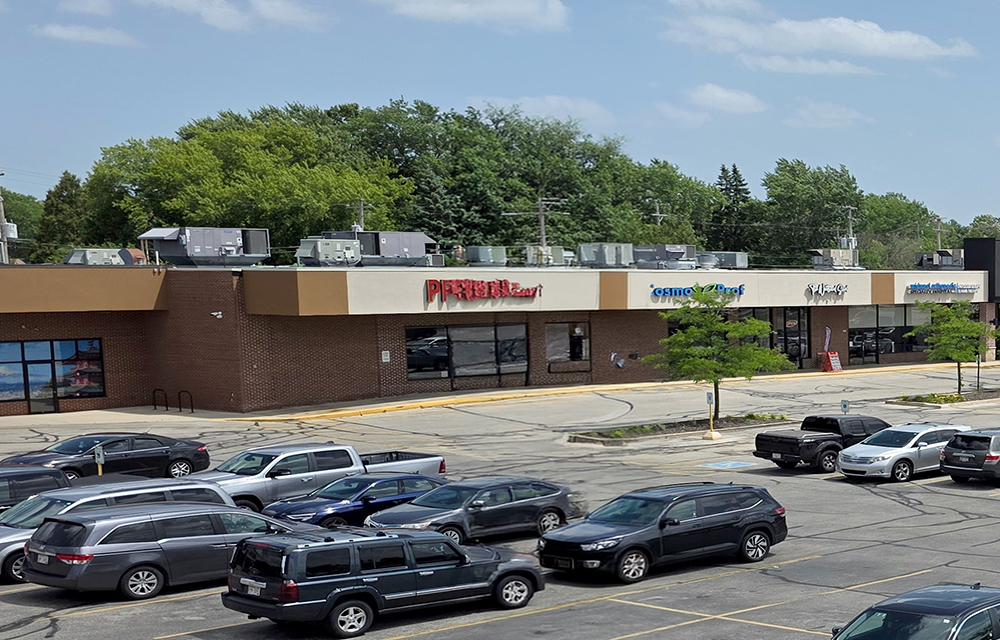
United Properties Corp. expands Wisconsin and Illinois retail presence adding 200,000 s/f
West Allis, WI United Properties Corp. completed two retail acquisitions totaling $27.4 million across Illinois and Wisconsin, adding 205,000 s/f of shopping center space to its portfolio


Quick Hits

Columns and Thought Leadership

Positive forecast for New York’s pro-housing push? - by Philip Butler
New York’s housing crisis remains a hot button topic despite growing consensus that varied and affordable housing is desperately needed statewide. Governor Hochul has recently introduced several initiatives to overcome N.Y.’s anti-housing

Hunt commercial real estate question and answer: Fortune 500 wisdom - by David Hunt
Yes, there are lessons to be learned from the largest companies in America when comes to managing your real estate. But the decision to buy or lease real estate may not be one of

A guide to finding the right NYC property management company - by Sanjay Gandhi
Being a small to midsize landlord in NYC is an increasingly demanding endeavor. From navigating complex regulations, increased compliance demands to dealing with tenant issues and remediating violations. It is wise to enlist the assistance of a partner, a professional

New York’s streets are full again, and the retail numbers prove it - by Noam Aziz
Walk down any New York block this year and you can feel it. The sidewalks are crowded, the storefronts are lit, and the energy that defines this city is back at full volume.
.gif)