



News:
Brokerage
Posted: December 7, 2007
Federal funding guarantee for Second Ave. Subway 1st phase
The city has reached an agreement that guarantees $1.3 billion in federal funding for the construction of the first phase of the Second Ave. Subway.
The first phase of the subway project will run along Second Ave. north from 63rd St. to 105th St., creating three ADA-accessible stations at 72nd, 86th and 96th Sts.
The line will relieve overcrowding on the Lexington Avenue subway line (4, 5 and 6 trains) and is projected to carry 213,000 riders daily, or as many as medium-sized subway systems in Washington, D.C., Boston and Chicago.
At first, the line will be served by the Q train, which will continue to Coney Island, Brooklyn, via the Broadway express and Brighton Beach local lines.
In order to meet the transportation needs of a rapidly-growing population, we must be prepared to invest in our city's infrastructure.
Not only will the construction of the Second Avenue Subway alleviate significant overcrowding along the Lexington Ave. lines, but it will also add to the city's economic growth and our quality of life by getting more people out of their cars and onto public transportation.
"Today is truly a historic moment for New York," said governor Spitzer. "For much of the twentieth century, New York talked about building the Second Ave. Subway. With the help of our partners in Washington and Albany, the shovels are in the ground. The project will provide much-needed relief for straphangers on the crowded Lexington Ave. line and will allow us to expand North Amerca's largest public transportation system to meet anticipated population growth and the increased demands for transit service."
"To the 1.5 million riders who squeeze onto the Lexington Ave. Line ever day, I say help is on the way," said FTA administrator James Simpson.
The line is scheduled to open in 2014. Construction will continue with three additional phases that will extend the line first up to 125th Street, where it will connect with the 4, 5 and 6 subway lines and with MTA Metro-North Railroad, and then down to Hanover Square in the Financial District.
After completion of the third and fourth phases, the line will carry two trains: the Q and the T, which will run the full length of Manhattan.
When completed, the full-length Second Avenue Subway is projected to carry 560,000 people per day.
According to the latest figures from the American Public Transportation Association, Los Angeles' subway carries 133,200 riders on an average weekday; Atlanta's MARTA, 239,400, and San Francisco's BART, 365,300, by comparison. New York City's entire subway now carries nearly 6.3 million passengers on a typical weekday.
This announcement demonstrates the Spitzer administration's continued commitment to investing in the MTA transit system as well as other critical New York City infrastructure projects such the redevelopment of Penn Station, the PATH Hub at the World Trade Center, East Side Access, South Ferry Subway Terminal and the Fulton Street Transit Center.
Michael Bloomberg is mayor of New York, N.Y.
Tags:
Brokerage
MORE FROM Brokerage
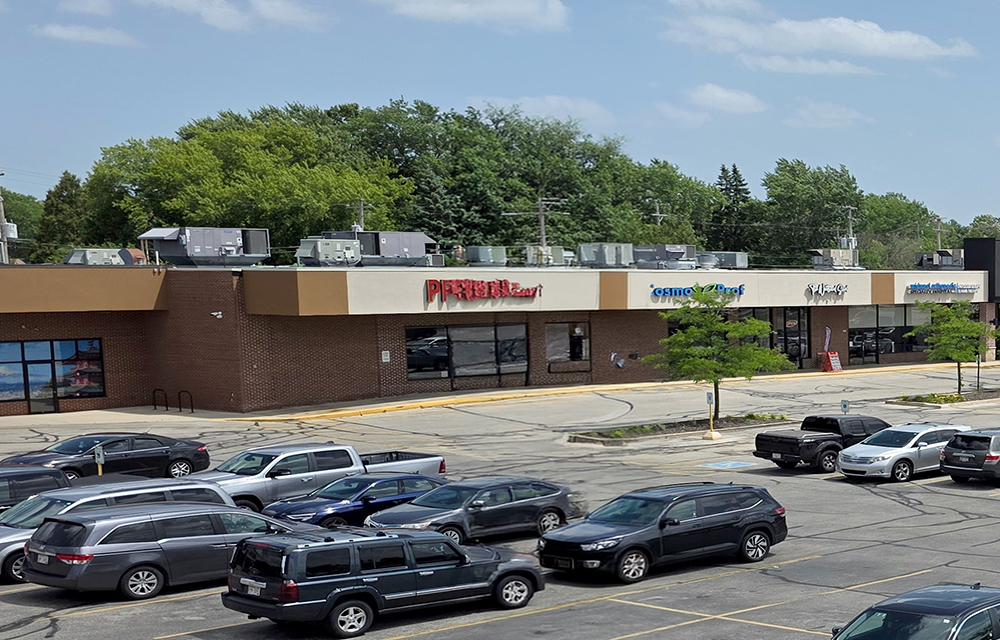
United Properties Corp. expands Wisconsin and Illinois retail presence adding 200,000 s/f
West Allis, WI United Properties Corp. completed two retail acquisitions totaling $27.4 million across Illinois and Wisconsin, adding 205,000 s/f of shopping center space to its portfolio



Quick Hits

Columns and Thought Leadership

A guide to finding the right NYC property management company - by Sanjay Gandhi
Being a small to midsize landlord in NYC is an increasingly demanding endeavor. From navigating complex regulations, increased compliance demands to dealing with tenant issues and remediating violations. It is wise to enlist the assistance of a partner, a professional

New York’s streets are full again, and the retail numbers prove it - by Noam Aziz
Walk down any New York block this year and you can feel it. The sidewalks are crowded, the storefronts are lit, and the energy that defines this city is back at full volume.

Hunt commercial real estate question and answer: Fortune 500 wisdom - by David Hunt
Yes, there are lessons to be learned from the largest companies in America when comes to managing your real estate. But the decision to buy or lease real estate may not be one of

Positive forecast for New York’s pro-housing push? - by Philip Butler
New York’s housing crisis remains a hot button topic despite growing consensus that varied and affordable housing is desperately needed statewide. Governor Hochul has recently introduced several initiatives to overcome N.Y.’s anti-housing
.gif)