


 (2).gif)
News:
Spotlight Content
Posted: February 22, 2010
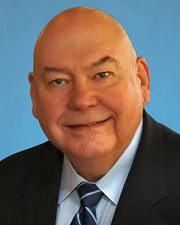
Decade Answers: David Lebenstein
David Lebenstein is a senior managing director at Cassidy Turley, New York, N.Y.
What was one of your corporate or career highlights of the decade?
My most memorable career experience of the decade happened very early in the decade when we (my late partner Arlene Wysong and I ) were able to play a critical role in creating the first new YMCA in Manhattan in 70 years.This was the McBurney YMCA which was built and opened on 14th St. in 2001-02 after a four-year torturous process to try to coordinate both the sale of the old Y on 23rd St., while solidifying the transaction to build the new Y. In addition to satisfying community and local residential concerns at the site regarding affordable housing for long-standing residents, the Y needed to keep continuously operating for its membership throughout the process.
What are your predictions for commercial real estate in the new decade?
I think the next decade will solidify the fact that the "west side from 14th St.-59th St.) is the hip, in area to be and the upper east side of Manhattan will be largely passé.
Tags:
Spotlight Content
MORE FROM Spotlight Content

The commercial classroom: 1031 tax-deferred exchanges - by Edwad Smith Jr.
The sale of real estate may trigger capital gains taxes on the net profits of that sale. These taxes may be deferred by participating in a 1031 tax exchange, in essence, by purchasing property(s) to replace the



.png)

Quick Hits
 (2).gif)

Columns and Thought Leadership
2026 Developing Long Island: ERG Commercial Real Estate launches its new Retail Leasing division
North Hempstead, NY ERG Retail Leasing is the dedicated leasing division of ERG Commercial Real Estate, an established full-service commercial real estate brokerage for over 35 years.

2026 Developing Queens: Long Island Board of Realtors advances commercial growth and advocacy in Queens
The Long Island Board of Realtors (LIBOR) Commercial Network continues to play a key role in advancing opportunities and strengthening the commercial real estate landscape across Queens. Through targeted programming and global outreach

CRE Guide Featured Company: Merritt Environmental Consulting Corp.
Merritt Environmental Consulting Corp. (MECC) was established in June of 2009 after being part of a larger engineering firm for almost 20 years. The focus of the company is to assist lending institutions, attorneys, real estate investors, and property owners with environmental concerns. Today, MECC has offices in New York, Florida, and Vermont and has grown into a regional consulting firm serving clients along the East Coast.

From vacancy to vitality: How adaptive reuse is reshaping Long Island’s CRE landscape - by Andrea Tsoukalas Curto
Adaptive reuse has become one of the most important conversations in commercial real estate today. Long Island has a large inventory of aging retail, office and industrial