



News:
Brokerage
Posted: May 12, 2026
Cushman & Wakefield inks two new leases at 28&7, bringing building to full occupancy
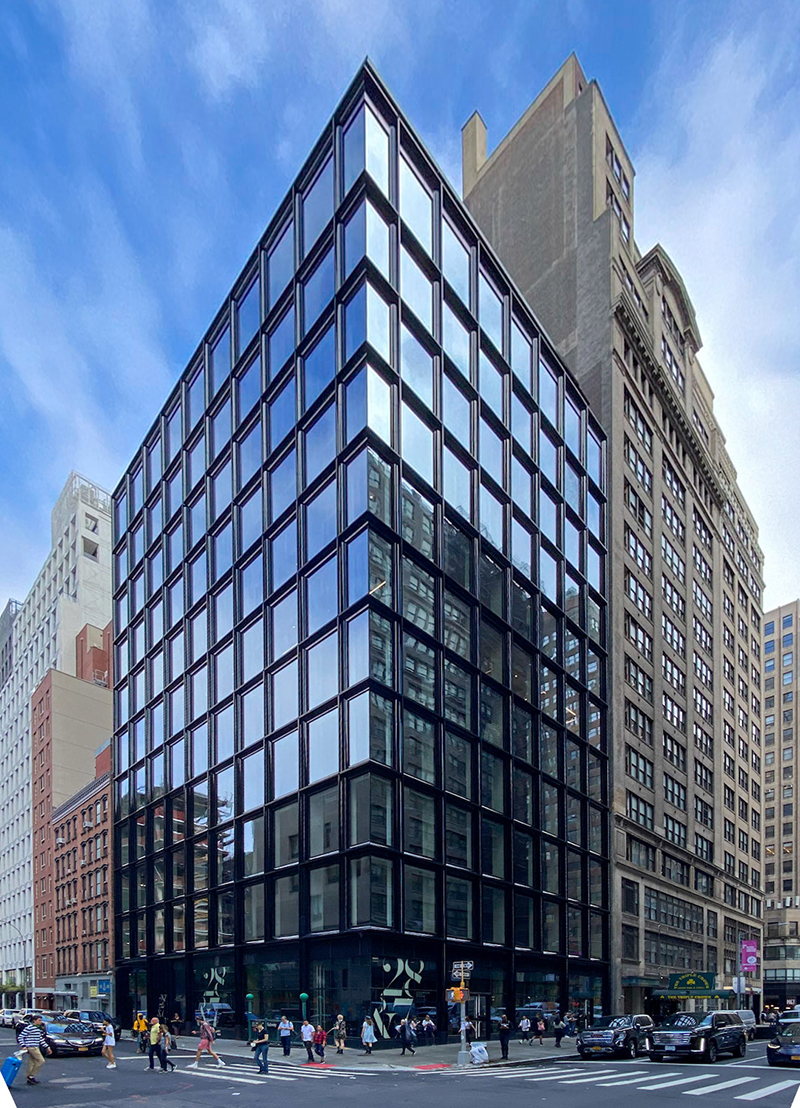 Manhattan, NY According to Cushman & Wakefield 28&7, a Class A office building located at 205 West 28th St. in Chelsea, has reached 100% occupancy following the signing of two new office leases. Verance Capital Management has signed a lease for 2,041 s/f on the second floor, while Melius AI has leased 4,595 s/f on the sixth floor.
Cushman & Wakefield represented the landlord, Capstone Equities, in both transactions. The agency leasing team included Michael Movshovich, Connor Daugstrup and Grant Potter. Ben Friedland, Taylor Scheinman, Gary Davies, and Owen Reda of CBRE represented Verance, while Ryan Alexander, Jared Isaacson, and Jeffrey Frenkel, also of CBRE, represented Melius AI.
“These leases mark an important milestone for 28&7, bringing the building to full occupancy and reinforcing the continued demand for high-quality boutique office space in Chelsea. Among a limited set of new construction office buildings in Midtown South, 28&7 distinguishes itself as a best-in-class product,” said Avi Kollenscher of Capstone Equities. “Tenants are increasingly seeking thoughtfully designed, amenity-rich environments in dynamic neighborhoods, and 28&7 delivers exactly that combination of modern workspace, premier location and boutique scale.”
Capstone Equities acquired 28&7 in November of 2025 and has since signed three leases to bring the building to 100% occupancy. The asset benefits from strong interest from fast-growing AI companies looking to attract top talent with a high-quality office space and accessible location.
Designed by Skidmore, Owings & Merrill, 28&7 is an 11-story office building totaling 91,000 s/f. The LEED Gold-certified property, which was completed in 2021, is designed to offer tenants a curated workplace experience. The building features side-core, column-free floor plates of roughly 8,600 s/f with ceiling heights approaching 13-ft., floor-to-ceiling windows that provide natural light, and modern infrastructure. Other features include a 24/7 attended lobby security and tenant access and energy-efficient construction.
MORE FROM Brokerage
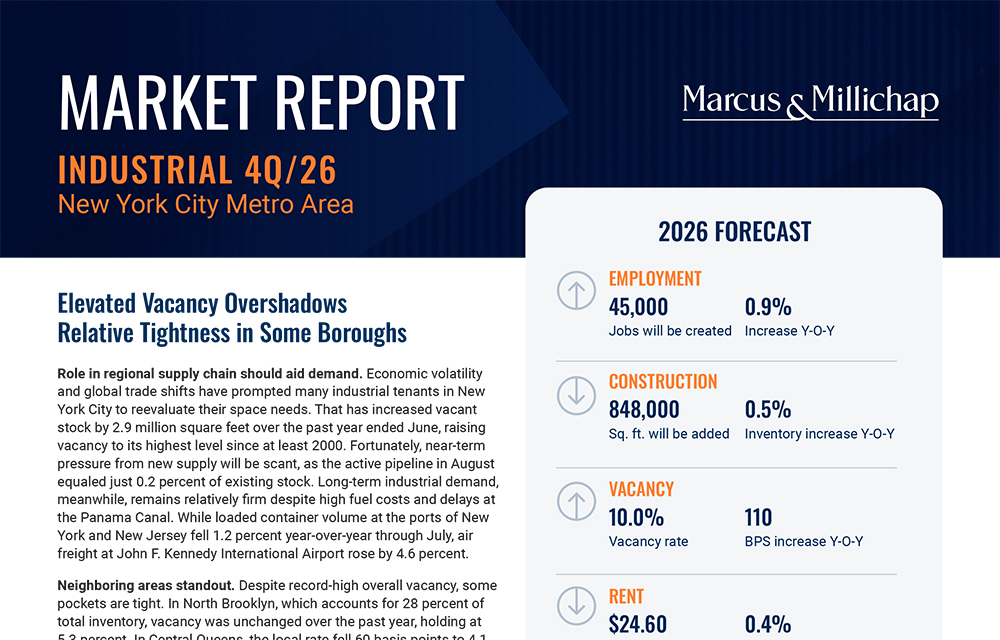
Marcus & Millichap releases fourth-quarter 2026 NYC industrial market report
Manhattan, NY Marcus & Millichap has published its fourth-quarter 2026 New York City Industrial Market Report. “New York City’s industrial market is showing a clear



Quick Hits
 (2).gif)

Columns and Thought Leadership

The art of investing in real estate - by Thomas Donovan
Real estate investing is as much an art as it is a skill. No one can time the market, or the factors that drive it, perfectly. Location, zoning, size, transportation, and neighborhood density give you a baseline for

Hunt CRE question and answer: Choosing a real estate agent - by David Hunt
First, we will only work with one agent exclusively. The primary reason is that we want that agent to legally represent our client’s interests. In New York State, a real estate agent has a fiduciary

New York’s streets are full again, and the retail numbers prove it - by Noam Aziz
Walk down any New York block this year and you can feel it. The sidewalks are crowded, the storefronts are lit, and the energy that defines this city is back at full volume.

Hunt commercial real estate question and answer: Fortune 500 wisdom - by David Hunt
Yes, there are lessons to be learned from the largest companies in America when comes to managing your real estate. But the decision to buy or lease real estate may not be one of
.gif)