



News:
Brokerage
Posted: October 7, 2013
Commercial classroom: Cell phones - Can't live with them, can't live without them
This column is offered to help educate agents new to commercial and investment brokerage and serve as a review of basics for existing practitioners.
Cell Phones - Can't live with them - Can't live without them.
Cell phone definition - A hand held devise that can interrupt us at any time! Of course there are tremendous benefits to today's technology; making emergency calls from anywhere (where there is a cell tower) and many phones are computers with e-mail and internet access. In our business this instant communication can be a big help.
How and when these phones are used must be thought about. There is the safety issue, talking or texting while driving, can be a serious distraction. Even the cars with phones built in; what are you thinking about while you are talking, the conversation or the road?
Sometimes, being anxious to answer every call, may give another person that your with, a sense that the person on the phone is more important that them. Not a good impression for a client or customer.
One of my agents told me the following story. He was showing property that he had listed for lease. Another agent brought a potential tenant; the owner met them to open the building and meet the tenant. As soon as they began a dialog, the owner's cell phone started ringing; he excused himself and took the call. After, he started to talk about the building, and his cell phone rang again. The tenant patiently waited to ask a few questions. His agent's phone rang too, and the agent took the call. To really top things off the owner had a second cell phone, which of course went off; he was now talking on two phones! My agent assisted the tenant as best he could, but the potential tenant was obviously turned off by the lack of courtesy displayed by the owner and even his own agent. The owner's actions delivered the message; I have more important things to deal with than you.
Agents, when you are with a client or customer shut your cell phone off, give them your undivided attention. At showings, ask all parties to put there phones on mute during the tour.
When we answer the phone our attitude can be heard at the other end of the phone. The tone of our voice, the speed at which we talk, the language we use all deliver a message. Receiving a call interrupts what we were doing. Are we ready to project our best image to the caller? Are we ready to stop what we were doing, to give the caller our undivided attention? Or are we trying to do two things at once showing a property and talking to a new customer, as quickly as possible, to get back to the showing?
Don't take the call, finish your showing, retrieve your voicemail and call back with a great attitude and full attention, which gives the right first impression. Hint: before you answer or dial the phone take a deep breath and smile. That smile will be heard!
How often do we get voicemail when we call someone? Prepare for this too, it happens so often that we should assume we are going to have to leave a message. Clearly state who you are, why you are calling, and how to reach you. If you start playing "telephone tag" with someone leave a definitive time and place they can reach you or advise them you will respond by e-mail.
People have a tendency to regularly check there e-mails and texts on there phones. But retrieving your voice mail requires the extra steps of dialing out and entering a code; sometimes this is not checked often enough. When driving through a "dead Zone" the phone may not ring but a voicemail may have been recorded, which would appear when you get service again.
Our cell phones make communication easier, but how and when we use them communicates other messages. The customer or client you are out with, or the calls you are talking deserve your uninterrupted attention.
Edward Smith, Jr. CREI, ITI, CIC, RECS, GREEN, MICP is the northeast regional director of Coldwell Banker Commercial NRT, Syosset, N.Y.
Tags:
Brokerage
MORE FROM Brokerage

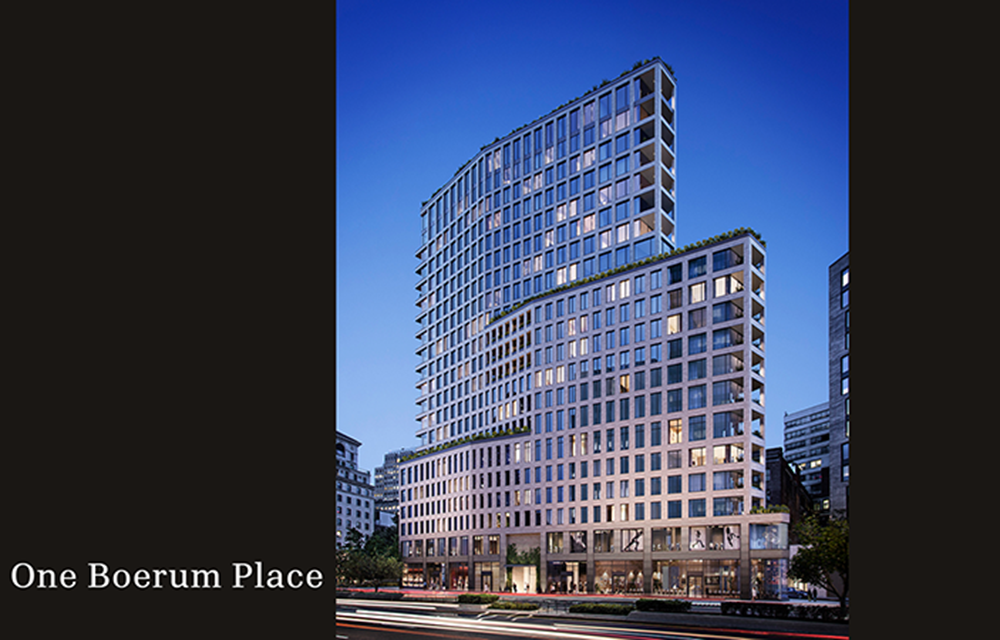
200E20TH sells out in Gramercy, penthouse A closes out sales at the CetraRuddy-designed condominium residences
Manhattan, NY 200E20TH, the CetraRuddy-designed architectural masterwork that brought a curved, contemporary sensibility to Gramercy’s Beaux-Arts streetscape, has



Quick Hits
 (2).gif)

Columns and Thought Leadership

Hunt commercial real estate question and answer: Fortune 500 wisdom - by David Hunt
Yes, there are lessons to be learned from the largest companies in America when comes to managing your real estate. But the decision to buy or lease real estate may not be one of

New York’s streets are full again, and the retail numbers prove it - by Noam Aziz
Walk down any New York block this year and you can feel it. The sidewalks are crowded, the storefronts are lit, and the energy that defines this city is back at full volume.

The art of investing in real estate - by Thomas Donovan
Real estate investing is as much an art as it is a skill. No one can time the market, or the factors that drive it, perfectly. Location, zoning, size, transportation, and neighborhood density give you a baseline for

Hunt CRE question and answer: Choosing a real estate agent - by David Hunt
First, we will only work with one agent exclusively. The primary reason is that we want that agent to legally represent our client’s interests. In New York State, a real estate agent has a fiduciary
.gif)