



News:
Brokerage
Posted: March 2, 2021
Collado earns top engineering excellence award for Haven Plaza
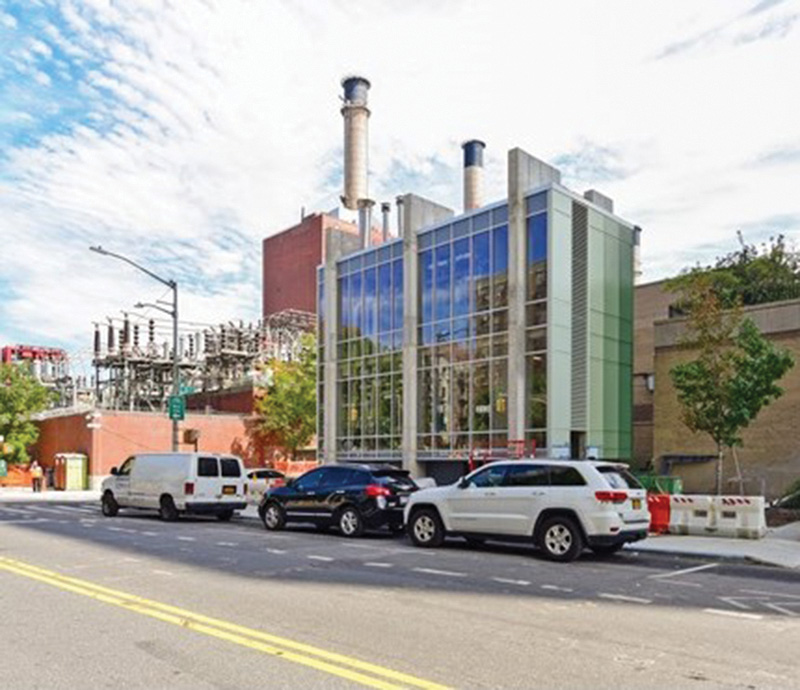
New York, NY Collado Engineering has earned a 2021 Diamond Engineering Excellence Award in the category of Building/Technology Systems for its innovative design of a flood resistant utility services building for Haven Plaza, a mid- to low-income housing complex on Manhattan’s Lower East Side. The plant is part of a resiliency program to harden infrastructure for the complex, which was massively damaged in 2012 by Superstorm Sandy.
Presented by the American Council of Engineering Companies of New York (ACEC New York), the Engineering Excellence Awards (EEA) are judged on a rigorous set of criteria, which includes complexity, innovation, and value to society.
Financial support for the project was provided by the New York City Department of Housing Preservation & Development (HPD) and the New York City Housing Development Corporation (HDC) under the city’s Build it Back program.
In the wake of Sandy’s surge, the residents of all 371 apartments in the four buildings that comprise Haven Plaza were stranded without power, heat and hot water service, and with only partial cold-water service due to flooding of critical mechanical and electrical infrastructure equipment located in the cellar of two Haven Plaza buildings. An explosion and subsequent power outage at the adjacent Con Edison power plant knocked out electrical service to the remaining two buildings of the complex.
Haven Plaza Square LLC, an affiliate of the Association of New York Catholic Homes and the New York Institute for Human Development, commissioned Collado, CTA Architects and Robert Silman to design an infrastructure system that would withstand the effects of a future natural disaster, allow the complex to be self-sufficient, and reduce operating costs.
Collado’s solution–a new, free-standing utility services building with a first floor that stands one foot above the FEMA base flood elevation and six feet above ground level–houses a new on-site dual fuel steam boiler plant, the domestic hot water generation equipment, and electrical service provisions for the plant and 4 Haven Plaza. The boilers, which normally operate on gas, can be switched to diesel fuel, if necessary, via a diesel fuel storage tank located in a floodproof “bathtub” cellar area. Electrical infrastructure for 1, 2, and 3 Haven Plaza was also raised to elevated platforms for flood-proofing. Each building is equipped with manual transfer switches, allowing portable generators to provide standby power to critical loads.
CTA Architects designed the utility building with transparency in mind, utilizing 1,300 s/f of glazed curtainwall, 1,500 s/f of metal façade and 500 s/f of green wall.
Prominently visible in the busy East Village neighborhood, the plant showcases for the public the investment made in the property’s engineering infrastructure.
The building’s poured concrete structure, designed by Robert Silman structural engineers, allows for a column-free space to accommodate the large equipment. Due to the low-bearing quality of the soil, fifteen 100-ton capacity concrete piles were incorporated into the foundation system. Location of the new Utility Services building was strategic, enabling the use of much of the existing underground distribution on site.
All work was completed while the housing complex remained occupied, requiring continuous communication with residents to coordinate service shutdowns and schedules.
“We are so pleased to be honored with the highest award in the Building Technology/Systems category for the Haven Plaza project. Our work has had an immediate and direct impact on average New Yorkers, providing them with the security that their lives would not be disrupted by another flooding event like Sandy,” said Andy Hlushko, president of Collado Engineering.
Tags:
Brokerage
MORE FROM Brokerage
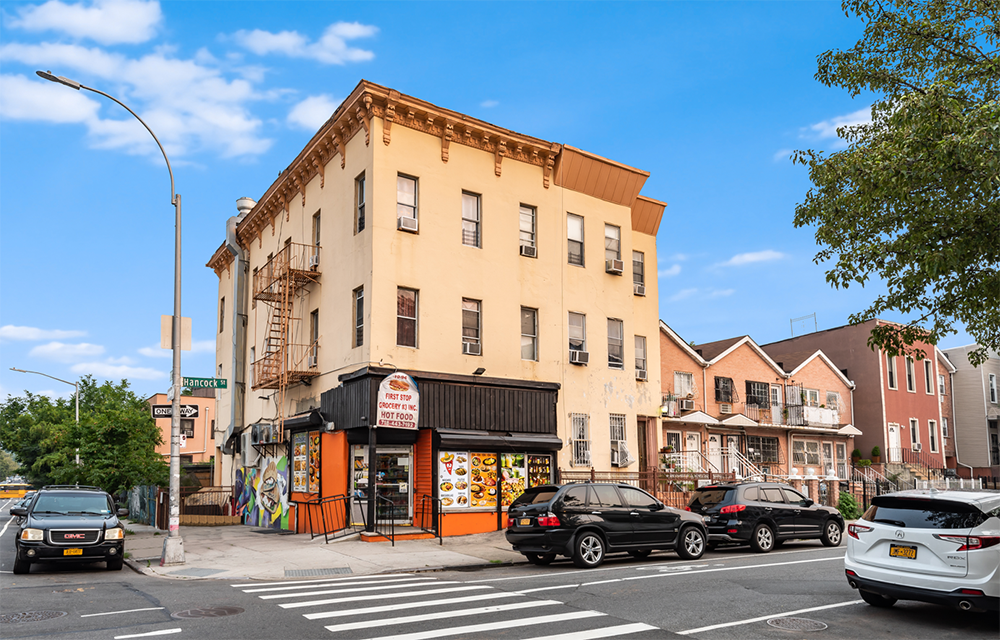
Investment Property Realty Group closes $1.75 million sale of 1094 Hancock Street in Brooklyn
Brooklyn, NY Investment Property Realty Group (IPRG), a New York-based commercial investment firm, has closed the sale of 1094 Hancock St., a mixed-use building in the Bushwick section, for $1.75 million.




Quick Hits
 (2).gif)

Columns and Thought Leadership

A guide to finding the right NYC property management company - by Sanjay Gandhi
Being a small to midsize landlord in NYC is an increasingly demanding endeavor. From navigating complex regulations, increased compliance demands to dealing with tenant issues and remediating violations. It is wise to enlist the assistance of a partner, a professional

Hunt CRE question and answer: Choosing a real estate agent - by David Hunt
First, we will only work with one agent exclusively. The primary reason is that we want that agent to legally represent our client’s interests. In New York State, a real estate agent has a fiduciary

New York’s streets are full again, and the retail numbers prove it - by Noam Aziz
Walk down any New York block this year and you can feel it. The sidewalks are crowded, the storefronts are lit, and the energy that defines this city is back at full volume.

Hunt commercial real estate question and answer: Fortune 500 wisdom - by David Hunt
Yes, there are lessons to be learned from the largest companies in America when comes to managing your real estate. But the decision to buy or lease real estate may not be one of
.gif)