



News:
Brokerage
Posted: September 6, 2016
Clark Patterson Lee welcomes Waite, Carty and Fagner to its Rochester team

Richard Waite, Clark Patterson Lee

Laurence Carty, Clark Patterson Lee

Katherine Fagner, Clark Patterson Lee
Rochester, NY Clark Patterson Lee recently welcomed Richard Waite as landscape architect, Laurence Carty as architectural designer and Katherine Fagner as human resource benefits coordinator.
Waite, RLA, LEED AP, will be responsible for planning and designing exterior spaces. He focuses on designs that are functional and beautiful, and that contribute to a positive and memorable pedestrian response to the environment. Waite brings more than 25 years of experience in the architectural and engineering industry to the team.
Waite received his Bachelor of Arts from St. Lawrence University in 1987 and then continued his education, earning his Master of Landscape Architecture from Cornell University in 1993.
Carty will be responsible for the production of designs and drawings, from preliminary design through to construction documents. He will also be responsible for building envelope analysis to help identify the most appropriate building envelope design options for particular building designs. Before joining CPL, Carty worked as an architectural technologist for almost 11 years at two architecture firms in his hometown of Sligo on the northwest coast of Ireland.
Carty attended Edinburgh Napier University in Scotland, United Kingdom, where he earned his Master of Science in architectural technology and building performance, and is working toward a second Master of Science in research in building science.
Fagner is responsible for facilitating new-hire and benefit processing, as well as employee relations. She also will be responsible for company policy development.
Fagner joins the CPL team from PharmaSmart International, where she served as human resource supervisor/global headquarters office supervisor for five years.
Tags:
Brokerage
MORE FROM Brokerage
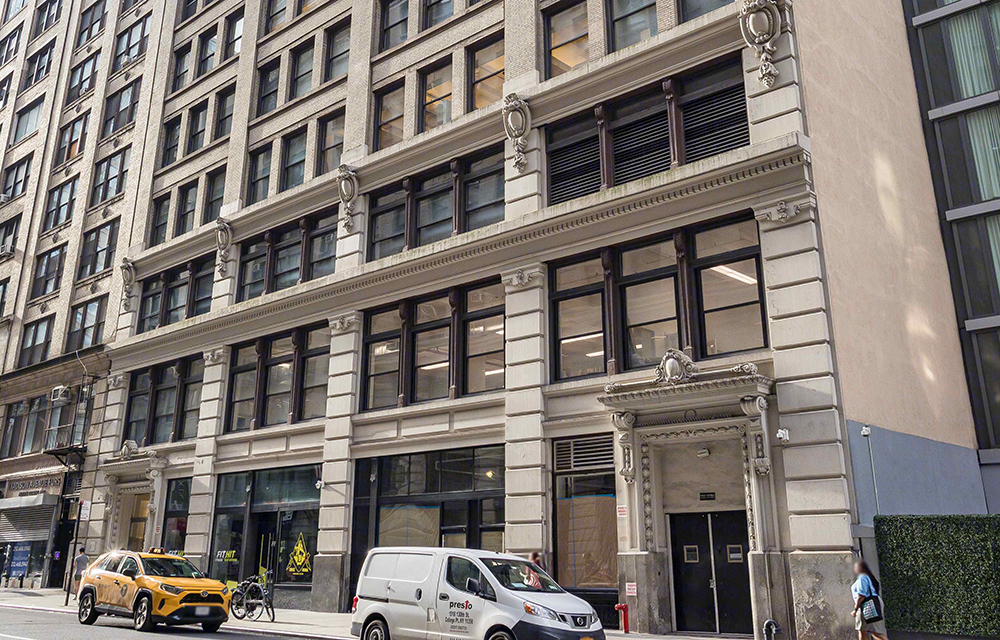
Koeppel Rosen inks 16-year 33,783 s/f lease for coworking firm Nomadworks at 122 West 27th St.
Manhattan, NY According to Koeppel Rosen LLC, leasing and management agent for the Rosen family portfolio, Nomadworks has signed a new 16-year, two-month lease totaling 33,783 s/f at 122 West



Quick Hits
 (2).gif)

Columns and Thought Leadership

Hunt CRE question and answer: Choosing a real estate agent - by David Hunt
First, we will only work with one agent exclusively. The primary reason is that we want that agent to legally represent our client’s interests. In New York State, a real estate agent has a fiduciary

The art of investing in real estate - by Thomas Donovan
Real estate investing is as much an art as it is a skill. No one can time the market, or the factors that drive it, perfectly. Location, zoning, size, transportation, and neighborhood density give you a baseline for

New York’s streets are full again, and the retail numbers prove it - by Noam Aziz
Walk down any New York block this year and you can feel it. The sidewalks are crowded, the storefronts are lit, and the energy that defines this city is back at full volume.

Hunt commercial real estate question and answer: Fortune 500 wisdom - by David Hunt
Yes, there are lessons to be learned from the largest companies in America when comes to managing your real estate. But the decision to buy or lease real estate may not be one of
.gif)