



News:
Brokerage
Posted: July 12, 2022
Baker of Certilman Balin named to WE CARE Fund advisory board
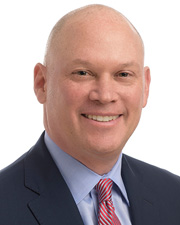
East Meadow, NY Daniel Baker, partner in the real estate and land use and zoning practice groups at Certilman Balin Adler & Hyman, LLP, has been named to the Advisory Board of the WE CARE Fund, which is the charitable arm of the Nassau County Bar Association, and this appointment is effective July 1.
Baker represents clients on real estate transaction matters, land use and zoning issues, and industrial development agency (IDA) benefits. His roster of clients runs the gamut from “mom and pop” operations and local developers to national and international shopping center owners and retailers. He also advises clients on local laws and customs, which help facilitate the navigation through the real estate and municipal processes.
He serves as the Tenth Judicial District Representative to, and a member of the Executive Committee of, the Real Property Law Section of the New York State Bar Association, as a member of the Advisory Board of the Chicago Title Insurance Company, among others and as an appointed member of the State of New York Commission on Quality Care for the Mentally Disabled Surrogate Decision Making Committee (SDMC) Program. He was Chairman of the Real Property Law Committee of the Nassau County Bar Association from 2010-2012.
Baker graduated from the Jacob D. Fuchsberg Law Center at Touro College, after earning his Bachelor of Arts degree from the State University of New York at Albany. Active with his alma mater and in his community, Baker is a member of the Touro Law Center Alumni Association, a member of the Touro Law Center Dean’s Advisory Council, and co-vice chair of the Board of Touro Law Center’s Institute of Land Use and Sustainable Development Law. In 2017 Baker was honored with the Law School Service Award and in 2019 with the Paul S. Miller Award.
As a member of The Engergeia Partnership at Molloy College of the class of 2019, Baker is one of Long Island’s leaders committed to improving the region’s most complex issues.
Admitted to practice in the State of New York and before the United States District Courts for the Southern and Eastern Districts of New York, he has achieved the highest professional rating by Martindale Hubbell. He is a member of the American, New York State and Nassau County Bar Associations.
Tags:
Brokerage
MORE FROM Brokerage

Law Firm Nutter expands space to 11,438 s/f at 5 Grand Central East
Manhattan, NY According to the Durst Organization, full-service law firm Nutter is expanding their office at 5 Grand Central East to 11,438 s/f. Nutter will take the entire 25th floor, in addition to renewing the firm’s existing office space on the 27th floor of the building.




Quick Hits

Columns and Thought Leadership

New York’s streets are full again, and the retail numbers prove it - by Noam Aziz
Walk down any New York block this year and you can feel it. The sidewalks are crowded, the storefronts are lit, and the energy that defines this city is back at full volume.

Positive forecast for New York’s pro-housing push? - by Philip Butler
New York’s housing crisis remains a hot button topic despite growing consensus that varied and affordable housing is desperately needed statewide. Governor Hochul has recently introduced several initiatives to overcome N.Y.’s anti-housing

Hunt commercial real estate question and answer: Fortune 500 wisdom - by David Hunt
Yes, there are lessons to be learned from the largest companies in America when comes to managing your real estate. But the decision to buy or lease real estate may not be one of

A guide to finding the right NYC property management company - by Sanjay Gandhi
Being a small to midsize landlord in NYC is an increasingly demanding endeavor. From navigating complex regulations, increased compliance demands to dealing with tenant issues and remediating violations. It is wise to enlist the assistance of a partner, a professional
.gif)