



News:
Brokerage
Posted: January 27, 2014
An overview of the Queens multifamily market: A 2013 year-end report on the borough
According to the New York City Rent Guidelines Board's, 2013 Price Index of Operating Costs (PIOC), which measures the price change in operating and maintenance costs for rent stabilized apartment buildings, costs are going up. Natural-gas heated buildings have seen costs increase 4.3%; costs for fuel-oil have risen by an enormous 20%. Real estate taxes, which is the largest expense, have increased by 2.6%, labor costs by 3%, utilities, which include water and sewer costs, have gone up by 6.3% and property insurance up by 7.1%.
At the same time, based on the RGB's 2013 Income and Expense Study, rental income has increased by 4.4% and net operating income (NOI) grew by 5.6%
Queens on average saw a 4.5% increase in Net Operating Income, with the neighborhoods of Sunnyside and Woodside seeing the largest increase in NOI, at 10.2%.
The average operating & maintenance cost for rent stabilized apartment buildings in Queens is $730/apartment/month. The average rent for a stabilized unit is about $1,100/month. This gives a rent stabilized building owner in the borough, on average, a net operating income of roughly $370/apartment/month.
The margins are small, but with the right management and knowledge, the business of owning rent stabilized multifamily buildings is highly profitable. The smart money investors are buying accordingly.
Last year we saw the highest sales volume ever for Queens. Let us look at the record breaking data for the Borough. In 2013, in the 12-unit and above submarket for Queens, there was 93 transactions. This consisted of 120 apartment buildings containing 5,564 units for a total sales volume of $1.077 billion; a 5.7% turnover rate. We have never seen sales of over $1 billion for this submarket in the borough. In 2012, for comparison, there was 87 buildings sold, with 3,976 units for a total of $500.165 million; a turnover rate of 4.04%, which was the strongest turnover rate since 2006.
Not only is this sales volume up, property analytic averages across the board are higher. I will break this down in two sectors; the walk-up sector and the elevator sector.
The average price per unit in the walk-up sector for 2013 was $145,248/unit an 11.4% increase from 2012. The average price per sf in this sector was $194.15/sf, an increase of 8.3%.
In the elevator sector, the average price per unit was $215,259/unit, an enormous increase of 31.6% from 2012. The average price per sf was $237.35/sf, which was an increase of 35.9 % in this sector.
The largest portfolio sale in the Queens apartment building market was the area property portfolio. This consisted of 29 separate transactions with 31 apartment buildings and 1,915 units. 10 of the buildings were walk-ups and 21 were elevator buildings. This vast portfolio traded for an average of $188,569/unit at $367.338 million. The purchaser was A&E Real Estate based in Manhattan.
The largest single asset multifamily sale in the borough was the purchase of "Saxon Hall" in Rego Park. This doorman building is a 16-story block front property with 417 units and two office spaces. It sold to Treetop Development, based in New Jersey, for a healthy price tag of $85.25 million. The building sold back in 2008 for $74 million.
The highest price per unit multifamily sale was the "Crescent Club" transaction in Long Island City. The 17-story, 123,000 s/f, 130-unit "failed" condo project traded for $81.5 million or $626,649/unit. (This was also the highest price per s/f sale at $658.96 per s/f) These are numbers that we do not see in the borough. The purchaser was a private New York investor. Back in 2011, a development company purchased the defaulted mortgage note for $51 million.
New planned multifamily projects:
* A long-term land lease was signed at 92-77 Queens Blvd. in Rego Park by Atlas Projects, Inc. The former site of a car wash and gentlemen's club will be developed into a 105,000 s/f, 15-story mixed-use tower.
* A 100,000+ s/f convention center, 25-story hotel, 236 apartments with 97,000 s/f of retail and restaurants is being planned for 112-21 Northern Blvd. in Corona. It is estimated to be a $200 million project that will break ground this summer.
* At 65-38 Austin St. in Rego Park, an application has been filed to construct a 55,630 s/f, seven-story building with 59 apartments.
* A seven-story, 90-unit, building with parking is being planned at 1626 Madison St. in Ridgewood.
* At 42-15 27th St. in Long Island City, an application has been filed to construct a 58-story, 398,702 s/f building with 477 apartments and ground floor retail.
2014 will be an interesting year for the multifamily market. With the city's new mayor in power, increases to property taxes and changes to zoning are likely on the horizon.
Stay tuned.
Rubin Isak is the CEO/co-founder of Falco & Isak Realty Services, Queens, N.Y.
Tags:
Brokerage
MORE FROM Brokerage
Investment Property Realty Group closes $1.75 million sale of 1094 Hancock Street in Brooklyn
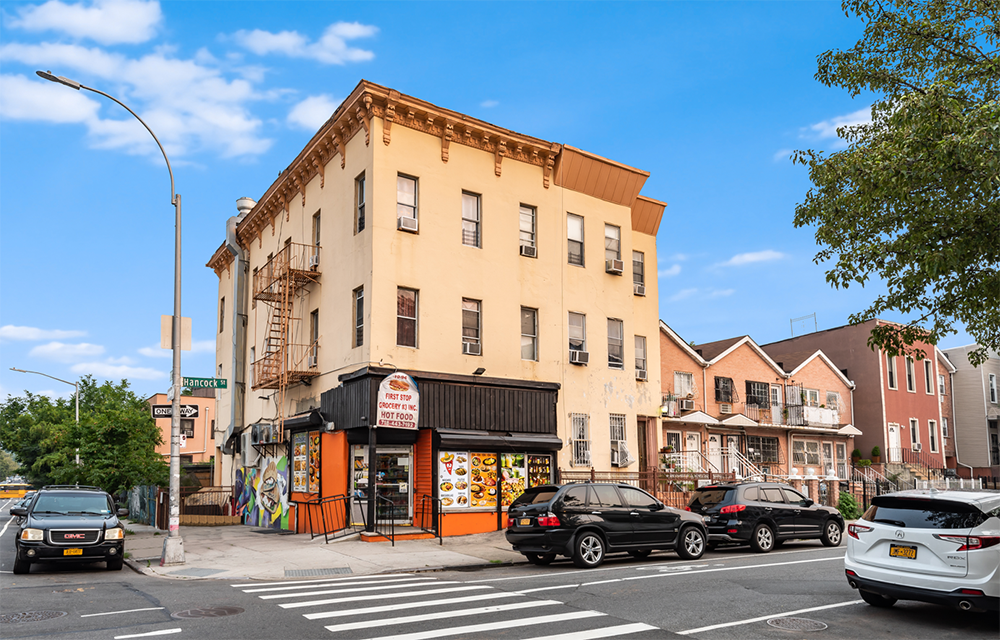
Brooklyn, NY Investment Property Realty Group (IPRG), a New York-based commercial investment firm, has closed the sale of 1094 Hancock St., a mixed-use building in the Bushwick section, for $1.75 million.


 (2).gif)

Columns and Thought Leadership

Hunt commercial real estate question and answer: Fortune 500 wisdom - by David Hunt
Yes, there are lessons to be learned from the largest companies in America when comes to managing your real estate. But the decision to buy or lease real estate may not be one of

A guide to finding the right NYC property management company - by Sanjay Gandhi
Being a small to midsize landlord in NYC is an increasingly demanding endeavor. From navigating complex regulations, increased compliance demands to dealing with tenant issues and remediating violations. It is wise to enlist the assistance of a partner, a professional

Hunt CRE question and answer: Choosing a real estate agent - by David Hunt
First, we will only work with one agent exclusively. The primary reason is that we want that agent to legally represent our client’s interests. In New York State, a real estate agent has a fiduciary

New York’s streets are full again, and the retail numbers prove it - by Noam Aziz
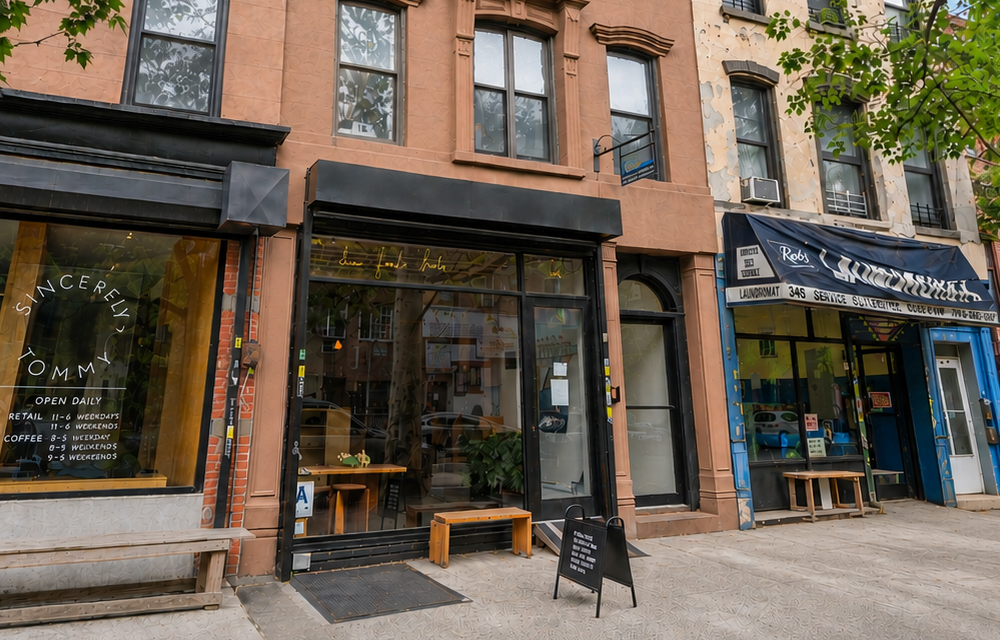
Walk down any New York block this year and you can feel it. The sidewalks are crowded, the storefronts are lit, and the energy that defines this city is back at full volume.
.gif)