



News:
Brokerage
Posted: May 26, 2015
AFL-CIO HIT invest $8 million in Brooklyn's Harry Silver Housing Co-Op
The AFL-CIO Housing Investment Trust (HIT) is investing $8 million of union pension capital for the refinance of Harry Silver Housing Cooperative, allowing modernization and repairs at the six-building, 288-unit complex. The funding will create 15 union construction jobs.
Built in 1953 with support from the Amalgamated Meat Cutters and Butchers Workmen Union, the complex was named after Harry Silver, a union organizer who died championing workers' rights in 1928. The cooperative has maintained its strong union ties, with a high percentage of existing and retired union members in residence and all maintenance staff members of Service Employees International Union Local 32 B-J.
"We are very excited to participate in this project," said Stephanie Wiggins, HIT's executive vice president and chief investment officer. "The Harry Silver Cooperative has had ties to the labor movement since its origin and we are proud to be using workers' capital to modernize the housing complex and preserve affordable housing for the many union families residing there."
Preservation of existing buildings and affordable units is crucial as there is a high demand for affordable housing in the city. According to the department of city planning, the population of the city will exceed nine million people by 2030, yet the housing stock has not kept pace with its burgeoning population.
Further, homeownership remains out of reach for nearly 80% of all households in the city.
Moreover, the supply of housing that remains affordable to low, moderate, and middle-income families is in rapid decline. The comptroller's office says rents have skyrocketed - leaving New Yorkers paying staggering sums, while their incomes are declining. Median apartment rents increased 75% since 2000 - a rise that is 31% higher than the national average. At the same time, median real incomes declined by nearly f5%.
"Preserving housing for working families is a vital part of maintaining the character and diversity of New York City's neighborhoods," said Scott Stringer, New York City's comptroller. "I would like to thank the HIT for finding fiscally sound, affordable housing investments on behalf of the New York City Retirement Systems' Trustees. This investment in Harry Silver Housing will not only help modernize and repair 288 units of housing, but create good union construction jobs."
The HIT has been actively investing workers' capital to address the housing shortfall. In January 2002, HIT launched the New York City Community Investment Initiative, a multi-phased investment strategy, to help meet the city's urgent need for investment capital following the 9/11 attacks. Since 2002, these investments have generated an estimated $1.6 billion in total economic activity, $676 million in personal income and created 9,600 jobs, including 4,830 on-site union construction jobs. Under the initiative, 31,099 housing and healthcare units were created or rehabilitated, with 96% of those affordable or workforce housing.
Wiggins said the HIT has been instrumental in preventing the loss of affordable housing units. The HIT has refinanced 28 projects in New York City to help preserve affordability.
The AFL-CIO Housing Investment Trust (HIT) is a fixed-income investment company registered with the Securities and Exchange Commission. It manages over $4.8 billion in assets for more than 360 investors, which include union and public employee pension plans. The HIT invests primarily in government and agency insured and guaranteed multifamily mortgage-backed securities. The HIT is one of the earliest and most successful practitioners of socially responsible, economically targeted investing, with a 30-year track record that demonstrates the added value derived from union-friendly investments. The investment objective of the HIT is to provide competitive returns for its investors and to promote the collateral objectives of constructing affordable housing and generating employment for union members in the construction trades and related industries. Since its inception, the HIT has invested $7 billion to finance more than 98,000 units of housing nationwide, generating more than 70,000 union jobs. More information is available on the HIT's website, www.aflcio-hit.com.
Tags:
Brokerage
MORE FROM Brokerage
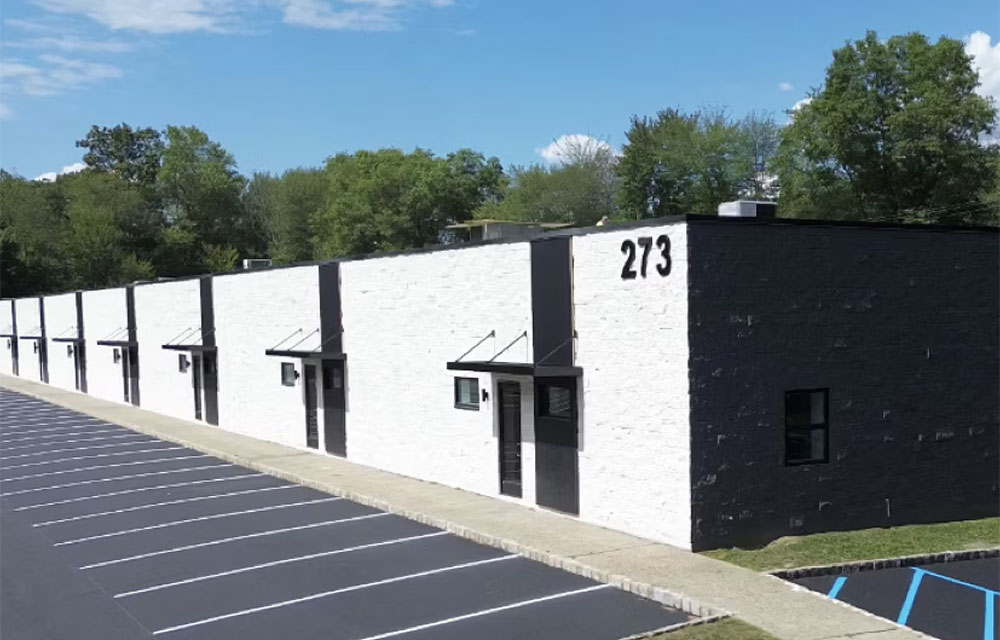
Resource Realty of Northern NJ delivers complete lease-up of 235 Franklin Rd. for Commerce Park Investors
Randolph, NJ Resource Realty of Northern New Jersey (RRNNJ) has completed the lease-up of a 10-unit small-bay industrial property at 273 Franklin Rd., marking the culmination of an investment strategy that began



Quick Hits
 (2).gif)

Columns and Thought Leadership

Positive forecast for New York’s pro-housing push? - by Philip Butler
New York’s housing crisis remains a hot button topic despite growing consensus that varied and affordable housing is desperately needed statewide. Governor Hochul has recently introduced several initiatives to overcome N.Y.’s anti-housing

A guide to finding the right NYC property management company - by Sanjay Gandhi
Being a small to midsize landlord in NYC is an increasingly demanding endeavor. From navigating complex regulations, increased compliance demands to dealing with tenant issues and remediating violations. It is wise to enlist the assistance of a partner, a professional

New York’s streets are full again, and the retail numbers prove it - by Noam Aziz
Walk down any New York block this year and you can feel it. The sidewalks are crowded, the storefronts are lit, and the energy that defines this city is back at full volume.

Hunt commercial real estate question and answer: Fortune 500 wisdom - by David Hunt
Yes, there are lessons to be learned from the largest companies in America when comes to managing your real estate. But the decision to buy or lease real estate may not be one of
.gif)