



News:
Brokerage
Posted: April 14, 2026
1540 Bdwy. secures 74,000 s/f in long-term leases with Pandora Jewelry and Woori Bank

Manhattan, NY GFP Real Estate and BDT & MSD Partners made known that 1540 Bdwy. has signed more than 74,000 s/f in new long-term office leases with Pandora Jewelry and Woori Bank New York Agency, underscoring continued momentum at the class A Midtown tower.
The transactions coincide with significant progress on the Fogarty Finger–led renovation of the property, highlighted by the addition of a 45,000 s/f amenity program, the unveiling of new renderings of the reimagined spaces, and the launch of a new interactive property website, www.TheNew1540Broadway.com.
In the first transaction, Pandora Jewelry, LLC signed a long-term lease for the entire 34th floor totaling 27,936 s/f, along with a lease extension for its existing 27,936 s/f at the building. The new lease and extension reinforce the company’s long-term commitment to the building and bring its total footprint to 55,872 s/f. Pandora is expected to occupy the expanded space in August 2026. Dan Posy of JLL represented the tenant.
In the second transaction, Korea-based Woori Bank New York Agency signed a 20-year lease for the full 38th floor, comprising 18,553 s/f. The international financial institution will relocate its New York operations from 245 Park Ave., with occupancy anticipated in May 2026. Charles Han and Douglas Levine of Newmark represented the tenant.
Clark Finney, Frank Doyle, Carlee Palmer and Michael Pallas of JLL and Allen Gurevich of GFP Real Estate represented the landlord in both transactions.
“These two commitments send a clear signal about how the market is responding to the transformation at 1540 Broadway,” said Clark Finney, executive managing director at JLL. “Today’s tenants are making long-term decisions based on quality, performance and the overall workplace experience. 1540 Broadway checks each of those boxes and stands out in a competitive Midtown landscape.”
The 907,000 s/f tower is undergoing a comprehensive repositioning led by Fogarty Finger, reintroducing 1540 Broadway as a next-generation Class A office destination in Midtown Manhattan. Plans call for more than 45,000 s/f of new amenities designed to support collaboration, wellness and flexibility. The program will span two levels and include a reimagined fitness and wellness center with upgraded locker rooms and recovery areas, modern conference facilities and hospitality-driven social and gathering spaces.
An executive lounge on the upper floors is planned to offer sweeping skyline views, refined meeting and dining areas, and a landscaped terrace designed for client engagement and leadership gatherings. The repositioning also includes upgraded infrastructure, modernized building systems and floor plates ranging from 18,000 to 28,000 s/f featuring floor-to-ceiling windows, multiple exposures and 13-ft. slab heights.
Large blocks of contiguous space, up to 223,000 square feet, remain available, positioning the building to accommodate major users including law firms, life sciences companies, and established technology and financial firms seeking scale and long-term flexibility in Midtown.
“These long-term commitments from a leading global consumer brand and an international financial institution validate the market’s confidence in ownership’s strategic repositioning of the building,” said Brian Steinwurtzel, co-CEO of GFP Real Estate. “With construction of the amenity program underway, we’re excited for the brokerage community and prospective tenants to preview the new spaces through the building’s website. Once complete, 1540 Broadway will deliver the quality, flexibility and elevated workplace experience today’s premier Midtown tenants expect.”
Coinciding with the announcement, ownership launched a new dedicated website for 1540 Broadway, www.TheNew1540Broadway.com. The new site provides brokers and prospective tenants with interactive access to availability, amenities, renderings and building updates.
Tags:
Brokerage
New York City
MORE FROM Brokerage
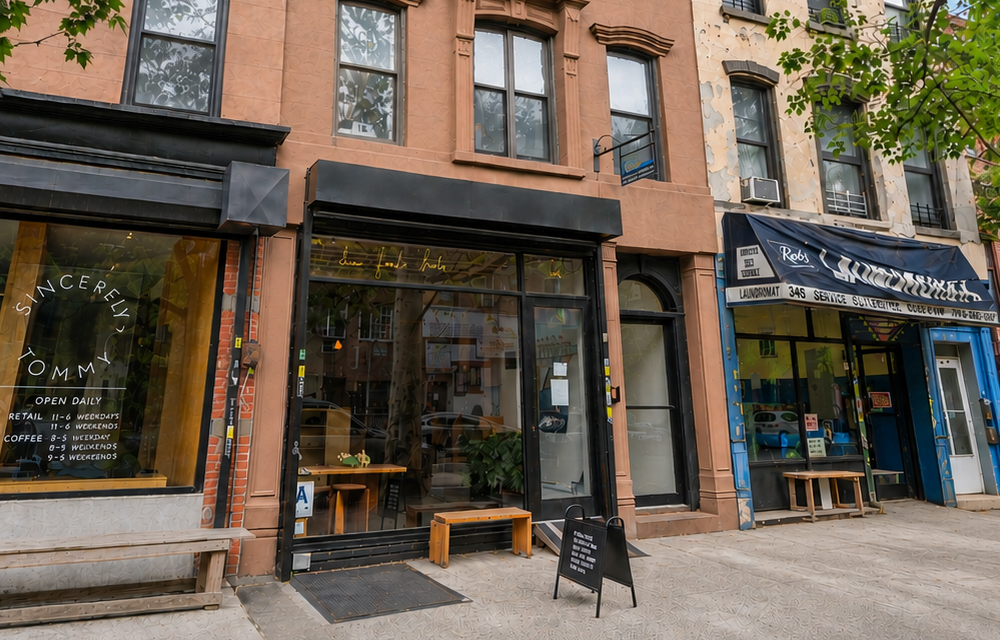
Bestreich, Reynolds, Davila, and Flaherty of Investment Property Realty Group close $1.97 million sale of 343A Tompkins Ave. in Bed-Stuy
Brooklyn, NY Investment Property Realty Group (IPRG) closed the sale of 343A Tompkins Ave., a mixed-use building located in the Bed-Stuy section of the borough, for $1.97 million.



Quick Hits
 (2).gif)

Columns and Thought Leadership

Hunt CRE question and answer: Choosing a real estate agent - by David Hunt
First, we will only work with one agent exclusively. The primary reason is that we want that agent to legally represent our client’s interests. In New York State, a real estate agent has a fiduciary

Hunt commercial real estate question and answer: Fortune 500 wisdom - by David Hunt
Yes, there are lessons to be learned from the largest companies in America when comes to managing your real estate. But the decision to buy or lease real estate may not be one of

A guide to finding the right NYC property management company - by Sanjay Gandhi
Being a small to midsize landlord in NYC is an increasingly demanding endeavor. From navigating complex regulations, increased compliance demands to dealing with tenant issues and remediating violations. It is wise to enlist the assistance of a partner, a professional

New York’s streets are full again, and the retail numbers prove it - by Noam Aziz
Walk down any New York block this year and you can feel it. The sidewalks are crowded, the storefronts are lit, and the energy that defines this city is back at full volume.
.gif)