



News:
Brokerage
Posted: February 25, 2013
The e-commerce effect on shopping center investment
Retail investment properties have historically been one of the favorite investments for both institutional and private investors alike, providing current return plus the potential for additional percentage rent based upon the individual store sales. Additionally, retail leases are typically crafted on a net basis, so the tenant assumes his proportionate share of all operating expenses, limiting the owner's exposure to increases in property related expenses. With tenants historically in expansion mode, newer and larger stores were added to their inventory, capturing market share and driving down vacancy rates to low single digit percentages in the most sought after markets. All good for the retail investor: stable cash flow, the potential for increasing percentage rent and high occupancy rates. The ownership and investment returns were safe and secure.
So what happens when the landscape is derailed by a few upstart Internet retailers who require no physical presence (e.g. Amazon and eBay)? Nothing good for the traditional retail investor, if he is unaware of the dynamic shift in the retail business model.
Consumers are attracted to e-commerce retail purchasing due in part to convenience in terms of time savings and comparison price shopping from various retailers. The Commerce Department indicates that internet sales amount to approximately $200 billion of total retail sales in 2011, or about 5% of total retail sales. Although a small percentage of overall retail sales, this percentage has increased by 40% since 2007, dramatically outgrowing traditional retail sales of 4% over the same period. Projected internet annual sales growth rates are estimated at 8.5% till 2016. If we convert online sales for 2011, this would equate to approximately 400 million s/f of unnecessary retail space based on typical sales volume per s/f. Not a small number, and a bit alarming in specific retail categories.
Retail segments that capture the bulk of consumer sales are electronics, apparel and hobbies (inclusive of books and music). These categories comprise approximately 56% of all Internet sales, and can be viewed as forming the base of the Internet sales triangle. Products within this base share a common thread. They are typically price-sensitive goods with generally inexpensive shipping and are hard to distinguish between various retail outlets. Retailers competing for sales within this market segment have, in the past, specified large space designs to attract consumers with an all-encompassing inventory and product selection. Office Depot is evaluating a revised store concept reducing their typical square footage of 27,000 s/f to 18,000 s/f while maintaining an Internet sales capability. One would expect the inventory of retailers within this segment to follow a similar business model as they seek to maximize profit by reducing store size and operational costs while increasing internet sales.
While the future will be bright for the base retailers who modify operations to compete in the new landscape, the anticipated reduction in retail space needs is a concern for investors owning neighborhood shopping centers anchored or co-anchored by these retailers. Tenants downsizing,or vacating a center will present unique issues of tenant replacement. Has the business model of the past fundamentally changed? We have seen many examples of health clubs and deep discount stores tenanting vacant space at steep discounts to historic rents. The profit margins of these retailers simply do not allow the payment of the historic rents from the prior tenants. This does not reflect a landscape of increasing rents and maintaining cash flow as in the past for the unsuspecting retail investor.
By contrast, at the top of the pyramid are the urban flagship, grocery and health care related categories. Flagship stores that take occupancy in an urban environment focus their efforts on high-end street retailing. Fifth Ave. is an excellent example. What would be staggering rents in a suburban market may be viewed as a combination of store rent plus brand marketing. The retailer's goal is to advertise their product to a high demographic audience, and drive sales through the entire store network, as well as through internet sales. Grocery related Internet sales comprise only 2% of all Internet sales, with online sales declining. No one has quite figured out how to squeeze a grapefruit through the internet, so the physical act of shopping for produce should remain constant. Investors of grocery anchored neighborhood centers should fare better in terms of occupancy and earnings over the long-term. Prime street retail in major metropolitan areas should continue to outperform the market.
It is estimated that a tenth of shopping centers may be currently obsolete, with Internet sales potentially doubling this estimate over the next decade. Retail investments must be viewed in light of the ongoing challenge posed by e-commerce, to avoid becoming an e-commerce casualty.
Matthew Schnurr is the managing director, capital markets group at Transwestern, New York, N.Y.
Tags:
Brokerage
MORE FROM Brokerage
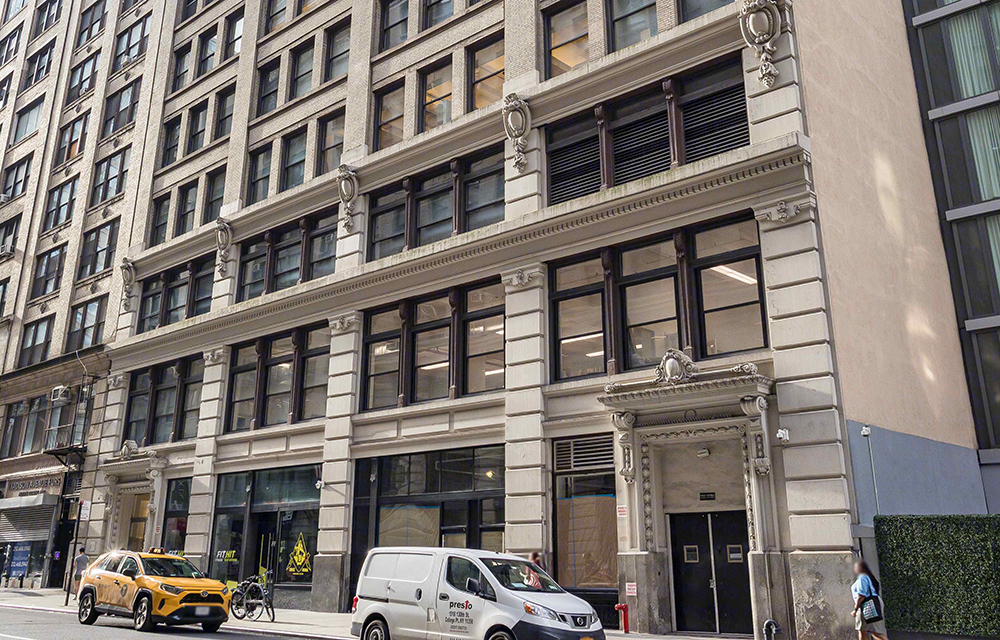
Koeppel Rosen inks 16-year 33,783 s/f lease for coworking firm Nomadworks at 122 West 27th St.
Manhattan, NY According to Koeppel Rosen LLC, leasing and management agent for the Rosen family portfolio, Nomadworks has signed a new 16-year, two-month lease totaling 33,783 s/f at 122 West




 (2).gif)

Columns and Thought Leadership

The art of investing in real estate - by Thomas Donovan
Real estate investing is as much an art as it is a skill. No one can time the market, or the factors that drive it, perfectly. Location, zoning, size, transportation, and neighborhood density give you a baseline for

Hunt CRE question and answer: Choosing a real estate agent - by David Hunt
First, we will only work with one agent exclusively. The primary reason is that we want that agent to legally represent our client’s interests. In New York State, a real estate agent has a fiduciary

New York’s streets are full again, and the retail numbers prove it - by Noam Aziz
Walk down any New York block this year and you can feel it. The sidewalks are crowded, the storefronts are lit, and the energy that defines this city is back at full volume.

Hunt commercial real estate question and answer: Fortune 500 wisdom - by David Hunt
Yes, there are lessons to be learned from the largest companies in America when comes to managing your real estate. But the decision to buy or lease real estate may not be one of
.gif)